
UMKM Minister Blames Illegal Chinese Imports for High KUR Default Rates
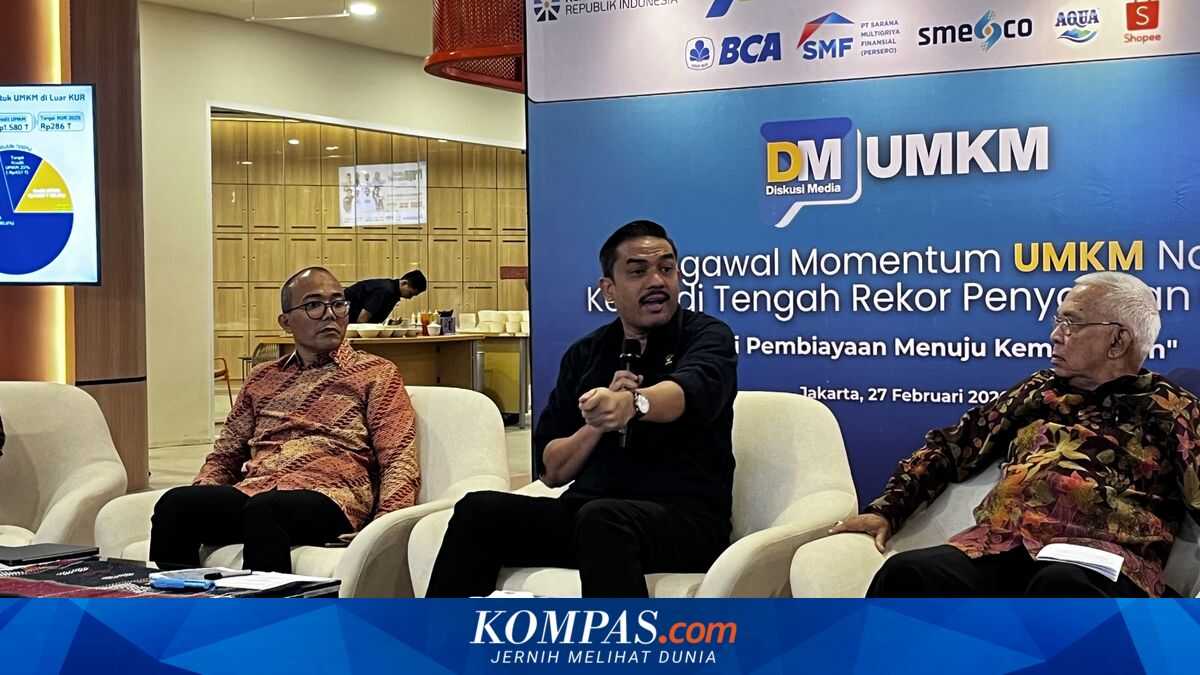
Jakarta – The Minister of Micro, Small and Medium Enterprises (UMKM), Maman Abdurrahman, has responded to Finance Minister Purbaya Yudhi Sadewa’s concerns about rising default rates on People’s Business Credit (KUR) loans.
Maman contends that the high volume of KUR defaults is linked to the domestic market being flooded with illegal imported products from China, which makes local UMKM products difficult to sell.
He stated that this situation is triggering mutual recriminations between ministries.
“Everyone blames someone else here, that one’s wrong, this one’s wrong. The UMKM sector keeps getting blamed,” said Maman during a discussion held by the UMKM Press Forum at his office in Jakarta on Friday (28 February 2026).
“Now another statement from Purbaya has emerged, saying ‘if that’s the case, we’ll adjust the KUR like this, adjust it like that’, and so on. So it feels like we’re caught in a vicious cycle,” he added.
However, he believes neither ministry is the root cause of the problem.
The Trade Ministry, he said, issues import licences in accordance with regulations and its policies can be openly scrutinised.
“The real problem is illegal imported goods entering unrecorded,” said Maman.
Data from the United Nations Trade and Development agency shows a discrepancy between China’s reported exports to Indonesia and Indonesia’s recorded import figures.
China’s reported exports of underwear in 2021 amounted to 24.2 million US dollars, whilst Indonesia’s recorded imports were only 6.8 million US dollars.
In 2024, China’s reported exports of T-shirts amounted to 61.7 million US dollars, whilst Indonesia’s recorded imports were only 20.4 million US dollars.
This discrepancy suggests suspected under-invoicing practices. The consequence is that Chinese goods flood the domestic market and UMKM products lose their competitive edge.
State and private banks have distributed KUR loans, and the government has also provided mentoring support. UMKM operators are considered capable of producing goods.