
UMKM actors: business climate, young generation, and investment determine 8 per cent economic growth
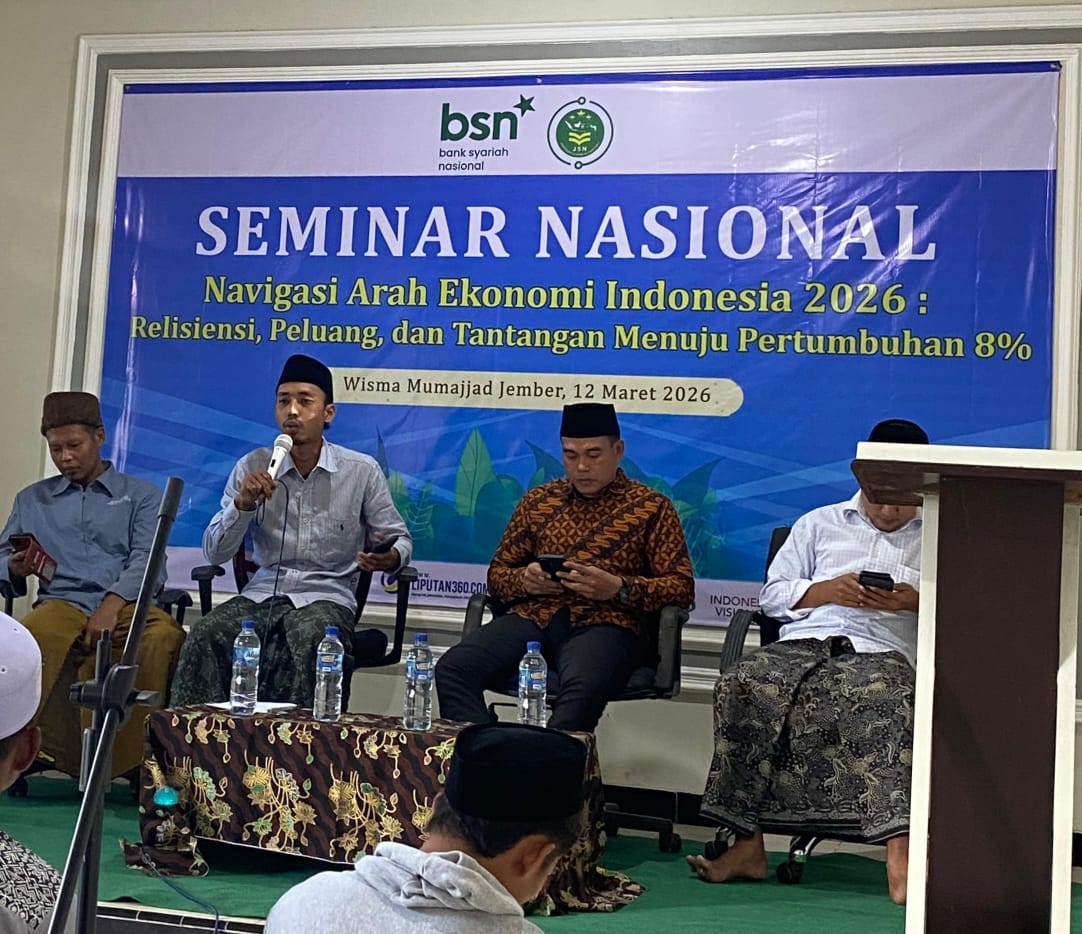
Jember – UMKM business operator Robby Hablil Huda has highlighted the vital role of the private sector as a driver of national economic growth. According to him, economic growth cannot be separated from investment activities, production, and innovation undertaken by business actors. For this reason, he has called for the creation of a more conducive business climate through regulatory simplification, ease of licensing, and broader access to financing for business operators.
He also emphasised the importance of strengthening the UMKM sector, which has traditionally been the backbone of Indonesia’s economy. With its large scale, the UMKM sector has significant potential to increase labour absorption while expanding the national economic base. Additionally, the digital economy sector, creative industries, and technology-based industrial development are viewed as major opportunities that can accelerate Indonesia’s economic growth.
“Collaboration between government and the business world is essential. If regulations are supportive and the business ecosystem is healthier, then the private sector will be able to contribute more substantially to driving economic growth,” he said at a National Seminar titled “Navigating Indonesia’s Economic Direction 2026: Resilience, Opportunities, and Challenges Towards 8 Per Cent Growth” held by the Jaringan Santri Nusantara (JSN) in Jember on 12 March 2026.
Meanwhile, Ibnul Mu’ad, Head of Economics and Entrepreneurship at Jaringan Santri Nusantara, stressed the importance of young people’s role in building the nation’s economic strength. He believes that Indonesia needs increasingly more young entrepreneurs to strengthen the national economic structure. According to him, the presence of young entrepreneurs not only plays a role in creating innovation but also in creating employment opportunities and expanding new economic sectors based on creativity and technology.
He asserted that youth and entrepreneurship organisations have the responsibility to encourage the emergence of competitive entrepreneurial generations capable of facing global challenges.
“If Indonesia wants to achieve high economic growth, we must increase the number of entrepreneurs. Developed nations typically have a high percentage of entrepreneurs in their economic structure,” said Ibnul Mu’ad.
He added that Indonesia’s young generation has significant potential to become drivers of the future economy, particularly in the digital transformation era that opens various new business opportunities. Technological development is viewed as having created wider economic space for young people to innovate and create adaptive creative business models responsive to changing times. According to him, Indonesia’s entrepreneurship ecosystem needs to be continuously strengthened through support for entrepreneurship education, access to capital, and ongoing development for young business operators.
“Young people must be willing to take on the role of business operators. With creativity, innovation, and the utilisation of digital technology, they have significant opportunities to create new businesses capable of competing at both national and global levels,” he added.
On another note, economist Ach. Barocky Zaimina from Universitas Islam Negeri Kiai Haji Achmad Siddiq Jember, emphasised the importance of strengthening national economic resilience amid increasingly complex global uncertainty. He explained that the global economy is currently still shadowed by various challenges, ranging from geopolitical conflicts, energy and food price fluctuations, to changes in global supply chains. According to him, Indonesia possesses a relatively strong economic foundation, supported by a large domestic market, natural resource wealth, and a demographic bonus that can be an important asset for economic growth. However, to achieve the economic growth target of 8 per cent, strategic and measured steps are needed, such as improving productivity in the industrial sector, strengthening downstream development of natural resources, and accelerating digital transformation.
“Indonesia has significant opportunities to grow higher, but this must be accompanied by consistent policy, strengthened investment, and improved human resource quality,” said Ach. Barocky Zaimina.
He also emphasised that political stability and regulatory certainty are important factors that will determine the level of investor confidence in Indonesia’s economy.
“Maintained political stability and clear, unchanging regulations will send positive signals to investors. When legal certainty and economic policy are guaranteed, investment flows will more easily enter and contribute directly to national economic growth,” he concluded.