
UMI's Mapala Joins Nationwide Humanitarian Programme in South Tapanuli
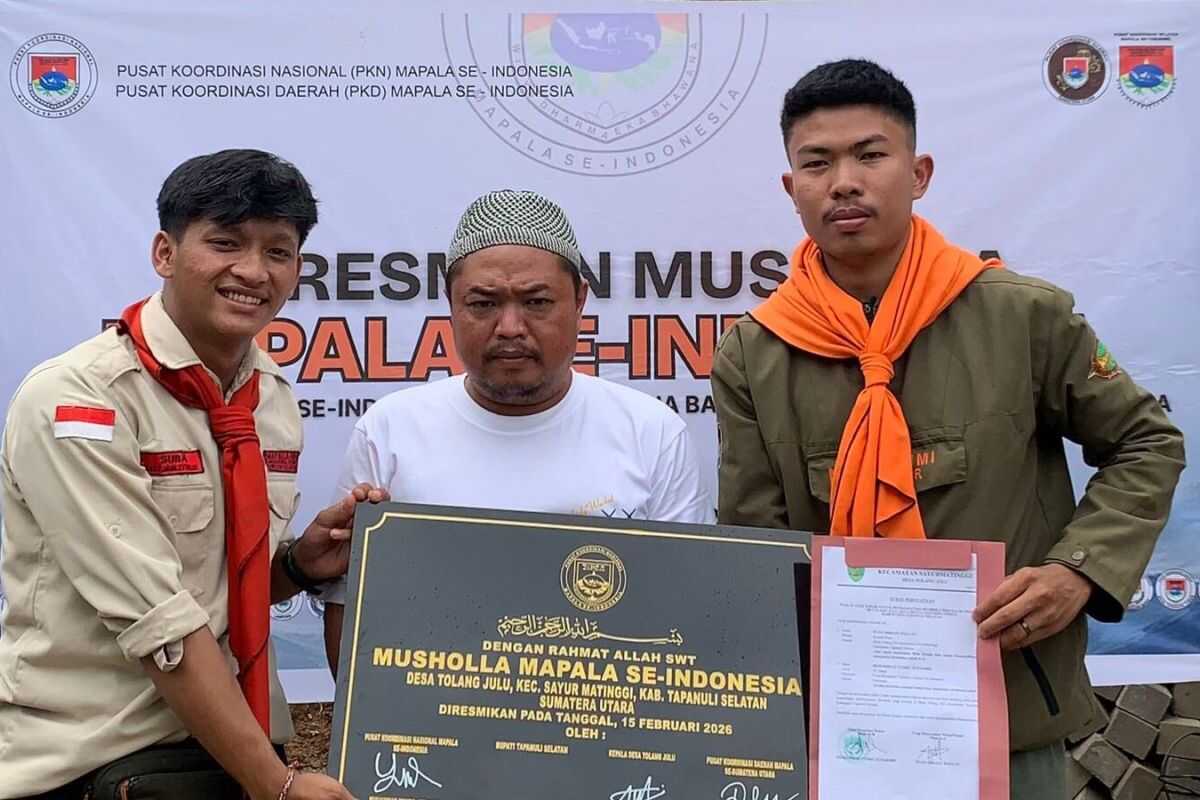
Makassar (ANTARA) — The Student Nature Lovers’ Organisation (Mapala) of Universitas Muslim Indonesia (UMI), together with Mapala chapters from across the country, carried out a post-disaster humanitarian programme in South Tapanuli, North Sumatra.
The nationwide Mapala network implemented three humanitarian initiatives: the construction of a prayer hall (mushala), trauma healing for children and disaster-affected communities, and a survey of disaster-hit areas followed by a dialogue with local government in Tolang Julu Village, South Tapanuli Regency.
Muhammad Yusril Sudarmin, the national coordinator of Mapala’s PKN programme, expressed his appreciation in Makassar on Friday for the direct involvement of UMI’s Mapala, which he said demonstrated its commitment to humanitarian missions.
“Mapala is not merely present as a nature-lovers’ organisation but also as a frontline force in disaster response, social recovery, and development built on cross-regional solidarity,” he said.
He explained that Mapala delegates came from Makassar (South Sulawesi), Greater Jakarta, Banten, West Java, Aceh, North Sumatra (Medan and Padangsidimpuan), as well as various regional Mapala chapters that contributed to and participated in the humanitarian action.
The prayer hall construction programme in particular, he said, served as a symbol of the spiritual and social revival of communities following the floods and landslides that struck the area.
As a demonstration of accountability and sustainability, a key handover ceremony was held for the prayer hall’s management committee and the South Tapanuli regional Mapala chapter, entrusting them with the facility’s management and community use.
In addition to the prayer hall construction, Mapala chapters nationwide also conducted trauma healing activities for children and affected communities. These included competitions in the call to prayer, poetry, calligraphy, and Quran memorisation, as well as educational games, motivational sessions, and psychosocial support to help restore mental wellbeing after the disaster.
Children were visibly enthusiastic in participating in the activities, demonstrating that the presence of volunteers brought not only material aid but also hope and renewed spirit.
The third programme was a survey of disaster-affected locations as part of efforts to assess ground conditions and strengthen ecological data. The survey findings were subsequently discussed in a dialogue forum with local government as an effort to promote synergy in future disaster management and mitigation.
The discussion served as a collaborative space between Mapala, the government, and communities to reinforce their shared commitment to environmental stewardship and to improve governance of disaster-prone areas.