
ULM and ISAT University of the Philippines Collaborate to Preserve Mangrove Ecosystem
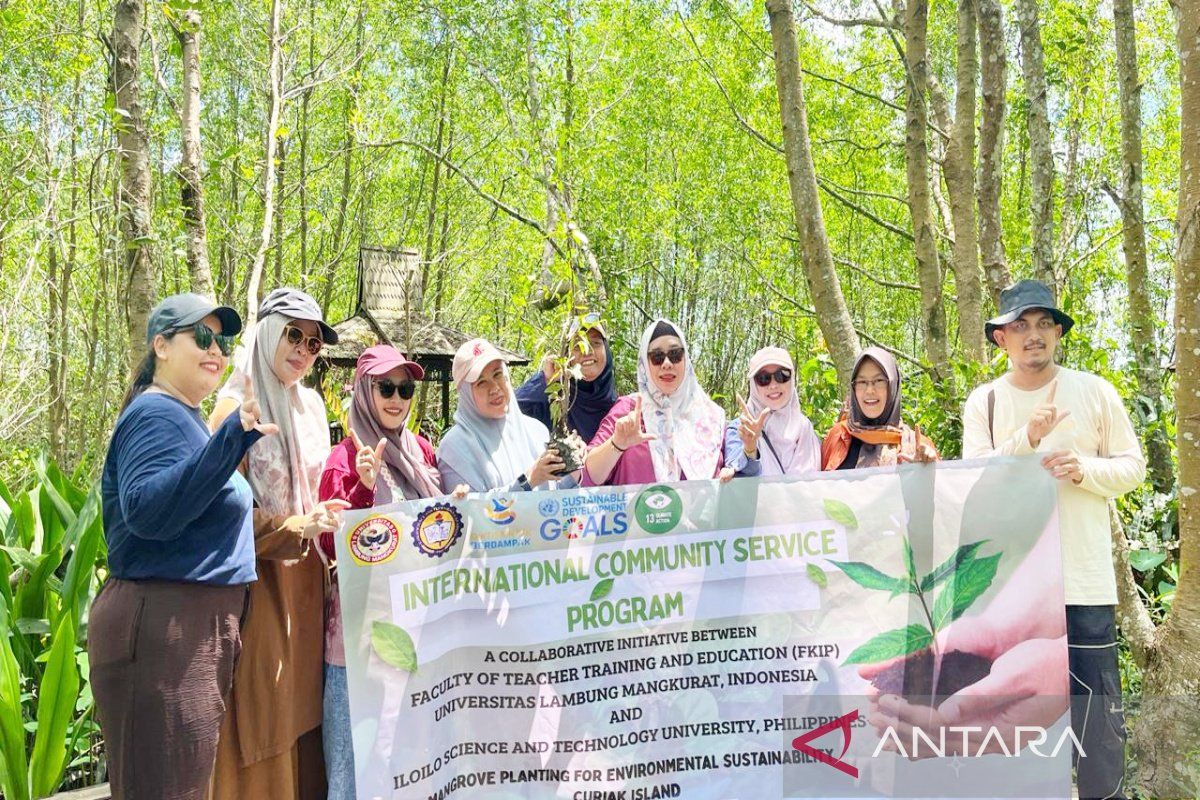
Banjarmasin - Universitas Lambung Mangkurat (ULM) and Iloilo Science and Technology (ISAT) University of the Philippines are collaborating to preserve the mangrove ecosystem by planting rambai mangrove seedlings in the proboscis monkey conservation area and wetland ecosystem on Curiak Island.
“This collaboration reflects our shared commitment to addressing global environmental challenges, particularly in preserving the mangrove ecosystem, which is crucial for the sustainability of coastal areas,” said Raisa Fadila, Chair of the Merdeka Belajar Kampus Merdeka Terpadu (MBKT) Team from ULM’s Faculty of Teacher Training and Education (FKIP), in Banjarmasin on Monday.
The visit by Filipino students was conducted as part of the International Community Service (PKM Internasional) alongside ULM FKIP students.
Under the theme “Mangrove Planting for Environmental Sustainability”, the activity serves as a tangible form of international community service focused on preserving the ecosystem in the coastal area of Curiak Island in Barito Kuala Regency, South Kalimantan.
Head of ULM’s Academic Support Unit (UPA) for Languages, Noor Eka Chandra, added that the activity not only focuses on environmental action but also strengthens cross-cultural learning.
“Besides ecosystem restoration, this activity provides a learning space for international students to understand the local language and context, particularly related to wetland ecosystems,” she explained.
Dr Amalia Rezeki, Head of ULM’s Proboscis Monkey Conservation Centre and founder of the Indonesian Proboscis Monkey Friends Foundation (SBI), explained to the Filipino students about the proboscis monkey habitat, mangrove planting techniques, and the importance of post-planting maintenance.
She revealed that Curiak Island has high biodiversity but faces serious challenges due to abrasion and human activities.
Through planting mangrove seedlings, the participants contribute to strengthening the island’s natural defences, absorbing carbon, and preserving habitats for flora and fauna.
The participants then collectively planted mangrove seedlings in the coastal areas affected by abrasion and environmental degradation.
Following the planting, the activity continued with observations of the proboscis monkey habitat, enriching the participants’ experience in understanding ecosystem-based conservation.