
UKMPPD: Guardian of Quality or Barrier to Medical Qualifications?
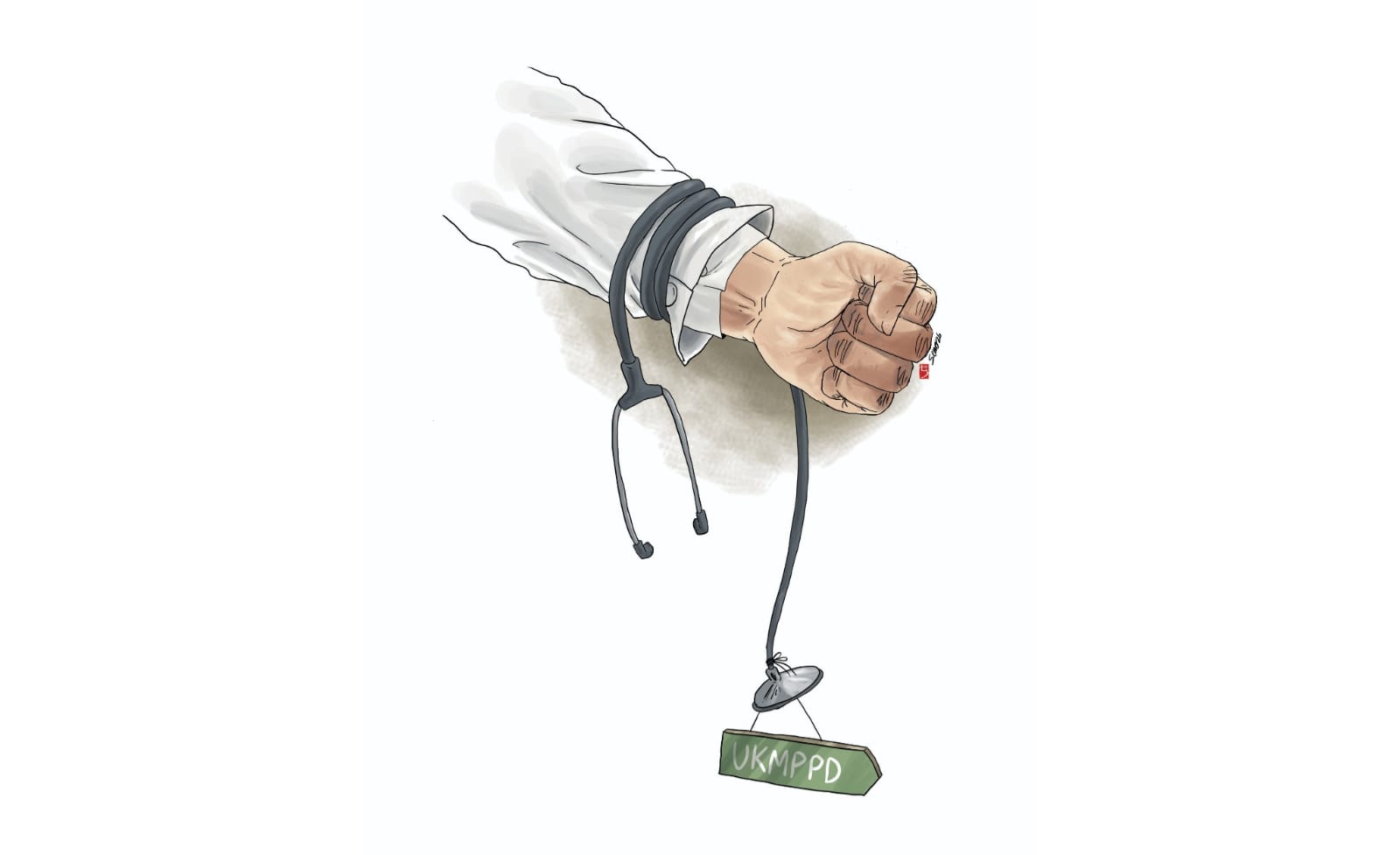
In Indonesia, medical students must pass the medical competency examination for professional programme students (UKMPPD) before they can enter and practise as medical professionals. This examination is administered nationally with the stated aim of ensuring that students entering the healthcare system possess uniform minimum competencies. Students who fail this examination cannot obtain their medical degree and are prohibited from practising medicine.
Whilst this principle is ostensibly reasonable—the medical profession directly affects human safety and the state has a legitimate interest in ensuring practising doctors possess adequate competence—in practice the UKMPPD has created serious academic, institutional, and humanitarian problems. Currently, approximately 2,300 medical students in Indonesia remain unable to pass the examination, despite having completed all stages of their professional medical education (clinical apprenticeship) at university. They have undergone five to six years of education, completed all clinical rotations at teaching hospitals, and passed various internal faculty examinations. From an academic standpoint, they have fulfilled all curriculum requirements and completed their studies, yet they cannot obtain their degrees or progress to the next stage of their careers solely because they have not passed the UKMPPD.
The situation has become more serious with reports that students failing the UKMPPD within five years of completing their clinical training face expulsion. If implemented, medical students who have invested years in their education could lose all their academic achievements due to failure in a single national examination. This has provoked widespread anxiety amongst medical students, leading to several demonstrations and protests.
Behind these statistics lie personal accounts of mental anguish, despair, and uncertain futures. Some students who have failed the UKMPPD have experienced severe depression and contemplated suicide. These students have sacrificed enormous amounts of time, effort, and resources—medical education in Indonesia is expensive, with tuition at many faculties reaching hundreds of millions of rupiah—only to be thwarted by the UKMPPD. They have endured demanding clinical training with long working hours, night shifts, exposure to patients in various conditions, and considerable academic pressure. Yet their years of effort can ultimately be halted by a single examination that lies outside the formal academic curriculum.
The fundamental issue with the UKMPPD system is not the existence of a competency examination itself—nearly all countries maintain similar mechanisms to ensure medical professional standards. Rather, the problem lies in the examination’s position within the education system. In Indonesia, passing the UKMPPD is not merely a requirement for practising medicine; it is a prerequisite for obtaining the medical degree itself. Students who have completed all university education cannot obtain their degree if they fail this examination.
This presents a serious academic problem. In higher education systems, the power to award academic degrees rests with universities. Degrees are awarded as recognition of academic achievement after students complete the institution’s curriculum. When a student has completed all required courses, passed faculty examinations, completed all clinical rotations, and is declared to have passed by the university, they have academically completed their studies and are entitled to their degree. This is an academic right that must be conferred at that stage. Using an additional national examination to determine whether the degree can be awarded constitutes an erosion and violation of university academic authority.
More problematically, the UKMPPD is not administered by a formal academic institution such as a university or institute. The examination is managed by an ad hoc national committee—not a higher education institution with formal academic authority. This ad hoc committee has no power to award or revoke degrees, yet it is making decisions about whether a student should be expelled. How can an ad hoc examination committee determine whether someone deserves an academic degree that should be awarded by the university?
Indonesian regulations governing degree conferral in higher education institutions are already sufficiently clear. The Ministry of Education, Culture and Research Regulation No 39 of 2025 stipulates that students can be declared to have passed by their higher education institution after fulfilling the entire curriculum load and achieving a minimum GPA of 3.00. Passing is synonymous with degree conferral, clearly indicating that academic graduation remains entirely within the authority of higher education institutions. This simultaneously suggests that medical students who have completed their professional education and satisfied all academic requirements are entitled to their medical degree, regardless of whether they pass, attempt, or even sit the UKMPPD.
The issue is fundamentally that the competency examination should be placed in a different domain—that of professional practice licences—rather than degree conferral.