
UI's FMIPA researches rubber plant genetics for sustainable raw material supply
The Faculty of Mathematics and Natural Sciences at Universitas Indonesia (FMIPA UI) is conducting research on rubber plants to ensure the sustainability of raw materials, thereby strengthening its position as a leading centre for scientific research.
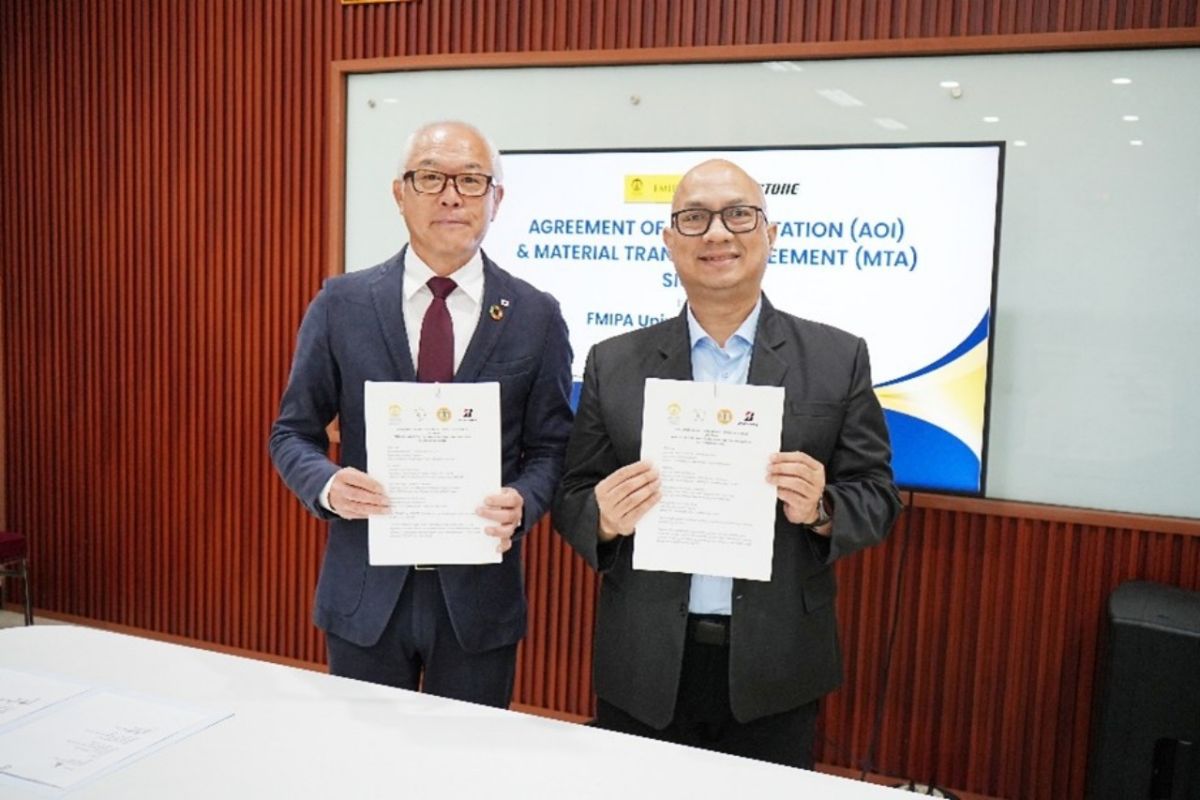
FMIPA has officially established an international research collaboration with Bridgestone Corporation, Public University Corporation Yokohama City University, and Public University Corporation Maebashi Institute of Technology.
The Dean of FMIPA UI, Tito Latif Indra, stated in Depok on Wednesday that this collaboration represents a significant milestone in enhancing FMIPA UI’s academic contributions to global research with tangible impacts.
“Through research in the field of sustainable natural resources, we aim to strengthen the global natural rubber production ecosystem and deliver significant innovations that support sustainable rubber plantations in Indonesia,” he said.
The agreement signing took place on Tuesday, 7 April 2026, at the FMIPA UI Administrative Centre in Depok.
This collaboration marks the start of a research project titled “Research on Elite Tree of Para Rubber Tree Hevea brasiliensis”, which will apply a marker-assisted selection approach to identify specific sequences in elite rubber trees with high and stable productivity.
This initiative is expected to provide concrete contributions to the national plantation sector while addressing global challenges related to the sustainability of the rubber industry supply chain.
FMIPA UI serves as an academic partner offering science-based solutions, strengthening research capacity, and affirming Indonesia’s contributions to world-class research.
The Biology 602 Laboratory at FMIPA UI, led by Dr. Retno Lestari, is responsible for extracting high-quality genetic material (RNA and DNA) from elite rubber trees.
The high-precision genetic data generated will be used to understand biological functions that influence plant productivity and open opportunities for biotechnological innovations in sustainable agriculture.
Meanwhile, Masashi Otsuki, Executive Director of the Institute of Advanced Technology at Bridgestone Corporation, affirmed his company’s commitment to promoting sustainable natural rubber use in line with the Bridgestone E8 Commitment, creating value for global rubber industry stakeholders, and preserving the environment for future generations.
Yukihisa Shimada, Director of the Kihara Institute for Biological Research at Yokohama City University, expressed support for building high-precision research infrastructure and genomic analysis.
Kensuke Nakamura, President of Maebashi Institute of Technology, added his institution’s commitment to leading bioinformatics analysis and international collaborative regional research.
Through this step, FMIPA UI further affirms its role as an innovative, collaborative academic institution that makes real contributions to knowledge-based sustainable development.