
UIN Rector: Discourse on Closing Programmes Needs to be Addressed Constructively
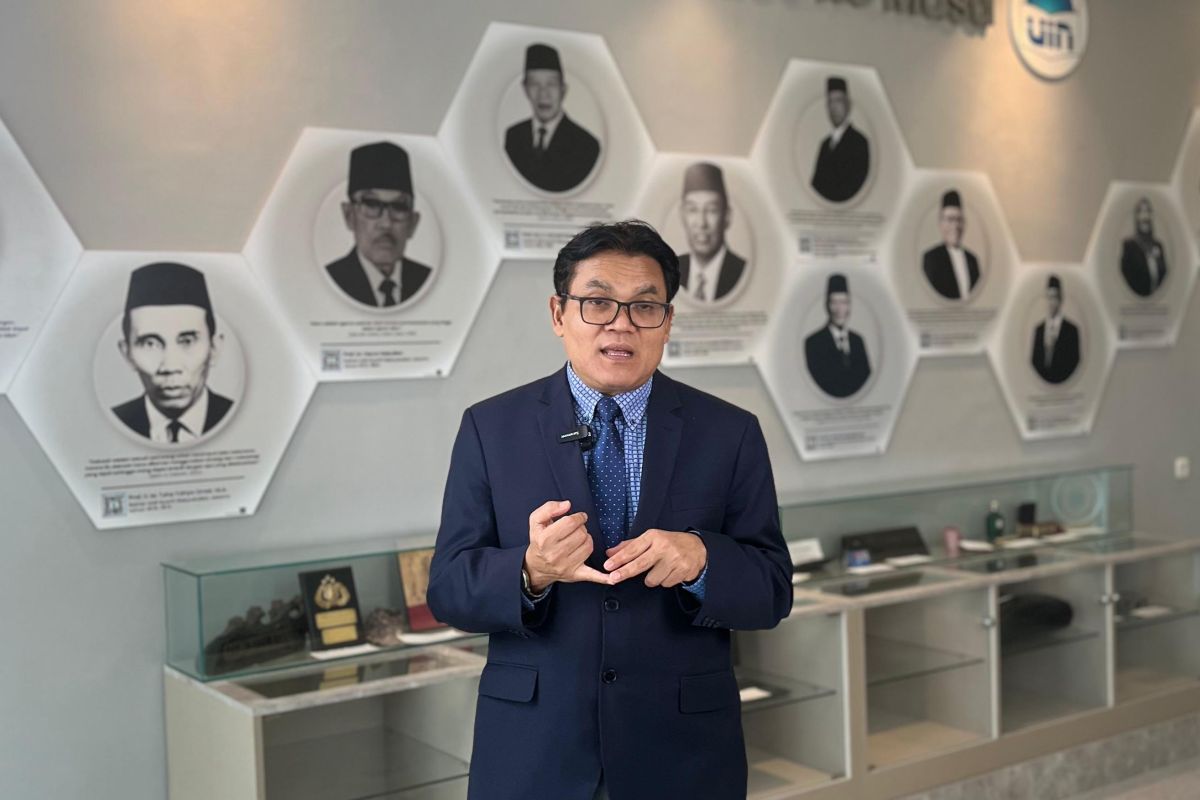
Jakarta (ANTARA) - The Rector of UIN Syarif Hidayatullah Jakarta, Asep Saepudin Jahar, stated that the discourse from the Ministry of Education, Science, and Technology regarding the regulation and closure of study programmes deemed irrelevant to industry needs must be addressed constructively, critically, and in a balanced manner.
“As an Islamic-based higher education institution, UIN Jakarta has a strategic mandate that is not only oriented towards meeting workforce needs but also towards the development of knowledge, character formation, and contributions to civilisation building,” Asep said in his statement in Jakarta on Thursday.
According to Asep, the relevance of a study programme is not solely measured by its connection to industry but also by its role in addressing society’s social, cultural, and religious needs.
In line with the spirit of quality improvement, he said, UIN Jakarta is committed to conducting a comprehensive evaluation of all study programmes through strengthening tracer studies, updating competency-based curricula for the future, and enhancing collaboration with various sectors, including industry, government, and civil society.
“This step is aimed at ensuring that UIN Jakarta graduates have high competitiveness, are adaptive to changes, and remain rooted in Islamic and national values,” he stated.
“The government’s task must be to encourage the formation of an ecosystem between higher education and industry. The government, assisted by universities, needs to formulate policies that encourage industry not only to focus on producing easily sellable goods in the short term,” he said.
Such policies also need to be integrated with improvements in education quality in Indonesia, enabling the production of superior human resources that are adaptive to global developments.
In this way, he said, synergy between industry, innovation, and education can become a strong foundation in enhancing Indonesia’s competitiveness at the international level.
“In this context, UIN Jakarta encourages the development of an integrated knowledge model that connects Islamic sciences with science, technology, and future industry needs, including in the fields of sharia economics, halal industry, educational technology, and digitalisation of Islamic studies,” he said.
The existence of study programmes in Islamic studies and humanities is an important foundation in maintaining a balance between technological advancement and humanitarian values.
Previously, the Minister of Higher Education, Science, and Technology (Mendiktisaintek), Brian Yuliarto, emphasised that university study programmes would be developed according to needs and relevance, not closed.
He expressed this in response to the issue that the government would close irrelevant study programmes, some time ago.
Minister Brian gave an example in the field of electrical engineering, where the industry currently requires integration of internet-based technology or the Internet of Things (IoT).