
UIN Jakarta Rector: Islamic Philanthropy Key to Reducing Social Inequality
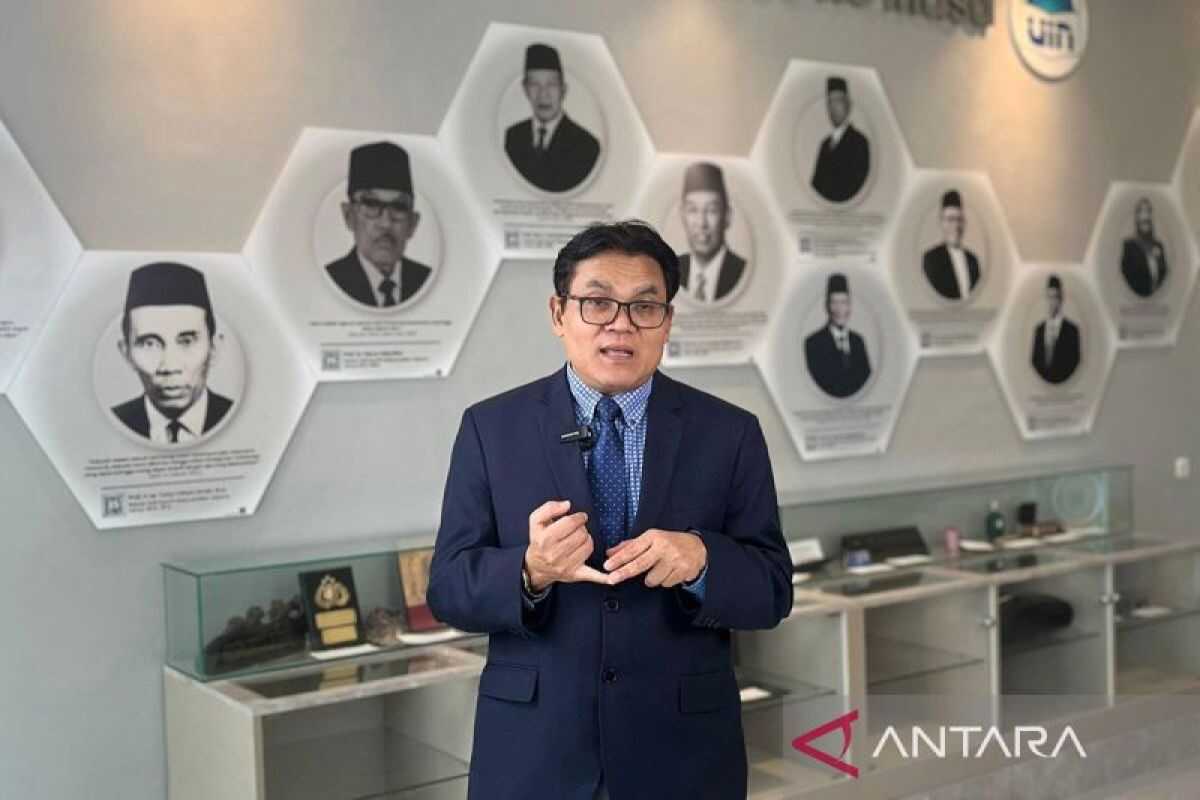
Jakarta – The rector of the State Islamic University (UIN) Syarif Hidayatullah Jakarta, Asep Saepudin Jahar, has emphasised that Islamic philanthropy such as zakat, waqf, infaq, and sadaqah are key instruments in efforts to reduce social inequality.
“Zakat is an obligation imposed upon those with wealth to distribute a specific percentage of their assets as a mechanism for social justice, ensuring that wealth does not circulate only among the rich,” Asep stated in Jakarta on Monday.
Asep cited examples of philanthropic practices in developed countries, such as the United States and Middle Eastern nations, which demonstrate that voluntary donations such as sadaqah and infaq have significant impacts on social development and education.
He argued this serves as an important lesson for the Muslim community in Indonesia to strengthen a culture of philanthropy as part of social responsibility.
“In many countries, educational and social institutions develop rapidly because they are supported by a culture of donation. In the Middle East, the value of sadaqah and infaq often even exceeds zakat,” he said.
He explained that the variety of Islamic philanthropic instruments proves that wealth distributed has its own foundation, function, and scope.
A proper understanding of these various philanthropic instruments is considered crucial to strengthening social justice and addressing increasingly complex economic inequality.
He gave the example of zakat and sadaqah. According to Asep, zakat is an individual religious obligation (fardhu ’ain) with clear stipulations in terms of minimum threshold, annual cycle, and the rate that must be distributed by a Muslim who meets the requirements.
Asep explained that the principle of zakat aligns with the teachings of the Quran, particularly Surah Al-Hasyr verse 7, which emphasises the importance of wealth distribution so that it is not concentrated in particular groups alone.
“Zakat serves to purify wealth and the soul of its owner from stinginess and greed, whilst also functioning as a corrective mechanism to ensure wealth does not concentrate in the hands of a few,” he said.
Nevertheless, Asep emphasised that zakat is fundamentally a minimum threshold of social concern for a Muslim, not the pinnacle of social contribution.
“Zakat is a baseline or moral foundation. Once a person has fulfilled zakat, they have only met their basic obligation, not necessarily achieved an optimal level of generosity,” he said.
In contrast, sadaqah has a broader dimension because it is not limited by any specific percentage and depends entirely on individual generosity.
“Sadaqah is rooted in humanitarian values, generosity, and social solidarity. A person can even give the majority of their wealth for the common good,” Asep said.
Sadaqah, he noted, plays a strategic role in building social welfare and strengthening community solidarity, particularly amid challenges of poverty and economic inequality.
Regarding the controversy surrounding a statement by Religious Affairs Minister Nasaruddin Umar that was misunderstood as a call to abandon zakat, Asep said the substance of that statement needs to be understood holistically.
“That statement was not intended to abolish the obligation of zakat, but rather to shift orientation so that the community does not stop at the minimum obligation. The much broader potential of sadaqah must be optimised,” he said.