
UIN Ar-Raniry Banda Aceh Develops Plant-Based Battery Materials
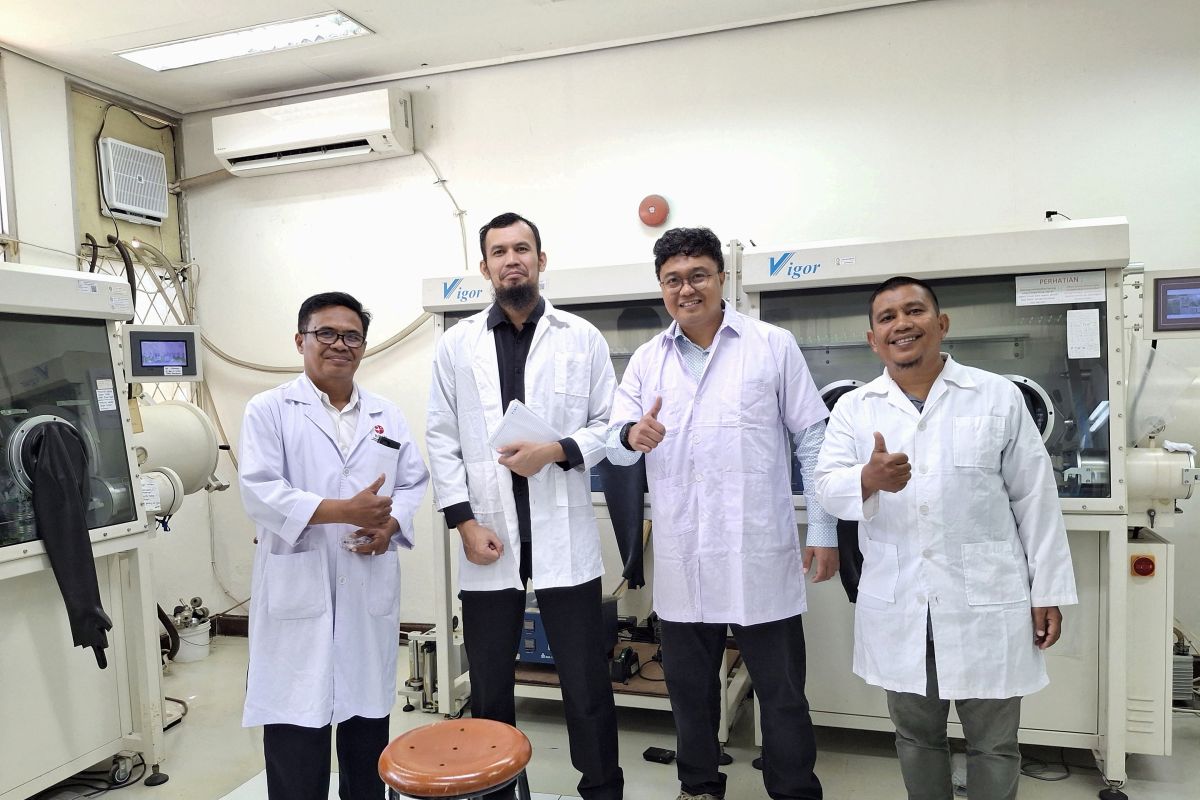
Banda Aceh — Researchers at Universitas Islam Negeri (UIN) Ar-Raniry in Banda Aceh are developing environmentally friendly plant-based battery materials with the potential to enhance lithium-ion battery performance.
“This innovation supports the development of future energy technology whilst strengthening national energy independence efforts,” said Dr Abd Mujahid Hamdan, research team leader from the Faculty of Science and Technology at UIN Ar-Raniry in Banda Aceh on Thursday.
The research involves Dr Abd Mujahid Hamdan, Muslem, Syafrina Sari Lubis, and Sri Nengsih from UIN Ar-Raniry, as well as Akhyar Ibrahim from Universitas Syiah Kuala (USK) in Banda Aceh.
The research also includes collaboration with several national research institutions, including the Bandung Institute of Technology, the National Research and Innovation Agency (BRIN), and research facilities at Surakarta State University through the Science and Technology Centre of Excellence.
Mujahid stated that the team is developing a nickel oxide (NiO) and graphite composite material synthesised through green synthesis methods. This approach utilises plant extracts as reduction agents and nanoparticle formation stabilisers, making it more environmentally friendly than conventional chemical synthesis using hazardous materials.
The composite material is used as the anode in lithium-ion batteries — the component responsible for storing lithium ions during the charging process.
“In conventional lithium-ion batteries, the anode typically uses graphite because it is stable and has good lithium ion storage capacity,” he explained.
Coulombic efficiency is an important indicator in battery technology, describing the amount of energy that can be reused following the charging process.
“Values approaching 100 per cent indicate that energy stored in the battery can be released again with very minimal loss,” he noted.
According to him, the green synthesis approach opens opportunities for developing more sustainable battery technology.
“The material we have developed demonstrates that high-capacity battery technology can be produced through more environmentally friendly approaches,” Dr Abd Mujahid concluded.