
UII Rector: Zakat Is Very Important and Must Remain Popular in Indonesia
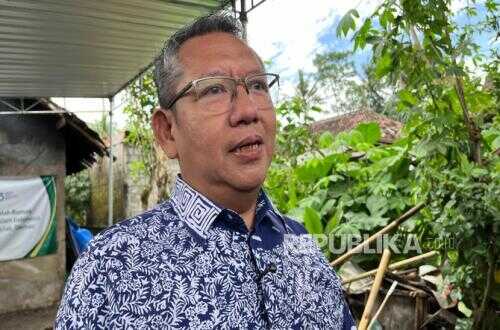
Rector Fathul Wahid of Universitas Islam Indonesia (UII) has asserted that zakat is highly important in the life of Muslims and must continue to be popularised in Indonesia. He made the remarks in response to public debate over zakat, including discussions about possibly using zakat funds for the Free Nutritious Meals (MBG) programme.
‘Zakat is extremely important. The Minister of Religion yesterday also corrected his remarks. The context was about comparing it with endowments (wakaf) and other things. But zakat remains obligatory. Very important,’ Fathul said after laying the first stone for a house rehabilitation program in Ngemplak, Sleman, on Thursday 5 March 2026.
Fathul said zakat should remain a primary concern for Muslims. Campaigns and education on zakat, he believes, must continue so that public awareness to fulfil it increases.
When asked whether zakat should remain popular, Fathul stressed this is important amid a national zakat potential that is still far larger than actual collection.
‘It must be popular in Indonesia. What we popularise does not necessarily mean everyone pays. Because the potential of zakat versus what is collected is not proportional. So we will continue to campaign for zakat,’ he said.
Fathul also responded to the widespread discussion about zakat funds with the MBG programme. He noted that when viewed against the recipients of zakat or the eight asnaf, the MBG programme does not fall into the category eligible to receive zakat funds.
Recipients of zakat are defined in eight categories or asnaf. The eight asnaf are: fakir (a person who has no wealth and no work to meet basic needs), miskin (a person who has work but whose income does not meet daily needs), amil (the zakat administrator), mu’allaf (new Muslims), riqab (enslaved people), gharimin (the indebted), fisabilillah (those who strive in the path of Allah), and ibnu sabil (a traveler).
‘The asnaf exist. It appears from the eight asnaf that MBG does not fall into,’ he said.
Earlier reports quoted the Minister of Religion, Nasaruddin Umar, apologising for remarks about zakat which caused misunderstanding among the public. He emphasised that zakat remains an individual obligation (fardhu ’ain) and a pillar of Islam that does not change in status.
‘I apologise for my statements that caused misunderstanding. I need to emphasise that zakat is a fardhu ‘ain and a pillar of Islam that we must fulfil,’ Nasaruddin said in Jakarta on Saturday, 28 February 2026, as reported.
The Minister explained that his remarks during the Sarasehan 99 Islamic Economists Forum were intended as a call to reorient the management of the umat’s funds. He urged that strengthening the Islamic economy should not stop at zakat alone, but also optimise other Islamic philanthropy instruments such as wakaf, infak, and sedekah.
According to Nasaruddin, several countries have shown progress through professional and integrated wakaf management, such as in Qatar, Kuwait, and the United Arab Emirates. Wakaf management in those countries has even become a motor for driving social and economic development of the Muslim community.
The minister hopes the clarification will correct circulating information and strengthen public understanding of the importance of optimising all instruments of religious social funds. He also urged the public to continue paying zakat while supporting the development of wakaf and Islamic philanthropy more productively and sustainably.