
UI Research: Cyberspace becomes arena for global geopolitical rivalry
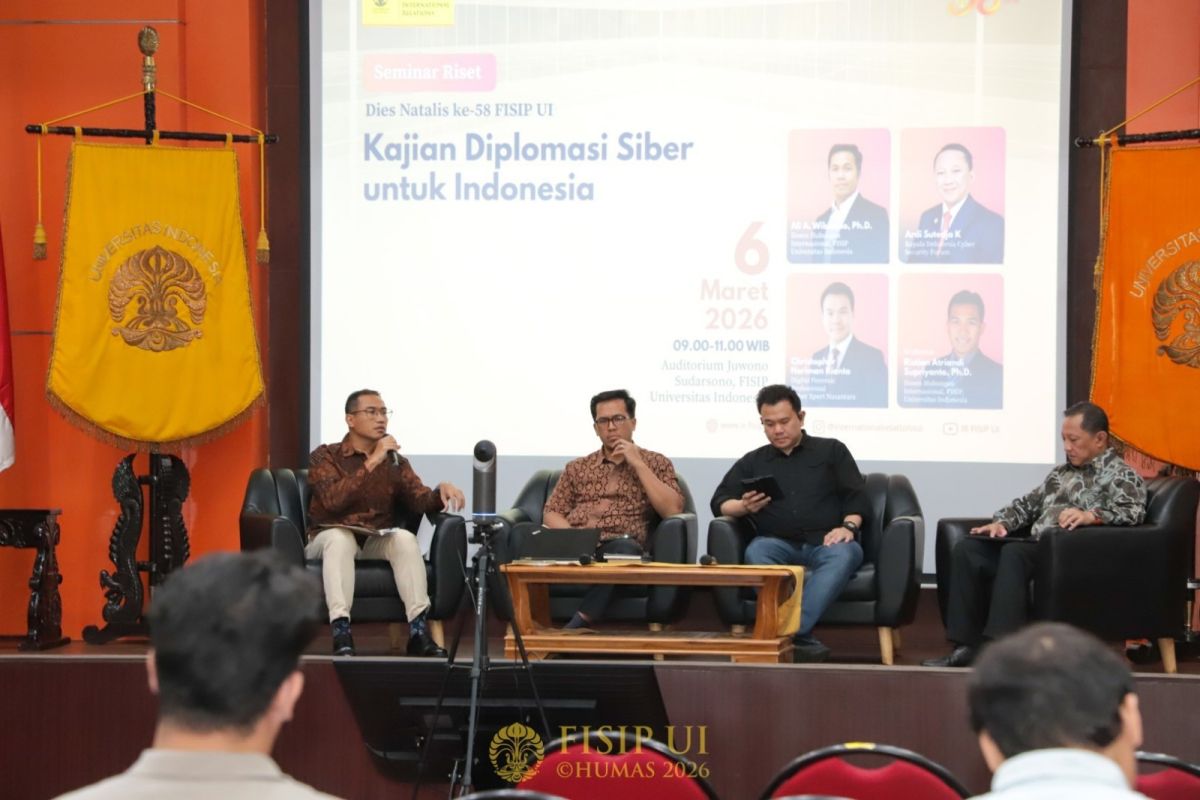
Depok — Research conducted by Ali Abdullah Wibisono, a lecturer in international relations at the Faculty of Social and Political Sciences at the University of Indonesia, indicates that cyberspace is no longer merely a technological arena but has become a strategic battlefield in global geopolitical rivalry.
The research, conducted in collaboration with the Australian Strategic Policy Institute (ASPI), demonstrates that state dependence on digital infrastructure—from banking systems to defence systems—means that cyberattacks now carry significant strategic implications for national security.
“There has been a shift in interstate conflict from the physical domain to the digital domain. Digital space has now become the fifth domain in modern warfare, requiring special statecraft and diplomatic strategies,” Ali Abdullah stated at the University of Indonesia’s Depok campus on Friday.
He also highlighted several domestic challenges that Indonesia faces in developing cyber diplomacy. Beyond limited legal frameworks and digital infrastructure gaps, Indonesia finds itself amidst global geopolitical pressure, particularly the rivalry between the United States and China, which influences technology competition in the Indo-Pacific region.
“Indonesia faces a dilemma in its free and active foreign policy: how to balance economic openness with digital sovereignty,” he explained.
Meanwhile, Ardi Sutedja, chairman of the Indonesia Cyber Security Forum (ISCF), presented data demonstrating the high intensity of cyber threats in Indonesia. In the past six months alone, approximately 3.64 billion cyberattacks were recorded, averaging more than 230 attacks per second.
“This figure is a serious alarm about the gravity of the national cybersecurity issue,” Ardi stated.
He added that Indonesia faces several strategic challenges, ranging from data diplomacy with other nations, regulating cross-border data flows, to safeguarding national digital sovereignty.
To address these challenges, the government is considered to need stronger regulations, encouragement for local technology development, and guarantees for the protection of citizens’ digital rights.
Beyond security concerns, cyber diplomacy is also seen as having significant potential in supporting the growth of Indonesia’s digital economy. Therefore, Ardi emphasised the importance of a modern diplomatic approach involving cross-sectoral and multi-stakeholder collaboration, including academia, technology industry, and non-state actors.