
UI Professor: Energy Independence Achieved by Developing Renewable Materials
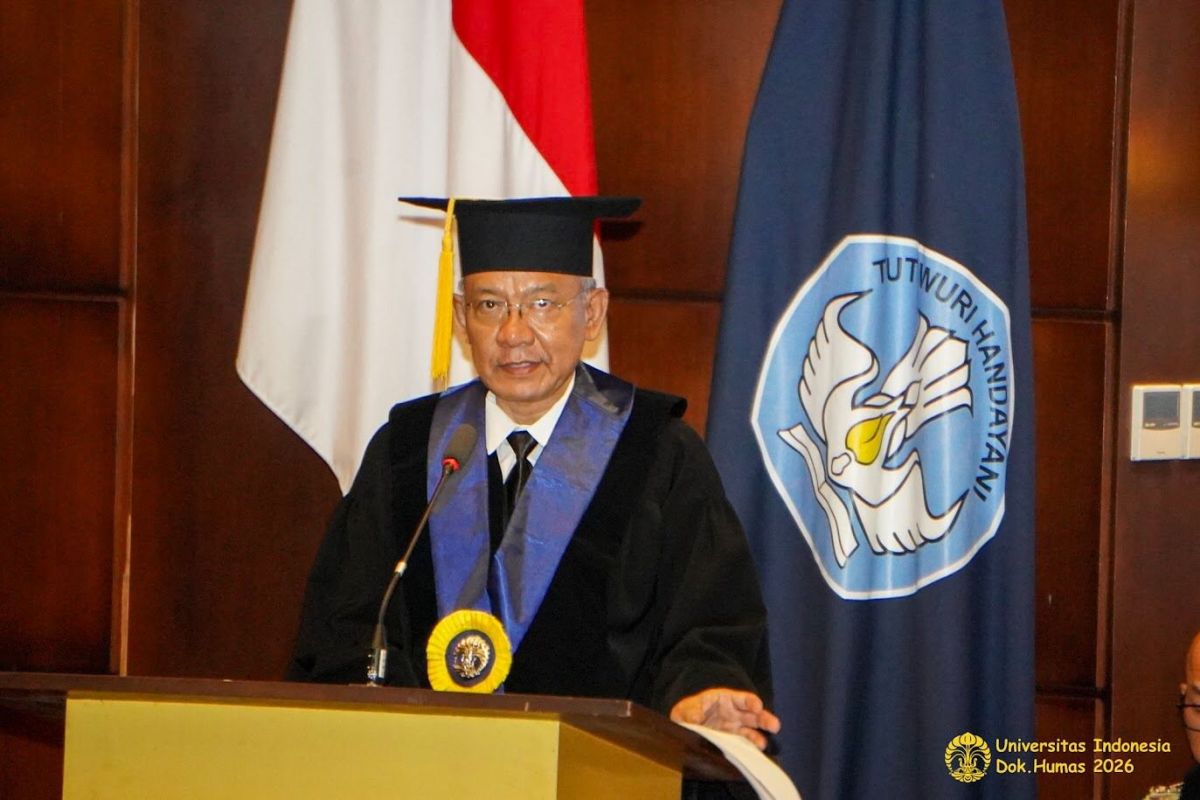
Energy independence for the nation can only be achieved if we are able to develop battery technology using renewable raw materials that are abundant in Indonesia, making its applications sustainable. Depok (ANTARA) - Prof. Bambang Priyono, a tenured professor in the Department of Metallurgical and Materials Engineering, Faculty of Engineering at the University of Indonesia (FTUI), in the field of New and Renewable Energy Materials, stated that energy independence is achieved by developing renewable materials. “Energy independence for the nation can only be achieved if we are able to develop battery technology using renewable raw materials that are abundant in Indonesia, so that its applications are sustainable and environmentally friendly,” said Prof. Bambang at the UI Campus in Depok, West Java, on Monday. Prof. Bambang highlighted the urgency of developing energy storage technology as a solution to the energy crisis, air pollution, and sustainability challenges. He emphasised that the utilisation of renewable energy sources such as solar and wind requires efficient storage systems, where lithium-ion batteries play a crucial role as battery energy storage (BES) technology. As part of his research, Prof. Bambang focused on developing secondary lithium-ion batteries, particularly anode and cathode materials, and efforts to improve performance by utilising renewable raw materials in the form of biomass. This focus reflects a research direction consistent with Indonesia’s needs for clean energy. He is also working on flashJoule technology to produce multi-layer graphene from biomass quickly and in an environmentally friendly manner, which is expected to enhance battery electrode quality while opening up broader applications. “We have extraordinary potential in achieving national energy independence, so in the development of this flash-graphene research, collaboration between researchers and industry with expertise in utilising these advanced materials will increase and can realise impactful research outcomes for our nation,” he explained. In addition, Prof. Bambang has begun developing research on sodium-ion batteries, which have great prospects because their raw materials are very abundant in Indonesia. This step expands the scope of his research from lithium-ion to other more sustainable alternatives, while strengthening Indonesia’s position in the clean energy transition. It is this consistency and relevance of the research that led to his inauguration as a UI professor in the field of New and Renewable Energy Materials. Prof. Bambang also emphasised that Indonesia has extraordinary potential as a tropical archipelagic country with the longest coastline in the world. The potential for renewable energy from sunlight and wind is very large, but its intermittent nature demands reliable energy storage technology. Lithium-ion batteries with an average Coulombic Efficiency (CE) of 95 percent and a lifespan of more than eight years provide an increasingly economical solution. “With the right research, we can utilise local biomass as battery material, thus not only reducing dependence on imported mining materials but also creating added value for Indonesia’s natural resources,” he asserted.