
UI FISIP study: Free Nutritious Meal Programme boosts residents' income, but...
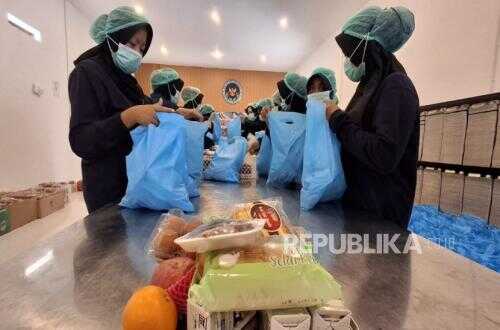
East Jakarta – A recent study by researchers from the Department of Social Welfare Science, Faculty of Social and Political Sciences, Universitas Indonesia, found that the Free Nutritious Meals Programme (MBG) is beginning to have an economic impact on communities around the feeding kitchen sites. In addition to creating new jobs, the programme also raises incomes for some workers and micro, small and medium enterprises (MSMEs) involved in its supply chain.
The study’s lead researcher, Prof. Fentiny Nugroho, explained that the research was conducted qualitatively through in-depth interviews, observation, and focus group discussions. The study was conducted in three areas: East Jakarta, Depok, and South Tangerang.
‘We used a qualitative approach because we wanted to obtain deep data. So it’s not a large representative survey, but to understand how this programme operates on the ground,’ Nugroho said when contacted by Republika on Thursday (5 March 2026).
The study involved 93 informants comprising MBG kitchen workers or the Nutrition Service Delivery Unit (SPPG), partner MSME suppliers, and beneficiary families.
One of the main findings is the rising income of volunteers who work at MBG kitchens. Many of them previously did not have stable jobs or only did casual work. After joining this programme, they gained more stable income.
‘SPPG volunteers can now earn around Rp110,000 to Rp125,000 per day. Previously most did not have stable employment,’ she said.
Income increases were also felt by the MSME operators supplying food ingredients. MSME distributors recorded income increases of around Rp1 million to Rp2 million per month.
Meanwhile, food producers could obtain even larger increases due to the stable demand from MBG kitchens.
In addition to increasing incomes, the programme is also seen to reduce the expenditures of beneficiary families. Children who receive nutritious meals at school lighten a portion of the family’s food needs.