
UI: Dengue mRNA vaccine development with Tsinghua yields multiplier effect
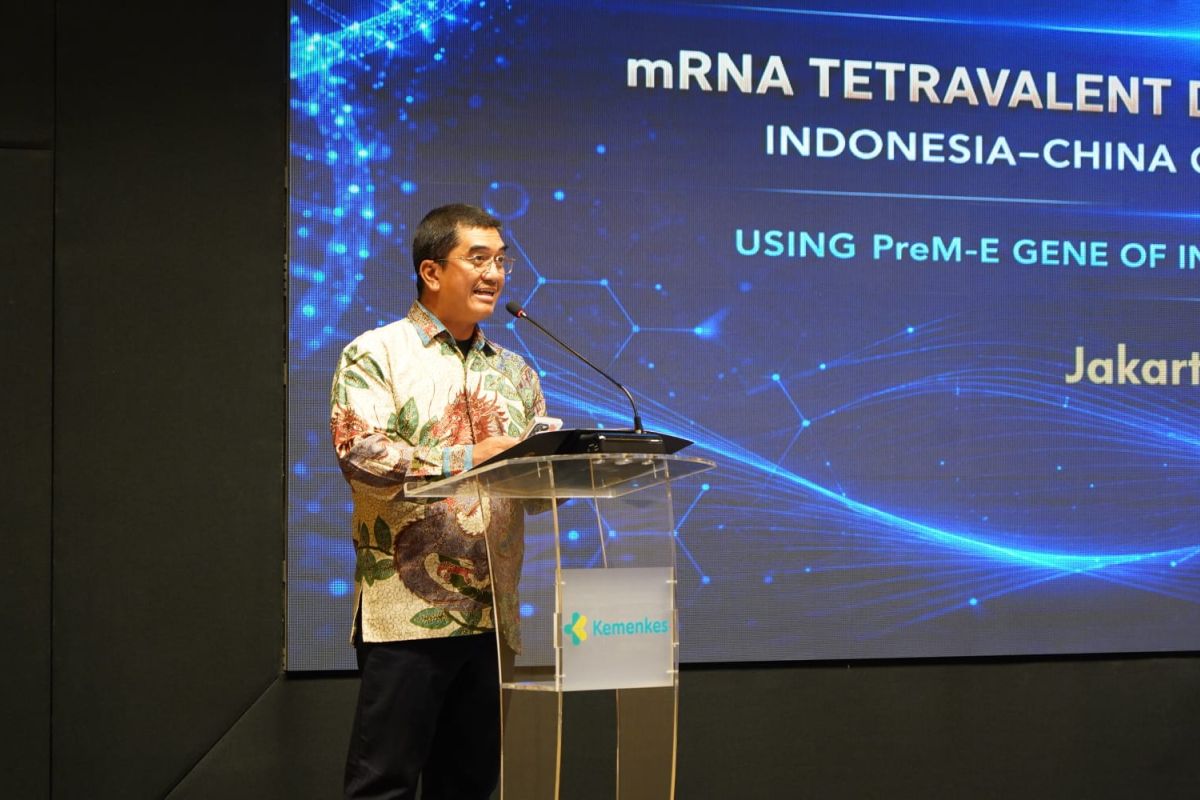
The Rector of Universitas Indonesia, Heri Hermansyah, stated that the collaboration with Tsinghua University in developing an mRNA-based dengue fever vaccine is capable of providing a multiplier effect, such as industrial downstreaming and the strengthening of the National Immunisation Programme.
During the launch of the mRNA-based dengue vaccine prototype in Jakarta on Wednesday, Heri noted that the collaboration serves as a form of high-level academic diplomacy. He expressed hope that this collaborative vaccine development could create a significant milestone in the national health system.
“We are not just initiating student exchanges. We are actively working together to create life-saving health technologies, with support from the Ministry of Health and the Indonesian Food and Drug Authority (BPOM),” he said.
According to Heri, the government has facilitated this cooperation effectively, ensuring that the phases from initial laboratory testing to clinical trials can proceed smoothly.
He also hopes this collaboration will mark the beginning of vaccine innovation, aligning with the vision of Minister of Health Budi Gunadi Sadplin, who has called for the development of 11 vaccines so that all vaccines used in the National Immunisation Programme can be produced domestically by Indonesia.
On the same occasion, the Vice President of Tsinghua University, Wu Huaqiang, stated that this collaboration is a tangible fruit of cooperation between China and Indonesia.
“Dengue fever has long plagued Southeast Asia. Traditional vaccine platforms have certain limitations, whereas mRNA technology offers new opportunities to develop safer vaccines that can be adapted by local systems,” he said.
With the support of the Beijing International Science and Technology Cooperation Base, Wu Huaqiang noted that Tsinghua University and UI possess a strong foundation for joint research to address this issue.
The collaboration, which was formalised on Wednesday, has three primary objectives: increasing mRNA vaccine research capacity and exploring opportunities for other vaccine collaborations; developing biotechnology talent through academic partnerships; and contributing to a replicable model for a collective response to regional infectious disease threats.