
UGM proposes renegotiation of Indonesia-US reciprocal trade agreement to preserve national sovereignty
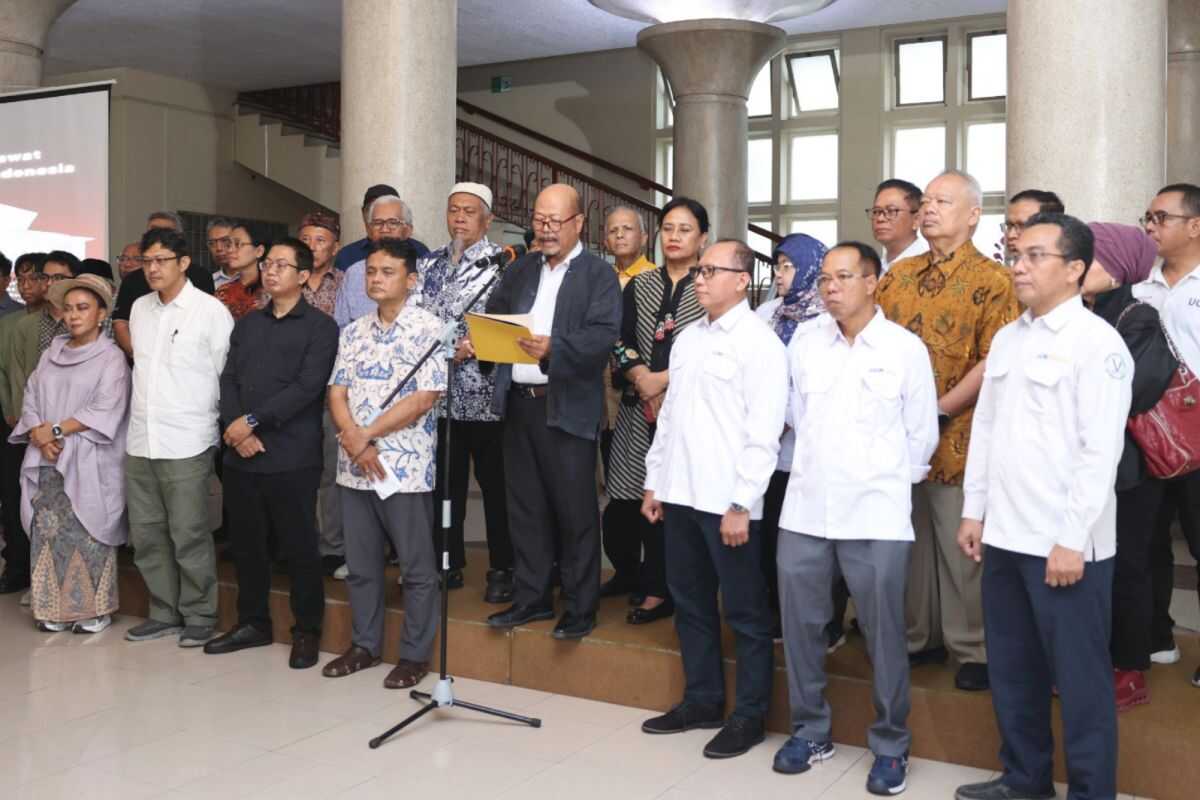
Yogyakarta, DIY — Universitas Gadjah Mada (UGM) has proposed renegotiation of the reciprocal trade agreement (ART) between Indonesia and the United States, citing the potential threat to national sovereignty and conflict with the constitution.
“If ratification of the ART agreement does not accommodate the objectives stipulated in legislation or the 1945 Constitution, the government should undertake renegotiation, delay, or cancel its implementation,” stated Professor Muhammad Baiquni, Chair of UGM’s Council of Senior Professors, whilst presenting the council’s position statement at UGM’s central building auditorium in Sleman, Yogyakarta on Monday.
The UGM Council of Senior Professors assessed that the ART ratification process potentially violates the constitution by failing to be preceded by consultation and parliamentary approval as stipulated in Article 11 of the 1945 Constitution and various laws governing international agreements.
Beyond procedural concerns, UGM identified the ART agreement’s content as asymmetrical and more advantageous to the United States. The council noted that the ART’s consequences—which require Indonesia to modify dozens of regulations ranging from laws to technical regulations and even formulate new regulations—risk imposing significant burdens on the government and society.
“The ART agreement is asymmetrical in nature, with the greatest benefits accruing to the United States, whilst Indonesia will bear most of the costs owing to numerous obligations burdening the government and people,” Baiquni stated.
UGM noted that tariff levels in the Indonesia-US ART agreement reach 19 per cent, higher than those of other countries without such ART agreements with the United States, which stand at 15 per cent.
The UGM Council of Senior Professors identified several clauses in the ART agreement as posing risks to Indonesia’s sovereignty in determining future national policies. These clauses include obligations to comply with policies not yet formulated, unilateral policy determination by the United States, and transmission of policies to third parties.
“Various clauses contained in the ART agreement risk Indonesia’s sovereignty as a nation that, since independence, has developed a free and active foreign policy,” Baiquni said.
In its position statement, the UGM Council of Senior Professors also rejected Indonesian foreign policy deemed to favour aggressors, as reflected in Indonesia’s participation in the Board of Peace (BoP) and signing of the ART agreement.
The UGM Council of Senior Professors called upon the Foreign Ministry to assist the government in correcting the ART agreement and prevent placing the President in a position potentially violating the constitution and legislation.
Based on this assessment, the UGM Council of Senior Professors urged the government to make decisions prioritising the nation’s long-term interests.
UGM stated its readiness to support efforts strengthening national sovereignty through multidisciplinary evidence-based research and encouraged dissemination of research findings to the public as a form of academic accountability.
“UGM academics are prepared to support any effort to strengthen and consolidate Indonesia’s sovereignty across various sectors and aspects of national life,” Baiquni concluded.