
UGM Expert Warns of Increased Risk of Forest and Land Fires During the 2026 Dry Season
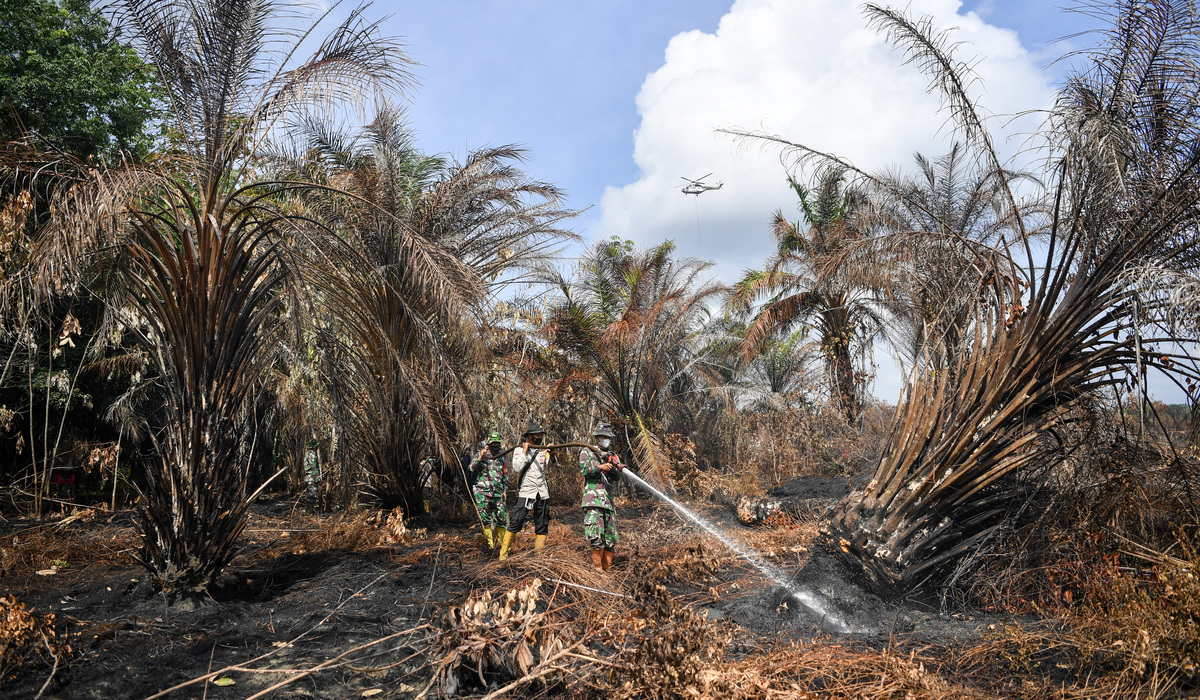
The Indonesian Agency for Meteorology, Climatology, and Geophysics (BMKG) predicts that much of Indonesia will experience an earlier and longer dry season this year than usual. This condition is said to increase the potential for forest and land fires (karhutla) this year.
Around 57.2 per cent of Indonesia’s territory will experience a longer dry season, while approximately 46.5 per cent of the territory will enter the dry season earlier or ahead of schedule.
Of that number, 16.3 per cent of the territory will begin entering the 2026 dry season in April. These areas include West Java, most of Central Java to East Java, West Nusa Tenggara (NTB), East Nusa Tenggara (NTT), Kalimantan, Sulawesi, and Sumatra.
A lecturer from the Faculty of Forestry at UGM, Fiqri Ardiansyah, stated that this longer dry season raises higher risks related to the threat of karhutla. Several areas affected by karhutla have already occurred in Riau, reaching 4,440.21 hectares and continuing to increase. Facing this projection of forest and land fire challenges, government and private sector decision-making policies are encouraged to be more adaptive with the involvement of all parties.
For this reason, he emphasised the need for budgets that prioritise the concept of sustainable emergency management. “Budgets should be able to adapt to the concept of emergency management from prevention, mitigation, preparedness, response, and recovery,” he explained in a press release from UGM’s Public Relations (31/3).
He highlighted the strategic role of peatland rewetting infrastructure compared to mere short-term solutions. To address karhutla, Weather Modification Operations (OMC), bore wells, and canal blocks are still viewed as instruments that can be carried out synergistically to keep ecosystems wet and minimise fires. “OMC, bore wells, and canal blocks are efforts for prevention and mitigation,” said Fiqri on Monday (30/3).
Based on several studies that have been conducted, said Fiqri, canal blocks are quite effective as a karhutla mitigation step. Not only in the short term but also in the long term. “Burnt peat is generally degraded peat, so the presence of canal blocks is expected to reduce water loss from the peat ecosystem, keeping the peat wet,” he stated.
In response to the government’s instructions regarding private sector involvement, Fiqri proposed a collaboration model that is not merely instructional during emergencies. He encouraged the formation of permanent cooperation agreements manifested through measurable and routine field activities.
“Permanent collaboration can be carried out through roll calls, patrols, joint monitoring with BPBD, Manggala Agni, and so on, conducted routinely, as well as MPA assistance,” he explained.
As a preventive step, Fiqri asserted that fundamental change must start from human behaviour at the grassroots level to prevent karhutla from occurring.
“Raising awareness to increase public understanding in using uncontrolled fire is important to do. This is because fires generally occur due to ignition sources from human activities,” Fiqri stressed.
As a concrete solution, Fiqri encouraged companies and communities to implement Zero-Burning Land Management (PLTB), especially in areas outside Java, to break the pattern of recurrent fire suppression. “Zero-Burning Land Management can be an alternative,” he concluded.