
UGM Expert Warns of Godzilla El Niño's Impact on Rice and Maize
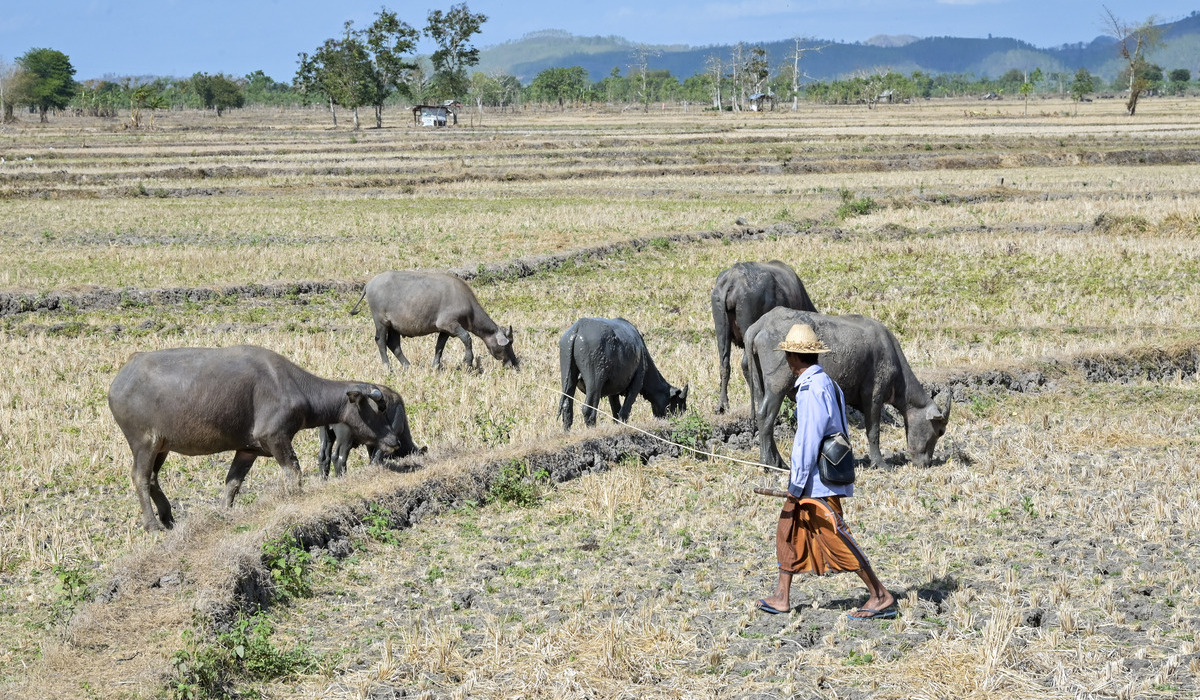
The re-emergence of the El Niño phenomenon, accompanied by rising sea surface temperatures in the Pacific Ocean, is predicted to disrupt global weather patterns in an extreme manner. This phenomenon, now termed ‘Godzilla El Niño’, describes a very strong climate anomaly intensity and has the potential to threaten food stability.
This phenomenon is expected to have significant impacts on tropical countries, including Indonesia, which heavily relies on seasonal stability. The agricultural sector is the most vulnerable due to its high dependence on water availability. Prolonged droughts risk reducing productivity while disrupting national food security.
Professor Bayu Dwi Apri Nugroho, a Professor in Agroklimatology at Gadjah Mada University (UGM), explained that El Niño is a natural climate cycle. However, global warming has made its patterns more dynamic, rapid, and difficult to predict.
“The term ‘Godzilla El Niño’ refers to an intensity far stronger than usual. This condition brings serious consequences for the agricultural sector. The impact will certainly be felt directly on the production side,” said Prof. Bayu on Friday (2/4).
According to Prof. Bayu, major food commodities like rice and maize are the most affected because they require large amounts of water during the growth phase. If water supply decreases drastically, plants cannot develop optimally and risk permanent damage.
“Rice and maize are very vulnerable. If water is insufficient, growth is disrupted, and it can even lead to crop failure,” he stated. This not only threatens food stocks but also hits farmers’ economies because production costs already incurred could be lost without yield.
A decline in water availability causes production quality to decrease and farmers’ incomes to plummet sharply due to the risk of post-planting crop failure.
To address this threat, Prof. Bayu emphasised the importance of integrated mitigation steps, including strengthening coordination between farmers and agricultural extension workers for access to real-time weather information and optimising pump irrigation programmes, drip irrigation, and the use of drought-resistant crop varieties. The government through the BMKG is expected to provide accurate early warnings reaching the village level.
He added that Indonesia actually has experience in dealing with El Niño in 2024. Water-saving irrigation innovations and the development of superior varieties are already available, but their effectiveness depends on farmers’ adaptation capacity in the field.
“The role of extension workers is crucial as a bridge for innovation. Cross-sector collaboration between the government, universities, and related institutions is key to maintaining national food production stability amid extreme weather,” he concluded.
The government is strengthening the Government Food Reserve (CPP) as an anticipatory step in facing the potential El Niño phenomenon expected to begin in May 2026.
The Minister of Agriculture, Andi Amran Sulaiman, is accelerating mitigation steps to address the potential El Niño through the implementation of five main strategies in the field.
The Godzilla El Niño phenomenon has the potential to suppress national agricultural production due to prolonged droughts and can increase the risk of crop failure.
As many as 815 villages in 26 sub-districts in East Java are at risk of experiencing drought due to this year’s prolonged dry season, which is predicted to be affected by Godzilla El Niño.
Regents have also requested that damaged irrigation be repaired immediately and existing weirs be optimised to ensure water supply continues to flow to agricultural lands.
The government through the Ministry of Forestry is taking quick steps to anticipate the threat of the extreme natural phenomenon ‘Godzilla El Niño’ predicted to occur in 2026.
The Godzilla El Niño phenomenon has the potential to suppress national agricultural production due to prolonged droughts and can increase the risk of crop failure.
As many as 815 villages in 26 sub-districts in East Java are at risk of experiencing drought due to this year’s prolonged dry season, which is predicted to be affected by Godzilla El Niño.
Minister of Agriculture Andi Amran Sulaiman has also spoken out regarding Indonesia’s food security ahead of the Godzilla El Niño phenomenon that will hit Indonesia in April.
The prolonged dry season due to the Godzilla El Niño phenomenon is estimated to strike Indonesia from April to October 2026 and has the potential to suppress agricultural production.