
UGM Expert Warns of Extended Dry Season's Impact on Agricultural Production
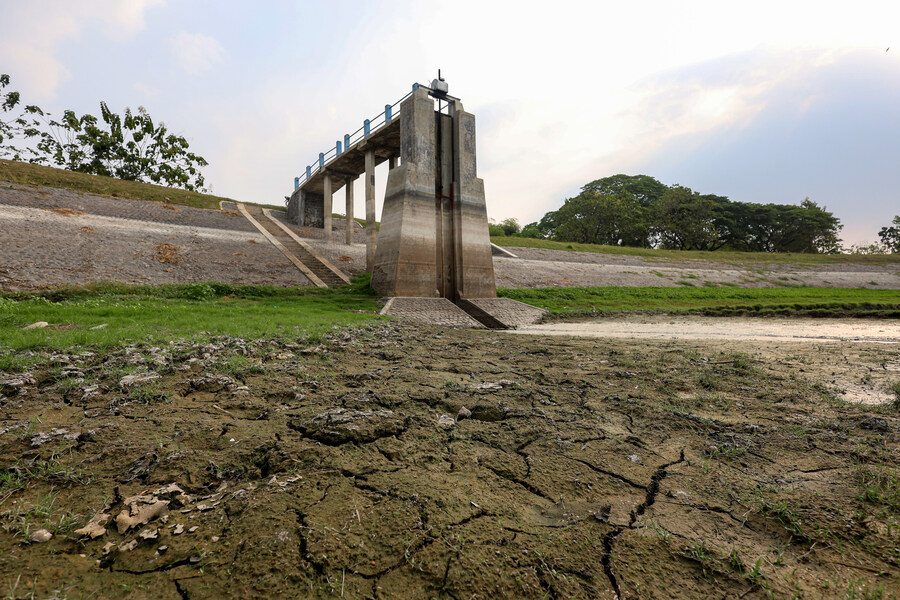
The Indonesian Meteorological, Climatological and Geophysical Agency (BMKG) has predicted that the dry season will be longer and more intense, with rainfall levels significantly below average. This forecast for April will inevitably impact the agricultural sector, which depends heavily on water resources from both rainfall and irrigation systems.
Prof. Bayu Dwi Apri Nugroho, a lecturer at the Faculty of Agricultural Technology at Universitas Gadjah Mada (UGM), has warned that the impacts of climate change, whether prolonged droughts or extreme rainfall, will affect the sustainability of agricultural enterprises.
“Prolonged droughts cause crop failure and harvest failure, which ultimately reduces agricultural production,” he stated in a press release on Tuesday, 10 March.
To address the coming longer and drier dry season, Bayu believes that agricultural sector stakeholders must adapt. He emphasises that more intensive communication between farmers and extension workers is key to adaptation and mitigation.
Farmers often lack adequate information regarding unpredictable weather conditions. Intensive support from extension workers is therefore expected to help mitigate the risks of crop and harvest failures.
“Farmers and extension workers are critical to success at grassroots level in facing prolonged droughts,” he said.
Current information from BMKG, including early warnings about extreme conditions—whether prolonged droughts or heavy rainfall—should be communicated to communities down to village level.
“To ensure weather information is more accurate and precise at the grassroots level,” he explained.
According to Bayu, beyond receiving accurate weather information, extension workers should also advise on which crops or varieties are suitable for planting during prolonged dry seasons. Additionally, he believes that researchers from universities and research institutions should develop innovations through downstream application of drought-resistant crop varieties that require less water yet maintain high productivity yields.
The BMKG projects that the 2026 dry season will generally be Below Normal (drier than usual) across 451 weather zones (64.5%) and Normal across 245 zones (35.1%), with the dry season peaking in August.