
UGM Biology Professor: Microalgae as an Alternative Solution for Future Fuel
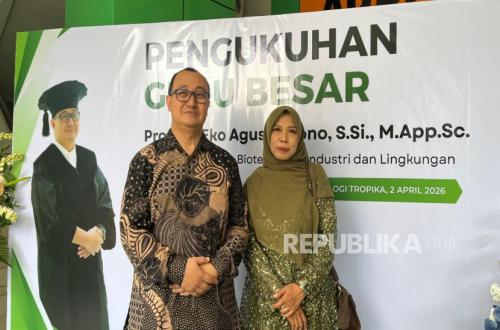
Amid concerns over the fossil fuel energy crisis and the impacts of climate change, microalgae is quietly emerging as one of the alternative solutions for the future. This microscopic organism, often overlooked, holds tremendous potential, including as a source of environmentally friendly fuel, and is even described as a ‘biological machine’ capable of supporting various industrial needs.
Prof Eko Agus Suyono, Professor of Industrial and Environmental Biotechnology at the Faculty of Biology, Universitas Gadjah Mada, revealed that microalgae possesses unique advantages not found in other organisms. Within a single cell, microalgae can combine the traits of plants, bacteria, and animals. Thus, microalgae can function as a bio-factory or biological factory capable of producing various high-value products, from food, feed, pharmaceuticals, to alternative energy.
“It has plant-like characteristics because it can photosynthesise, bacterial characteristics because it can ferment, and it can also move like animals. This makes microalgae a very interesting organism to develop,” he said when met after being inaugurated as Professor of Industrial and Environmental Biotechnology at the Faculty of Biology UGM on Thursday (2/4/2026).
One of the most promising potentials of microalgae is as an alternative fuel source. Prof Eko did not deny that Indonesia still relies heavily on biodiesel based on palm oil.
“Mikroalga can be used for biodiesel, bioethanol, and even developed into biojet and biohydrogen. In the future, hydrogen will be one of the future energies,” said Eko.
Interestingly, Indonesia is said to be one of the hotspots for microalgae biodiversity in the world. With its vast water areas, Prof Eko is convinced that Indonesia has a very large wealth of microalgae species.
“Indonesia is actually a hotspot for microalgae biodiversity. Hotspot means that the number of microalgae in Indonesia is suspected, based on empirical scientific experience, to be the richest. However, the problem is that the exploration of microalgae in Indonesia is still not optimal,” he said.
He gave an example that in international genome databases, Indonesia’s contribution to microalgae research is still far behind compared to other countries such as America, Europe, and even Africa. In fact, the research results he conducted with Japanese researchers show that microalgae isolated from Indonesia has quality that is no less, even superior in some aspects.
“This is an extraordinary potential that would be very regrettable if not utilised,” he said.
Global Environmental Saviour
In addition to being an energy source, Prof Eko explained the important role of microalgae in maintaining environmental balance. In his research titled Microalgae as the Future Biological Machine: Integration of CO₂ Capture Technology and Biorefinery Concept for National Independence, this organism is known to be very effective in absorbing carbon dioxide (CO₂), even more efficient than land plants.
Not only that, microalgae also contributes around 40–50 percent of oxygen production in the Earth’s atmosphere. This means that nearly half of the oxygen breathed by humans comes from the photosynthetic activity of microalgae in waters. This fact also underscores that waters play a crucial role as the ‘lungs’ of the world.
“Mikroalga is a very strong CO₂ capturer. Even its carbon absorption capacity can be higher than that of land plants,” he said.
The potential of microalgae does not stop at energy and the environment. Prof Eko said that its high nutritional content makes it a potential material for functional food and feed. He described microalgae as rich in protein, vitamins, minerals, and antioxidants that are even higher than vitamin C. In the livestock sector, microalgae has also been proven to improve the quality of livestock products, such as producing low-cholesterol eggs.
Meanwhile, in the health sector, microalgae also has the potential to be developed into raw materials for medicines, antivirals, and cosmetics. Even now, its utilisation technology is beginning to integrate with digital systems such as the Internet of Things (IoT) and machine learning to improve production efficiency. Not only that, in its metabolic process, microalgae can even produce bioelectricity or electricity, although currently still on a small scale.
This potential opens up opportunities for the birth of new energy sources that do not rely on burning fossil fuels.
“We cannot rely on fossil fuels. Because they will run out. Moreover, fossil fuels today are vulnerable to conflicts, right. Now we are having trouble with fuel because the Strait of Hormuz is closed by Iran. Then people are quarrelling just to find oil. So we must find other ways or alternatives. Replacing it will indeed take time,” he explained.
As bioremediation, microalgae can also be used to absorb environmental waste. This is due to microalgae’s high adaptation to various environmental conditions, the enzymes and chemical compounds produced, and the chemical components in the microalgae cell wall. Not only that, microalgae can also be integrated with the Internet of Things (IoT) and machine learning.
“In this context, IoT is a breakthrough because it enables continuous and real-time monitoring of biomass and cultivation parameters, then prepares data flows ready to be processed into operational information,” he said.
Nevertheless, Eko acknowledged that economically, the utilisation of microalgae is still not competitive, including as a fuel. The current technology is still in the development stage and requires large investments.
Prof Eko also highlighted that the development of microalgae in Indonesia still faces various challenges, from the limited number of researchers to the lack of microalgae-based industries. Eko mentioned that more than 90 percent indu