
UBBG Students Develop Vegetable Gardens in Disaster-Affected Paddy Fields
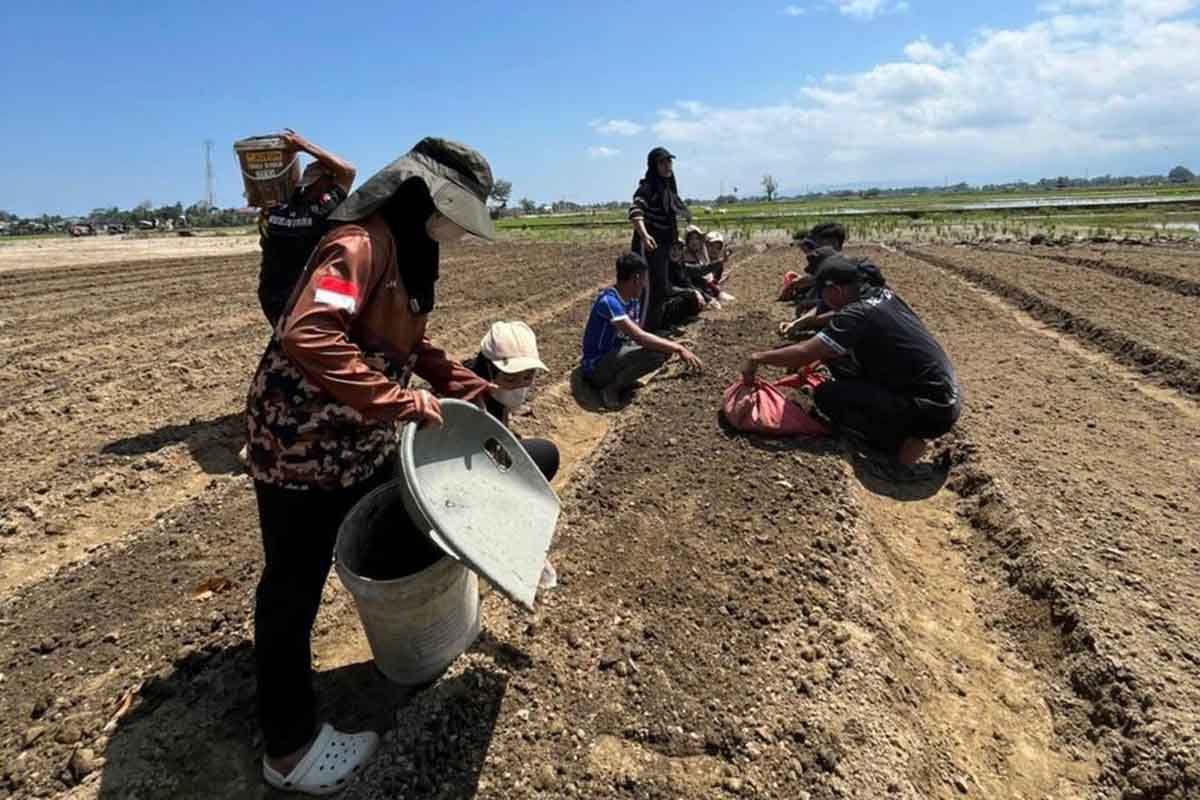
Banda Aceh — Students from Universitas Bina Bangsa Getsempena (UBBG) in Banda Aceh have developed a vegetable garden for the community in paddy field areas affected by disaster in Pidie District, Aceh Province.
UBBG Rector Professor Lili Kasmini stated in Banda Aceh on Monday that the mini vegetable garden development was being undertaken in Gampong Tiba Mesjid, Mutiara Timur District, Pidie District.
“This vegetable garden development represents collaboration between lecturers and students through the Student Impact Programme. The vegetable garden development is the effort of UBBG’s academic community in supporting post-disaster recovery,” she said.
The Head of the Student Impact Programme, Neila Fauzia, explained that the garden development was being carried out in a paddy field area previously affected by flooding in late November 2025.
“The vegetables being planted are showing positive growth and are targeted to be harvested before Eid al-Fitr 1447 Hijriah/2026 CE. The vegetables being planted, such as water spinach and amaranth, have a short planting cycle of approximately 25-30 days,” she said.
Previously, flooding had caused thick mud deposits in the paddy field area, preventing the land from being utilised optimally for the rice planting season.
“This situation impacted food production and increased community concerns during the holy month of Ramadhan and Eid al-Fitr, so the paddy field area was developed into a vegetable garden,” said Neila Fauzia.
She explained that through land mapping and coordination with local village authorities, the student team identified fields that could be utilised as temporary planting land.
According to her, utilising the disaster-affected paddy field area represented a strategic step to keep the community productive during the main agricultural land recovery process.
Planting was carried out communally with technical guidance from students, from soil preparation, organic fertilisation, to monitoring plant growth.
“Currently, some plants have entered the early vegetative phase and are growing evenly in the cleared land,” said Neila Fauzia.
She mentioned the programme was implemented thanks to funding support from the Directorate of Research and Community Service and the Directorate General of Research and Development, Ministry of Higher Education, Science and Technology through a grant scheme.
“We appreciate and thank the Ministry of Higher Education, Science and Technology and the Directorate General of Research and Development for their support and funding through the Student Impact Programme,” said Neila Fauzia.
Keuchik (village chief) of Gampong Tiba Mesjid, Haryadi, appreciated the collaboration between students and the community in developing a vegetable garden in the disaster-affected paddy field area.
“The utilisation of this paddy field area not only accelerates recovery in the agricultural sector but also revives the spirit of community solidarity after the disaster. Most importantly, the community now has new spirit and hope following the disaster,” said Haryadi.