
UAE Ambassador Speaks Frankly on Iran Attacks: Not a Religious War But...
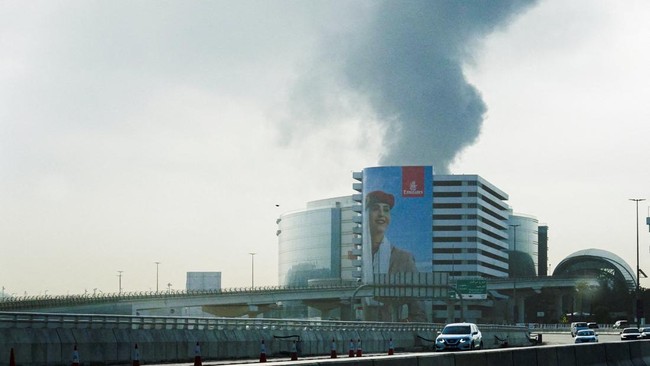
Jakarta, CNBC Indonesia - The Ambassador of the United Arab Emirates (UAE) to Indonesia, Abdulla Salem Al Dhaheri, has spoken candidly about the impact of Iran’s attacks on his country, which are said not only to have targeted military sites but also civilian infrastructure. The previous attacks were launched by Iran in retaliation against the United States (US) and Israel due to strikes on Tehran on 28 February.
In his speech in Jakarta, he stated that the UAE’s defence systems have intercepted hundreds of missiles and thousands of drones since the beginning of the attacks. As of 7 April 2026, 520 ballistic missiles, 26 cruise missiles, and 2,221 drones have been successfully intercepted. However, debris from the attacks has still caused impacts on the ground.
“Thirteen civilians were recorded as having died and 217 others injured, with damage to vital infrastructure such as airports, ports, energy facilities, and residential areas,” said Al Dhaheri at the UAE Ambassador’s Residence in South Jakarta on Wednesday night, quoted on Thursday (9/4/2026).
Al Dhaheri emphasised that these facts refute Iran’s claims that the attacks only targeted military facilities. He assessed that there has been a dangerous shift in targeting civilian infrastructure to undermine regional economic stability.
In addition, he revealed attack patterns deemed disproportionate. Around 85% of Iran’s missiles and drones were directed at Gulf countries and Jordan, while only 15% targeted Israel.
Amid this situation, he stressed that the conflict is not a religious war. He further asserted that efforts to frame this conflict as a religious war are misleading and do not reflect reality.
The UAE also warned of the global impact of the conflict, especially if disruptions occur in the Strait of Hormuz. This route handles around 20% of the world’s oil supplies and global LNG trade, much of which is destined for Asia, including Indonesia.
“Disruptions in this region will impact rising energy prices, shipping costs, and pressure on global supply chains,” he explained. He added that Indonesia could be affected through increases in fuel prices and commodity prices.
While condemning the attacks as violations of international law, the UAE continues to affirm its commitment to diplomacy and de-escalation. According to him, the UAE chooses stability over escalation, and cooperation over conflict.