
UAE Ambassador: Gulf States and Jordan Continue to Push for Regional Peace
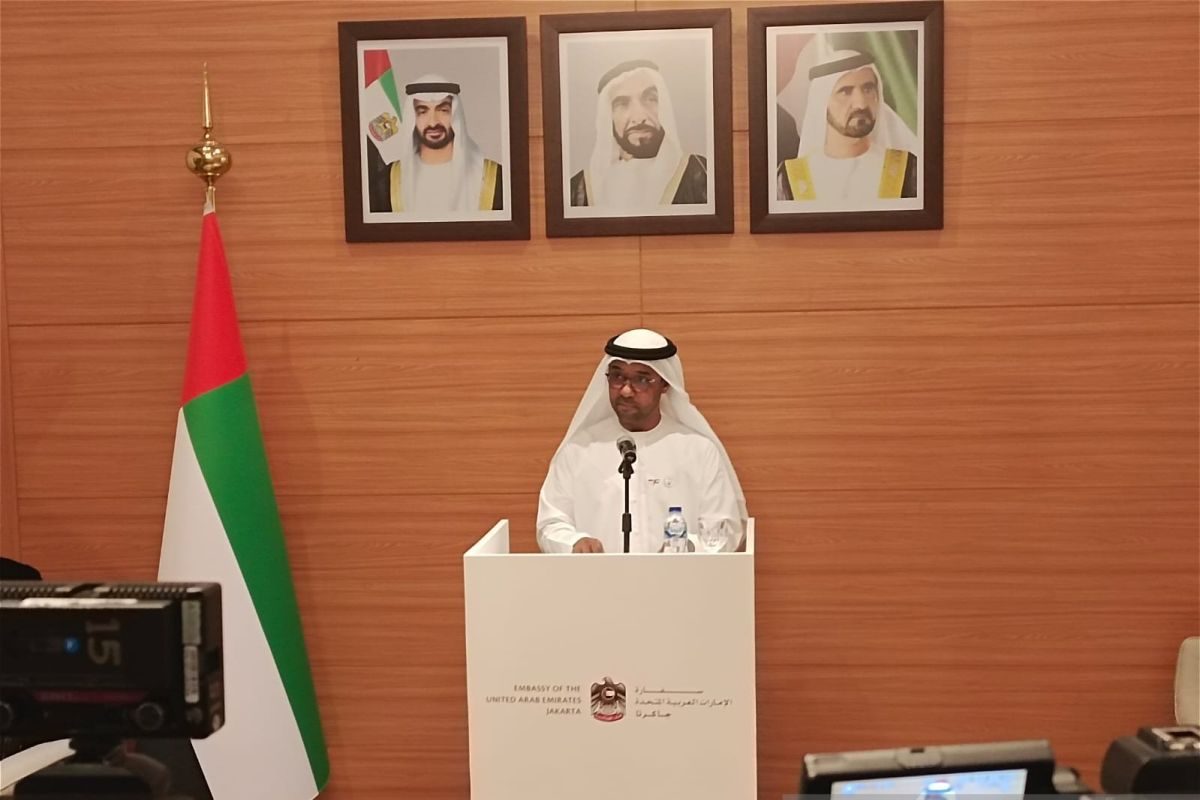
Jakarta (ANTARA) - The Ambassador of the United Arab Emirates (UAE) to Indonesia, Abdulla Salem Aldhaheri, has emphasised that his country, together with the Gulf Cooperation Council (GCC) states and Jordan, continues to promote peace in the Middle East region. “We will also continue to work with international partners, including Indonesia, to promote peace, stability, and shared prosperity,” said Ambassador Aldhaheri during a press conference in Jakarta on Wednesday evening (8/4). The Ambassador stated that under the leadership of UAE President Sheikh Mohammed bin Zayed Al Nahyan, active communications have taken place with world leaders, including Indonesian President Prabowo Subianto, to promote de-escalation and international coordination. “At the same time, leaders in the GCC region, including Jordan, are also undertaking similar diplomatic efforts that reflect the united position of the Gulf region,” he said. In line with this, he added, the UAE Deputy Prime Minister and Foreign Minister Sheikh Abdullah bin Zayed Al Nahyan is also leading intensive diplomatic efforts with foreign ministers from various countries, including Indonesian Foreign Minister Sugiono. As many as 136 countries and international organisations have expressed condemnation of Iran’s aggression, affirming the strong solidarity of the international community towards the UAE, GCC countries, and Jordan, he said. This support is also reflected through the adoption of UN Security Council Resolution 2817, as well as the consensus adoption of a UN Human Rights Council resolution on the human rights implications of the Iranian attack, supported by more than 100 countries. “This demonstrates that the United Arab Emirates is leading diplomatically, while acting in alignment with GCC countries and Jordan in presenting a united and responsible voice for the Gulf region,” he said. The Ambassador reiterated that his country, together with GCC states and Jordan, firmly condemns Iran’s attack as a violation of international law and the UN Charter. “However, we remain committed to diplomacy, de-escalation, and international cooperation. We will continue to choose stability over escalation, responsibility over reaction, and cooperation over conflict,” he said.