
Types of EV Chargers Explained: Match Your Charging Station to Your Vehicle's Battery Capacity
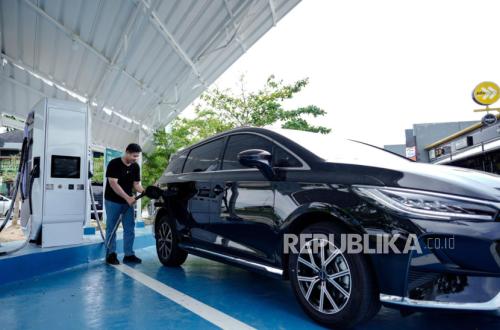
Indonesia’s use of electric vehicles (EVs) continues to rise as charging infrastructure expands, driven by PT PLN (Persero) alongside various partners.
However, many users still lack understanding of the different types of charging stations available and their suitability to electric vehicle battery capacity.
Gregorius Adi Trianto, Executive Vice President for Corporate Communications and Corporate Social Responsibility at PLN, explained that developing the electric vehicle ecosystem focuses not only on building infrastructure but also on educating the public about proper usage.
According to him, PLN is not only constructing charging infrastructure but is committed to educating the public so that electric vehicle usage becomes increasingly easy, safe, and comfortable. “By understanding the types of charging stations available, users can optimise the charging process according to their mobility needs,” Gregorius stated on Saturday (14 March 2026).
Generally, there are four types of charging stations that can be used by electric vehicles according to power capacity and battery charging requirements.
Standard Charging
Standard Charging is a charging method using alternating current (AC) with capacity of 7kW or below. The charging process using this method typically takes approximately 6 to 12 hours, depending on the vehicle’s battery capacity.
This type of charging is most commonly used at home (home charging) and is suitable for electric vehicles with small battery capacity as well as plug-in hybrid vehicles.
Medium Charging
Medium Charging also uses AC with power capacity greater than 7kW up to 22kW. With larger capacity, the charging time can occur for approximately 2 to 4 hours.
This facility is generally available at offices, shopping centres, or public parking areas, making it suitable for use when vehicles are parked for several hours. This type of charging typically uses wallbox charger equipment.
Fast Charging
Fast Charging uses direct current (DC) with power capacity greater than 22kW up to 50kW. With this technology, charging an electric vehicle’s battery can reach 80 per cent in approximately 30 to 60 minutes.
This facility is typically available at Public Electric Vehicle Charging Stations (SPKLU) and is well-suited for long-distance travel or at locations with high vehicle mobility.
Ultra Fast Charging
Ultra Fast Charging also uses DC with power capacity above 50kW. With this capacity, charging an electric vehicle can be accomplished in approximately 10 to 20 minutes.
This type of charging is ideal for electric vehicles with large battery capacity that require rapid charging during travel.
As support for the ease of using electric vehicles, PLN also introduces technology through the PLN Mobile application, equipped with an Electric Vehicle Digital Services (EVDS) menu as a one-stop service for EV services.
Within this menu, PLN offers a Trip Planner feature that allows users to plan travel routes whilst simultaneously determining charging points more efficiently during journeys.
Additionally, PLN Mobile is equipped with the AntreEV feature, which allows users to monitor SPKLU availability and make digital reservations for charging queues, so that the charging process can be accomplished more practically and efficiently.
Through infrastructure readiness and digital services, PLN is committed to strengthening Indonesia’s electric vehicle ecosystem whilst delivering a safe, comfortable, and worry-free travel experience for EV users, particularly during the return migration season.