
Two Threats Endangering Java's Pantura: What Should the Prabowo Administration Do?
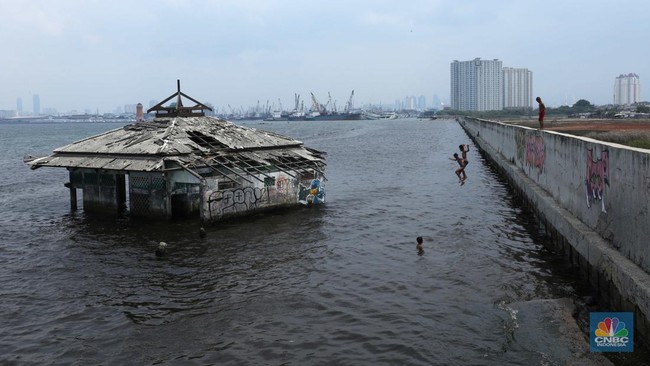
Java’s North Coast (Pantura) is in a critical phase, with land subsidence reaching 15-20 cm per year, most severely in Jakarta and Semarang. At the same time, Pantura is being hit by sea level rise driven by global warming of about 0.8-1.2 cm per year, a combination that AHY calls ‘twin pressure’ increasing the threat of tidal flooding, which could devastate property and homes. Without serious intervention, seawater encroachment by 2050 could be more severe, and coastal communities also face a looming clean-water crisis. Pantura accounts for around 27.53% of national GDP in 2025, equivalent to US$368.37 billion.
National Research and Innovation Agency (BRIN) reports that 65.8% of Pantura’s coastline from Serang to Situbondo has experienced erosion, driven by intense development pressure and coastal exploitation. BRIN chief Arif Satria says five coastal-protection technologies are being prepared, from modular multifunctional seawalls and automatically interlocking breakwaters to tidal-current energy platforms, all aimed at high stability, cost-effectiveness, and simpler production. BRIN is also advancing a hybrid eco-engineering approach combining infrastructure with mangrove rehabilitation to dampen waves and restore coastal ecosystems.
Meanwhile, the head of the North Java Coast Authority (BOPPJ), Didit Herdiawan Ashaf, says President Prabowo Subianto has asked for the Pantura protection master plan to be expedited so that threats to about 55 million residents in the area can be addressed promptly.