
Two Pertamina Vessels Remain Stranded in Strait of Hormuz; Pertamina Prepares Alternative Import Sources
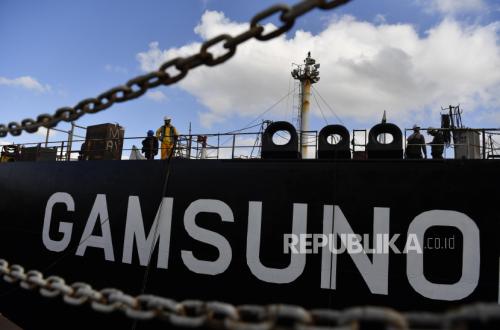
PT Pertamina (Persero) is anticipating national energy supply challenges by opening alternative import sources amid the dynamics of global energy distribution in the Strait of Hormuz resulting from geopolitical conflict in the Middle East. Chief Executive Officer Simon Aloysius Mantiri stated that the company has prepared precautionary measures through sourcing alternative energy suppliers to maintain national energy stock resilience.
“We are naturally anticipating this by searching for other sources so that our stock resilience also remains good,” said Simon in Jakarta on Thursday, 12 March 2026.
He emphasised that Indonesia’s energy supply sources are not limited to the Middle East, but also extend to other regions such as Africa and the United States.
“For contingency planning, we are also conducting source diversification. Our supplies are not only from the Middle East, but also from Africa, the United States, and various other places,” he said.
Tensions in the Middle Eastern region had previously triggered shipping disruptions in the Strait of Hormuz, a strategic global energy trade route connecting the Persian Gulf to international markets. The strait is one of the main routes for crude oil shipments from Middle Eastern producing nations to various consumer countries.
The government had previously noted that approximately 20 to 25 per cent of Indonesia’s crude oil imports are shipped through the Strait of Hormuz.
This search for alternative crude oil imports has been accelerated by Pertamina following the situation where two tankers operated by Pertamina International Shipping (PIS) remain in the Arabian Gulf region and are unable to transit the Strait of Hormuz.
The two vessels are the very large crude carrier (VLCC) Pertamina Pride, managed by NYK, and the Gamsunoro, managed by Synergy Ship Management.
According to a PIS report on Monday, 2 March 2026, Pertamina Pride had completed its loading process and was anchored in Ras Tanura, Saudi Arabia, whilst Gamsunoro was undergoing loading at Khor Al Zubair, Iraq.
Meanwhile, two other PIS vessels, namely PIS Paragon and PIS Rinjani, were reported to be located outside Middle Eastern waters.
“Our primary concern is the safety of our crew and the safety of our cargo. We are naturally continuing to coordinate with various parties, from the Ministry of Foreign Affairs to other relevant parties, and we are also promoting an improvement in the situation there,” said Simon.
PIS currently operates approximately 345 vessels to support energy distribution. Of this total fleet, 266 vessels provide petroleum fuel and aviation fuel transportation, 27 vessels carry crude oil, 45 units serve LPG distribution, and seven units support petrochemical transportation and serve as floating storage facilities.
In addition to maintaining supply through imports, Pertamina will continue to push for increases in domestic energy production, Simon added.
“We have cooperation in the Cepu Block, so this must be maximised. With the addition of facilities there, we are driving efforts to increase production,” he said.