
Two Months of Disciplined Waste Sorting: Banjar Saraswati Residents No Longer Complain
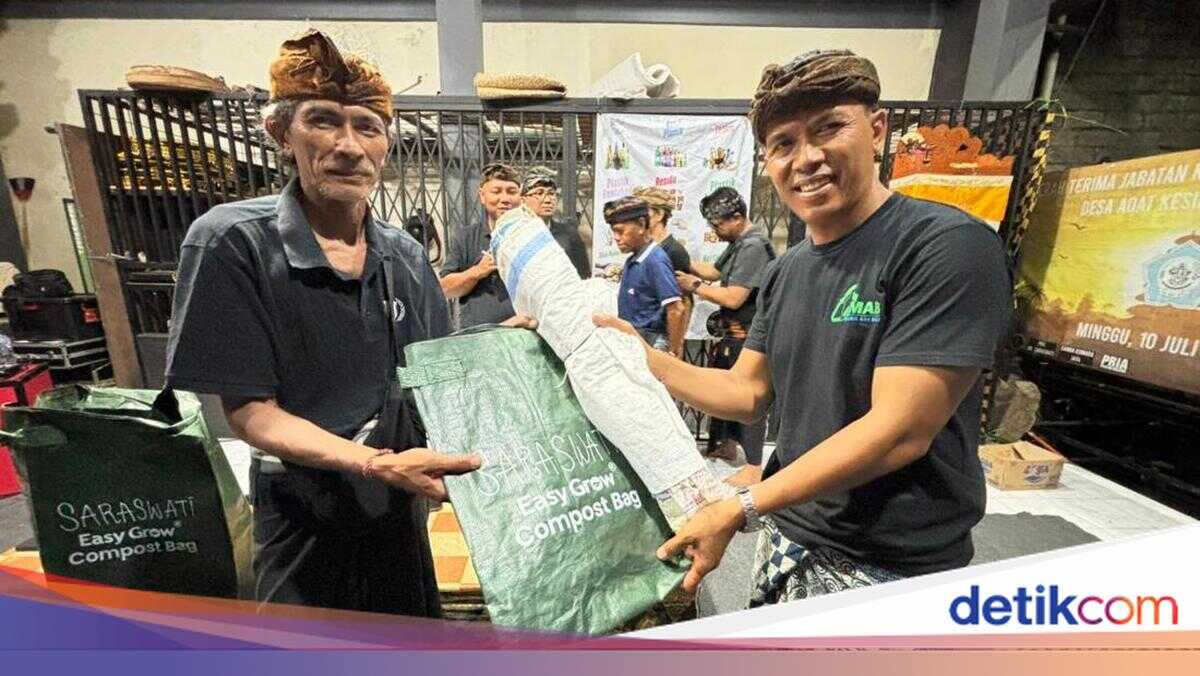
Residents of Banjar Saraswati, Kesiman Petilan, Denpasar, have consistently sorted waste over the past two months. The programme began after Banjar Leader Anak Agung Ngurah Srijaya Widiada challenged residents to manage waste independently from their homes.
“Denfest (Denpasar Festival) raised remarkable awareness. At that time we launched waste sorting education. Secondly, we provided composter bags free of charge to all homes in the banjar. Then we issued a challenge: organic waste should not leave the house,” said Widiada, who also serves as Coordinator of Eling Ring Pertiwi, on Monday (2 March 2026).
Eling Ring Pertiwi is a waste management community that collaborates with Denpasar City Government in waste management at Denpasar Festival 2025 and D’Tik Festival 2026.
Widiada explained that the challenge was accompanied by reward incentives. “The most sought-after reward is what I said: ‘If you succeed in the second month, we’ll review again in the third month, and in the fourth month you can stop paying for waste collection. For example, if waste collection costs Rp 35,000, you’ll only pay Rp 15,000 to the banjar for cleanliness,’” Widiada explained.
According to him, approximately 60-70 per cent of total household waste comprises organic waste that can be managed at home. Economically valuable waste is deposited at waste banks, while residue that cannot be utilised, approximately 3-7 per cent, is collected through village self-management systems.
“For the past two months there has been no waste accumulation in front of homes. In my case, I used to put out two plastic bags every 2-3 days. Now it’s collected twice a month. Now whether it gets collected or not, people don’t care anymore,” Widiada explained.
He believes that community attitudes towards waste management have been influenced by existing handling systems. “Because they’ve already paid, they can do whatever they want with their waste. The self-management waste system creates the illusion of handling, which also shapes people’s character like that,” he said.
Widiada acknowledged initial resistance to the programme’s implementation. Though not widespread, some residents felt compelled to follow the policy. However, the banjar continued to provide education based on validated data from Denpasar Festival 2025, which was attended by approximately 75,000 residents.
He also emphasised the importance of government supervision and education. “Don’t just focus on tenders and procurement, but on supervision. What matters most in successful waste management isn’t equipment; we only use sacks. If the government lacks sufficient time, labour and thought, it can hand over responsibility to banjar officials and their leaders,” Widiada added.
Meanwhile, the Tempat Penampungan Sampah (TPS) Sampah Daur Ulang (SaDu) waste facility reported that the situation in its area remained conducive. Waste collection using traditional carts or independently managed systems remained manageable.
“There are no waste accumulation points in Sumerta Kaja Village. Daily waste production remains normal. The vertical composting or composter bag programmes have not yet been distributed. The challenge is to discipline residents again to ensure proper sorting,” explained Madi Tirta Jati, Head of TPS SaDu Unit in Sumerta Kaja Village, when interviewed by the detikBali team on Monday.
Jati said his team involved university community service students, women’s groups, youth organisations, community associations, subvillage heads and village officials to raise awareness about waste sorting.
Additionally, TPS SaDu has introduced Meta SaDu, an organic waste processing system with production capacity reaching 500 kilograms per day. Sumerta Kaja Village is also opening job positions to increase human resources in waste management.
“The village has opened job vacancies for additional staffing, but no one has responded or shown interest in waste management,” said Jati.
Jati stressed the importance of coordinated efforts between parties regarding residue management. “After the landfill is completely closed, there is no clarity. Between the Environmental Office and village government and TPS, so we know developments and don’t suffer losses. Please ensure a solution for the residue,” Jati explained.