
Two Decades of Waiting for the Domestic Worker Protection Bill
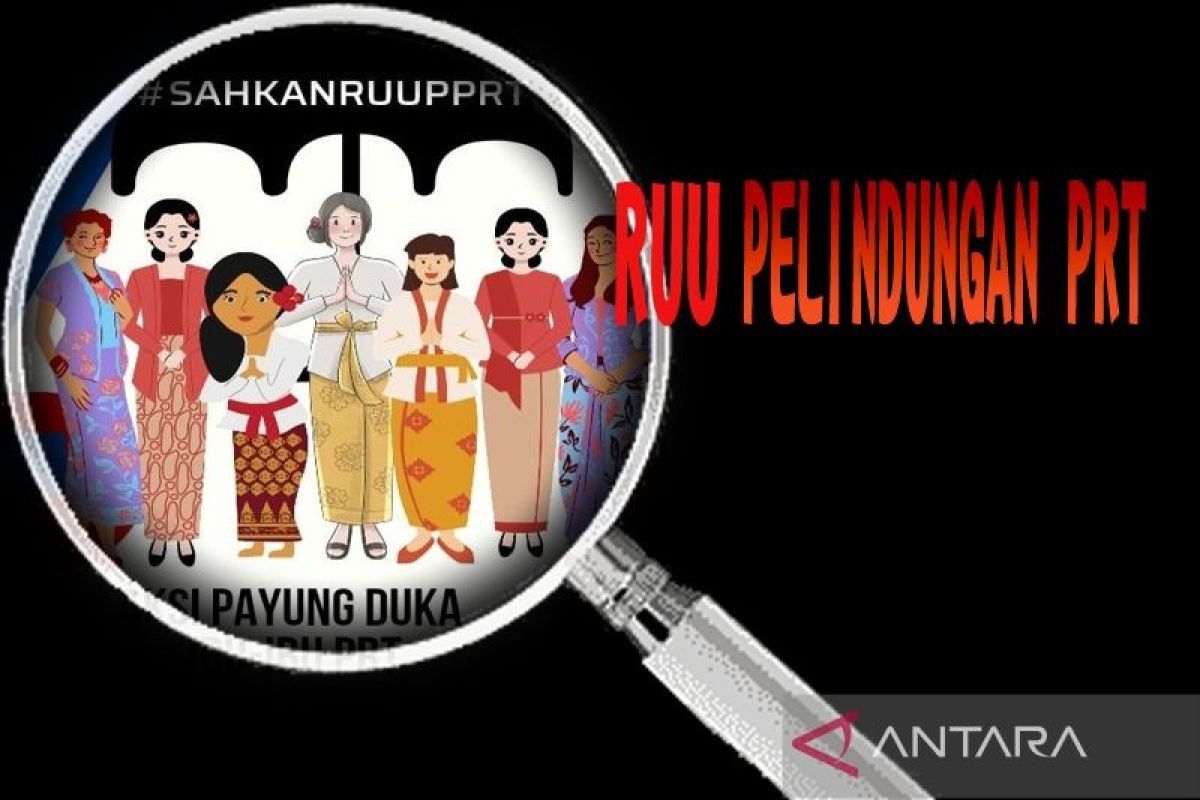
Behind seemingly ordinary domestic activities—sweeping floors, cooking, caring for children, and looking after elderly relatives—millions of domestic workers (PRT) have laboured for decades without adequate legal protection.
Since first entering the National Legislative Programme in 2004, the Domestic Worker Protection Bill (RUU PPRT) has been championed by civil society organisations, academics, and the workers themselves. Yet, despite these efforts, legal recognition for work that underpins family life and the social economy remains an unfulfilled promise.
A new momentum emerged on 12 March 2026, when Parliament, in a plenary session, finally designated the RUU PPRT as a parliamentary initiative, marking a significant chapter after more than two decades of winding discussions. This decision paves the way for further deliberation with the government before the bill can be enacted into law.
The push for this bill’s passage is not without reason. Various data demonstrate the persistent vulnerability of domestic workers. The National Network for the Advocacy of Domestic Workers (JALA PRT) recorded at least 3,308 reports of violence against domestic workers between 2021–2024.
Meanwhile, Amnesty International’s 2025 report cited 122 cases of sexual violence and domestic violence against domestic workers—a figure believed to be merely the tip of the iceberg, as most employment relationships occur in closed domestic spaces beyond public scrutiny.
Monitoring by the National Commission on Violence Against Women also recorded at least 128 domestic workers as victims of violence during 2020–2024, demonstrating recurring vulnerabilities.
On the other hand, domestic workers remain in a legal “grey area” of labour law. This situation has made the enactment of the RUU PPRT an urgent step to provide recognition and legal protection for millions of workers who have laboured in domestic spaces without adequate safeguards.
The void in protection
The vulnerability of domestic workers cannot be separated from the absence of a comprehensive legal protection framework within the national labour system. To date, domestic workers are not explicitly accommodated in Law No. 13 of 2003 on Manpower and its amendments.
Yet, in fact, domestic workers engage in employment relationships similar to workers in other sectors: they work, receive wages, and maintain employment relationships with employers.
In practice, however, protection for domestic workers still rests on the Minister of Manpower Regulation No. 2 of 2015 on the Protection of Domestic Workers, which, in the legal hierarchy, has limited reach.
This creates a legal “grey area” in domestic employment relationships. Many domestic workers labour without written employment contracts, without clear wage standards, and without adequate social security.
This situation demonstrates that Indonesia’s labour law system remains oriented towards formal sector workers, whilst domestic sector workers have not received equivalent protection. Consequently, when violations or violence occur in employment relationships, legal protection mechanisms often fail to operate effectively.
Nevertheless, the number of domestic workers in Indonesia is not small. International Labour Organisation survey data showed that in 2015, the number of domestic workers in Indonesia reached approximately 4.2 million people.
Despite this, Indonesia still lacks a specific law that comprehensively regulates protection for domestic workers. This regulatory gap reveals an inequality in fulfilling workers’ rights, particularly for those working in domestic spaces who have largely been overlooked by the law.
Protection for domestic workers
Protecting domestic workers is fundamentally part of the state’s obligation to guarantee human rights. This principle has been affirmed in the 1945 Indonesian Constitution, which guarantees every citizen the right to work and a decent living, as well as fair treatment in employment relationships.
Similar guarantees are reinforced in Law No. 39 of 1999 on Human Rights, which affirms every person’s right to obtain decent work and protection from treatment that violates human dignity.
This commitment is also reflected in various international human rights instruments. The Universal Declaration of Human Rights (UDHR) affirms that everyone has the right to work, fair working conditions, and protection from exploitation. This principle is strengthened through the International Covenant on Economic, Social and Cultural Rights, which Indonesia acceded to through Law No. 11 of 2005 on the Ratification of the International Covenant on Economic, Social and Cultural Rights, obligating the state to guarantee fair and decent working conditions for all workers.
As lex specialis, international standards on domestic workers are regulated in ILO Convention No. 189 on Domestic Workers. This convention affirms that domestic workers are entitled to humane working hours, fair wages, social security, and protection from violence and exploitation. Although Indonesia has not yet ratified this convention, its principles serve as an important reference for strengthening domestic worker protections.
Closing the wait
The political momentum emerging in the RUU PPRT discussion should not stop at its designation as a parliamentary initiative alone. After more than two decades in the National Legislative Programme, the public expects this legislative process to genuinely result in the enactment of a law providing legal certainty for domestic workers. Without concrete steps towards enactment, the bill risks becoming another unfulfilled promise in the struggle for worker rights.