
Turns Out They're Not Extinct Yet! Scientists Discover Two Ice-Age Marsupials in Papua's Forest
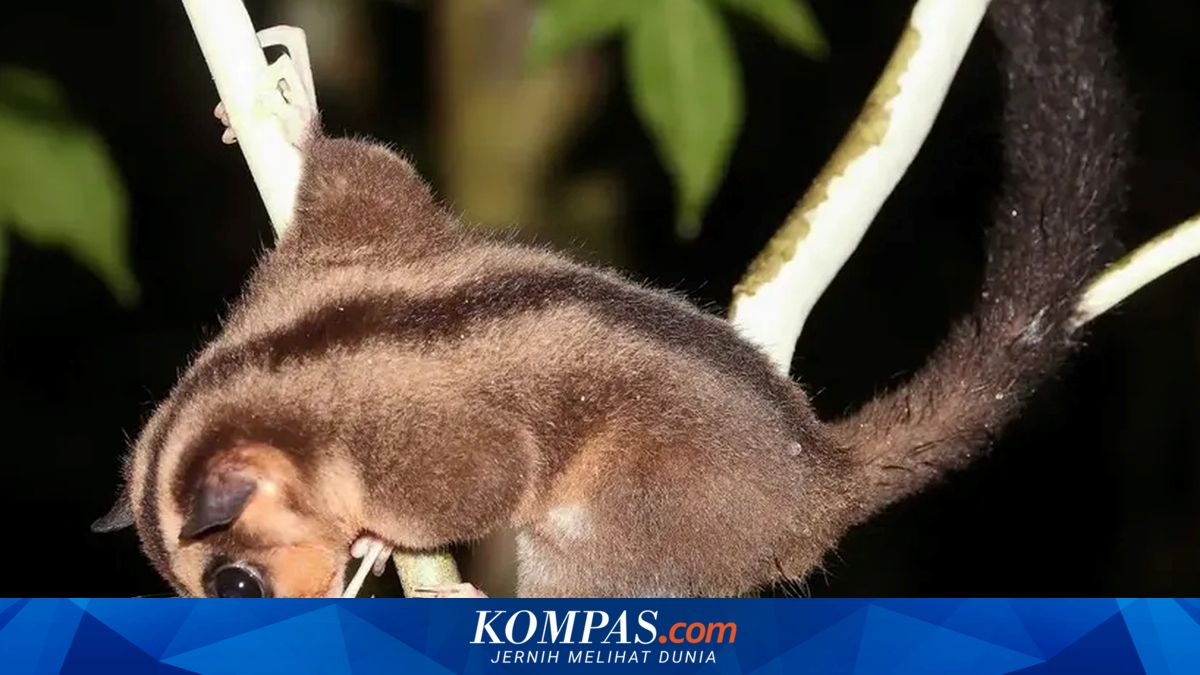
Over thousands of years, scientists have believed that two ancient marsupial species had been extinct since the end of the Ice Age. Yet the latest findings reveal a surprising twist: the two animals are alive and hidden in a remote Papua forest.
The study, published on 6 March in the Records of the Australian Museum, confirms the existence of the long-fingered dwarf kusu (Dactylonax kambuayai) and the ring-tailed kusu (Tous ayamaruensis) in the Vogelkop Peninsula rainforest, or Bird’s Head, of Southwest Papua.
These animals were previously known only from fossil records dating to about 6,000 years ago from the late Ice Age and the early Holocene. Therefore, their rediscovery constitutes one of the major surprises in modern zoology.
‘Even finding one Lazarus species is extraordinary, let alone two species that were thought extinct for thousands of years. This is truly extraordinary,’ said Tim Flannery, the lead author of the study from the Melbourne Sustainable Society Institute.
The phenomenon is rare, particularly among mammals.
The discovery in Papua also provides important clues about the region’s evolutionary history. According to Flannery, the Vogelkop region has geological ties to the Australian continent.
‘Vogelkop was an ancient part of the Australian continent that later became part of an island. The forests in this region may still hide many hidden relics from Australia’s past,’ he explained.
The tiny marsupial measures about 17.6 centimetres in body length with a tail of 18 centimetres. Its head features a striking black-and-white striped pattern.
The most striking feature is its hand. The fourth finger of these animals is twice as long as the others.
This limb structure serves as a specialised foraging tool. With that finger, the kusu can excavate beetle larvae from decaying wood.
This hunting method is reminiscent of the aye-aye primate in Madagascar, which uses its long finger to extract insects from within wood.
The study also suggests that the kusu’s ears may be able to detect low-frequency sounds, including the noises of insect larvae within tree trunks.