
Turns out it's not just humans! Carrion crows prove they have geometric intuition
For centuries, humans have believed that we hold a monopoly on geometric intuition—the ability to recognise structure within a shape, such as right angles, symmetry, and parallel lines—long considered a measure of human cognition. Yet a recent study shows this ‘mathematical sense’ is not uniquely ours.
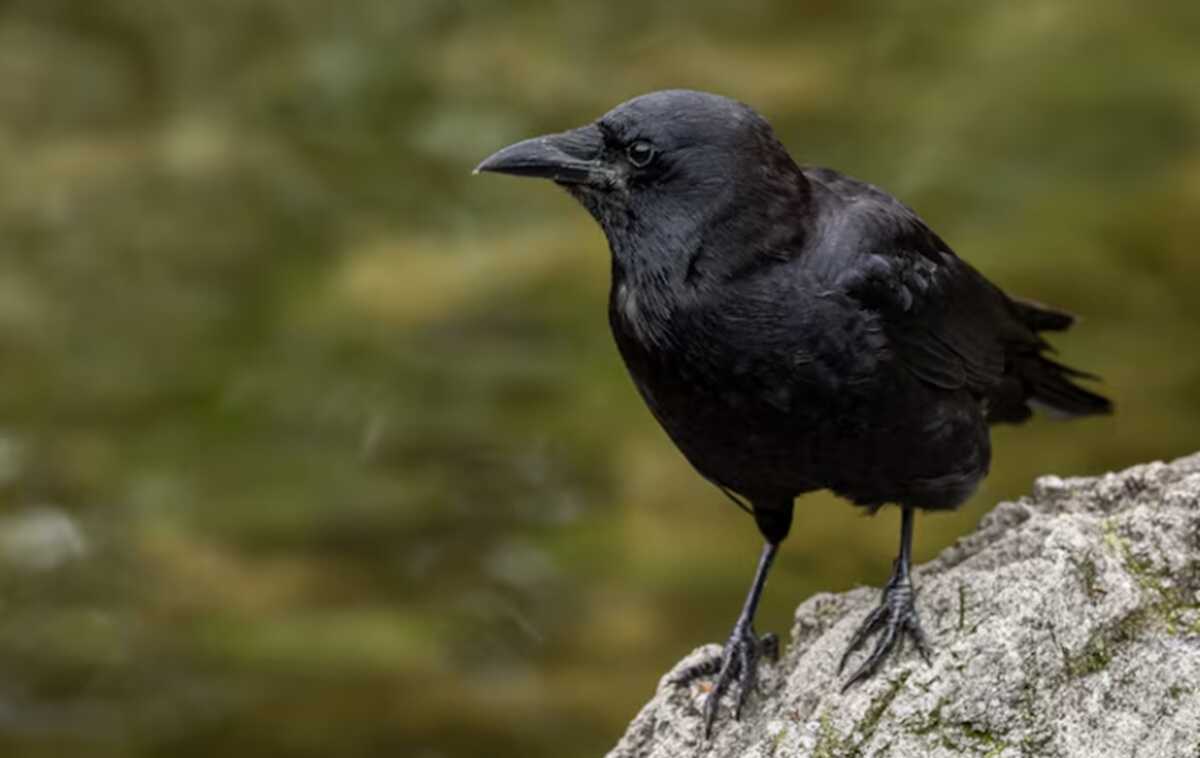
A study led by researchers at the University of Tübingen reveals that carrion crows are capable of detecting geometric regularities in a variety of shapes. The finding not only showcases the birds’ intelligence but also questions whether our deep understanding of space and form truly stems from an evolution shared with other species.
In the animal kingdom, many species can navigate or estimate quantities, but they are usually ‘blind’ to the subtle rules that define a shape. Even baboons, close evolutionary relatives of humans, failed to consistently recognise pentagonal shapes in previous studies.
This makes the crow achievement particularly remarkable. ‘The claim that this is specific to us humans, that only humans can detect geometric regularities, has now been shattered. For at least we have crows,’ said Andreas Nieder, the study’s lead author.
In the experiments, Nieder involved two male carrion crows trained using a touchscreen. They were given a simple yet challenging task: choose the shape that is most different from the six options (the odd one out).
Initially, the birds were tested with easy patterns, such as spotting a crescent among a cluster of stars. After success, the challenge was increased to a complex quadrilateral shape. The researchers altered subtle details, such as shifting one angle to disrupt symmetry or the right angles of the shape.
The results were highly surprising. Without special training for the new shapes, both crows managed to pick the correct answer with accuracy far above chance. Crow 1 succeeded in 50% of trials, while Crow 2 reached 60%, figures that are striking given that random guessing would be only 16.7%.
Statistical analysis confirmed that the birds’ ability did not depend on familiarity. Even when shapes were rotated or scaled, the crows remained able to detect the ‘intruder’ more easily when the base shape followed strong geometric rules, such as parallel lines or equal side lengths.
Interestingly, the difficulty the crows experienced was often similar to that of humans. For example, the rhombus shape that often confuses humans in previous studies also perplexed the crows. This suggests similar perceptual biases when judging shapes.
The study, published in Science Advances, provides strong evidence that geometry is not merely a cultural invention of humans or classroom materials. Rather, it is a deep-seated biological instinct, a way of understanding the order of the world that we share with other beings in the universe.
Greek philosopher Plato wrote about Socrates challenging a pupil with the problem of “doubling the square” around 385 BC.
Calculating the area of a circle is one of the fundamental mathematical concepts widely applied in various contexts in everyday calculations.
The Pythagoras theorem is another fundamental mathematical concept studied by almost all learners around the world.
Translation is a geometric transformation that moves every point of an object by the same distance in the same direction.
Finding the height of a triangle is one of the fundamental concepts in geometry essential to master.
Recent cognitive research reveals that animals are capable of logical reasoning. Explore how animal thinking differs from human thinking and the challenges in measuring their intelligence.