
Turning Waste into Energy: Comparison of WtE Models in Asia
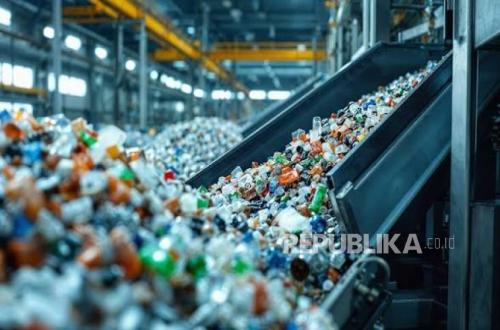
The utilisation of waste to generate electricity (waste-to-energy/WtE) has long been implemented in several Asian countries as a solution for waste management and energy sources. Japan, Singapore, and South Korea serve as examples of nations that have developed this technology earlier with differing approaches.
In Japan, WtE forms the backbone of the waste management system. Data from Japan’s Ministry of the Environment indicates that the country has around 1,004 incinerator facilities with a processing capacity of 174,598 tonnes per day. Of these, approximately 40 per cent are equipped with power plants with a total capacity of about 2.23 gigawatts (GW).
Additionally, global studies record that around 79 per cent of urban waste in Japan is processed through incineration and utilised for energy. Japan’s approach emphasises large capacity and system stability. Limited land makes landfills not the primary option, so incineration becomes the dominant solution to reduce waste volume while generating energy.
In contrast to Japan, Singapore has developed a more integrated system. Data from the National Environment Agency (NEA) shows total waste generation reached 6.66 million tonnes in 2024, with about half recycled.
The remaining non-recyclable waste is processed at incineration facilities before the residue is sent to Semakau Landfill. Singapore government documents also note that the country has four main WtE facilities capable of processing millions of tonnes of waste each year.
Singapore’s approach positions WtE as part of the national utilities system. The electricity generated is fed into the grid, while waste volume is drastically reduced before landfilling.
Meanwhile, South Korea has developed a more diverse model within the framework of a circular economy. Academic studies note at least dozens of operating incineration facilities that are an important part of the national waste management system.
Additionally, South Korea is known for its high recycling rate, reaching about 54 per cent, one of the highest in the world. This country’s approach does not rely solely on incineration but also processes organic waste such as food waste into biogas and utilises heat for district heating systems.
In comparison, these three countries demonstrate that WtE success is highly determined by its supporting systems. Japan emphasises capacity and stability, Singapore focuses on system integration, while South Korea leans towards a circular economy.
On the other hand, Indonesia is currently in the acceleration phase of WtE infrastructure development. The government targets the construction of waste processing and energy facilities (PSEL) in dozens of major cities to reduce landfill burdens.
The approach used tends to adopt incineration technology as widely applied in China, which can process mixed waste in large quantities without requiring complex upstream sorting systems.