
Turning Waste into Electricity: What Technology is Used in Indonesia?
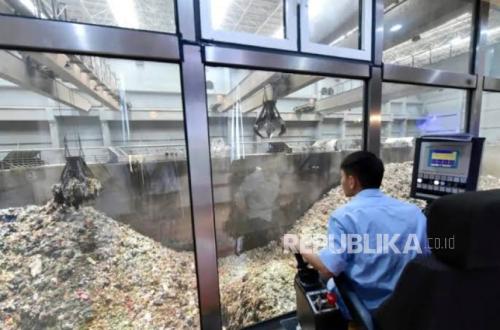
The government is accelerating the construction of waste-to-energy (WtE) projects in various cities. This step is taken to reduce the burden on final disposal sites (TPAs) while addressing the urban waste emergency issue.
Amid this acceleration, several environmental technology companies from China are entering and eyeing projects in Indonesia. Among them are Zhejiang Weiming Environment Protection and Wangneng Environment, known as major players in developing waste-based power plants in their country.
Both companies rely on the main technology of incineration, namely burning waste at high temperatures of around 850 to 1,000 degrees Celsius. The heat from this process is used to generate steam that then rotates turbines to produce electricity.
In practice, a WtE facility can generally process 500 to 3,000 tonnes of waste per day, with an electricity capacity of around 10 to 60 megawatts (MW). This technology can also reduce waste volume by around 80 to 90 per cent.
Zhejiang Weiming Environment Protection is a company focused on urban waste treatment, waste-based power plants, liquid waste and sludge treatment, as well as manufacturing environmental equipment such as incinerators and exhaust gas control systems. The company not only acts as a contractor but also as an investor and operator of projects. Weiming operates an integrated business model from facility construction, power plant operation, to electricity sales.
In the domestic Chinese market, Weiming is considered a major player with more than 50 WtE facilities built. Its market capitalisation value also reaches around 7 billion US dollars. This experience has led the company to be involved in several PSEL projects, including those planned in Indonesia such as in Bogor and Denpasar.
Meanwhile, Wangneng Environment has a broader business scope. In addition to urban waste treatment and waste-based power plants, Wangneng also develops food waste treatment, sludge, and wastewater, including recycling and resource recovery activities.
The company has developed dozens of incineration-based power plant facilities in various provinces in China. Wangneng also has international expansion through subsidiaries in several countries such as Thailand, Cambodia, Australia, and Singapore. The business model implemented is similar, namely encompassing investment, construction, and integrated operation of environmental projects.
The approach brought by both companies tends to be oriented towards quickly resolving waste issues. The incoming waste generally does not undergo strict sorting processes but is burned in a mixed condition. This model allows large-scale processing without requiring complex upstream waste management systems.
On the other hand, a different approach is shown by two companies in Europe, Vantaa Energy in Finland and Amager Bakke in Copenhagen, Denmark. Although still using incineration, these companies develop systems that are far more integrated within the circular economy framework.
CEO of Vantaa Energy, Jukka Toivonen, stated that waste burning is only carried out on residues that cannot be recycled. “Our society produces fossil-based waste that cannot be recycled. The safest, low-emission, and most resource-efficient way to manage it is by using it as an energy source for district heating and electricity,” he said.
Unlike the Chinese model that focuses on electricity, Vantaa Energy maximises heat utilisation through a district heating system, namely a heat distribution network for household needs.
In the city of Vantaa, more than 90 per cent of buildings are connected to this system. This means that heat from waste burning is not wasted but directly utilised for room heating and water.
This approach makes energy efficiency much higher. If conventional incineration-based power plants only have an efficiency of around 20 to 30 per cent, then combined heat and power systems like in Finland can reach more than 80 per cent.
Not only that, Vantaa Energy also targets the cessation of fossil fuel use by 2026. The company is developing Carbon Capture and Storage technology to capture carbon emissions from the burning process. “Stopping the use of fossil fuels is an important milestone in our sustainability journey,” said Toivonen.
The investment prepared for this transformation reaches around 1 billion euros over one decade. The funds cover the construction of waste sorting facilities, large-scale heat energy storage, and carbon capture projects targeted to operate before 2035.
In addition to Finland, a similar approach is also applied in Denmark, particularly in Copenhagen through the Amager Bakke facility. This facility processes around 400,000 tonnes of waste per year and is one of the most modern waste-based power plants in the world.
Amager Bakke not only generates electricity for around 30,000 homes but also supplies heat for around 70,000 homes through a district heating system. With the combined heat and power concept, energy utilisation from waste becomes far more optimal.
Interestingly, this facility is also designed as a public space. The building’s roof is utilised as a recreational area such as a ski slope and hiking trail, showing the integration between energy infrastructure and urban space.
Like in Finland, the waste burned is residue that cannot be recycled, so sorting remains an important part of the system. Emission control standards are also very strict, in line with European Union environmental regulations.
These differences in approaches show that although te