
Tual Case Becomes a Test for Polri's Cultural Reform
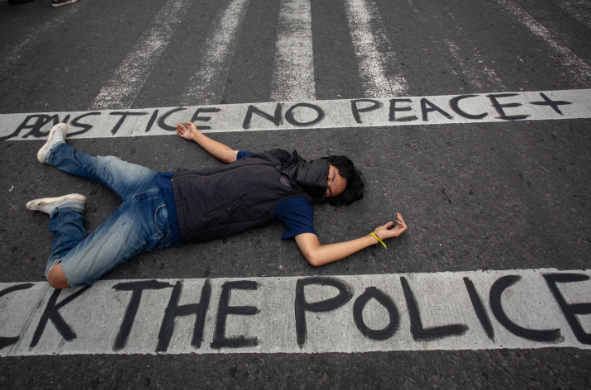
The death of a student, identified only as AT, in Tual, Maluku, has once again placed the police force under intense scrutiny. The incident, involving a member of the Mobile Brigade (Brimob), is seen not just as a local incident, but as a serious test of the Polri’s commitment to reform and professionalism.
A member of Commission III of the DPR (House of Representatives) and Chairman of the UKI Law Doctoral Alumni Association, I Wayan Sudirta, stated that this incident adds to the list of cases of violence involving the police in various regions, from Jakarta to NTT (East Nusa Tenggara). In several high-profile cases, the handling has often followed two paths: criminal and ethical, with many Polri members facing legal proceedings.
In the Tual case, National Police Chief Listyo Sigit Prabowo openly expressed his anger and disappointment over the alleged abuse by the Brimob officer that led to the victim’s death. He affirmed that the incident has tarnished the reputation of the Brimob Corps and the Polri institution.
Instructions have been given to the Chief of the Maluku Police and the Head of the Propam (Professional and Security Division) to thoroughly investigate the matter, both criminally and ethically, with firmness and severity to ensure justice for the victim and their family.
According to Wayan, the National Police Chief’s anger should be seen as a structural message, not just an emotional expression. “The public can see that the National Police Chief’s anger is not just an emotional reaction, but a strong signal about the importance of professionalism and command responsibility within the Polri,” he said on Wednesday (February 25).
He explained that in the hierarchical police system, failures in the field are not only a burden for the technical implementers but also a basis for evaluating unit leaders. “This firm statement reflects two things. First, there is a commitment not to cover up internal mistakes. Second, there is moral and institutional pressure to ensure that this case is handled transparently and accountably,” said Wayan.
However, the public will not stop at statements. Wayan emphasized that the public expects concrete steps, such as a thorough investigation of all personnel involved, an evaluation of standard operating procedures for crowd control, and the imposition of disciplinary or criminal sanctions if proven to have violated the law. He also reminded of Article 58 of the Criminal Code, which imposes heavier penalties on officials who abuse their authority.
From a human rights perspective, the use of force by law enforcement officers must meet the principles of legality, necessity, and proportionality. “If the victim is a student who is unarmed and does not pose a serious threat, then legal accountability becomes a central issue,” Wayan explained.
He referred to Article 13 of Law Number 2 of 2002 concerning the Polri, the National Police Chief’s Regulation Number 2 of 2019 concerning the Handling of Riots, and the Korbrimob Regulation Number 2 of 2021, which regulates the gradual escalation in handling riots.
According to him, the principle of caution is often ignored in the field, leading to serious injuries, significant losses, and even human rights violations. Professionalism and accountability are lost, while the values of Tribrata and Catur Prasetya, which should be the guiding principles, are violated.
Wayan emphasized that Polri reform should not stop at restructuring and policy adjustments. The fundamental problem lies in the culture. He noted that various surveys show that efforts to improve public trust have been made, but they are always tarnished by cases that could have been prevented.
A repressive culture and weak supervision in the field are recurring issues highlighted in the media and social media. The Tual case, according to Wayan, is a momentum for improvement and restoring public trust.
“If the handling is done openly, objectively, and fairly, then this tragic event can become a momentum for improvement. Conversely, if it seems defensive and closed, then public trust risks being eroded,” he said.
He affirmed that the measure of success lies not in the firmness of the leadership’s statements, but in the upholding of justice and the protection of the rights of citizens. Transparency in the investigation, consistency in law enforcement, and continuous evaluation will determine whether this tragedy becomes a turning point for reform or just another long list of recurring problems.
“In the end, the measure of success lies not in the firmness of the statements, but in the upholding of justice, the protection of the rights of citizens, and the maintenance of public trust in the police institution,” Wayan concluded. (Mir)
Yusril views the tragedy in Tual as an act that is truly inhumane and greatly undermines the ongoing reform spirit.
Chairul Huda believes that the case of violence by Brimob members in Tual stems from problems with police culture and weak control over the determination of suspects in the criminal justice system.
Digital transparency through social media makes these cases now more easily revealed.
Amnesty International Indonesia views the death of a 14-year-old student in Tual, Maluku, as an extension of alleged extrajudicial killings by law enforcement officers and calls for structural reform of the Polri.
The Coalition of Civil Society for Security Sector Reform urges the police to take action against Bripda MS, a member of the Brimob Polda Maluku, in connection with the torture of a 14-year-old teenager in the city of Tual.
Constitutionally, the Polri is under the President as part of the executive branch.
Copyright @ 2026 Media Group - mediaindonesia. All Rights Reserved