
Trump's War, Xi Jinping Calculates: China Quietly Takes Control of the Game
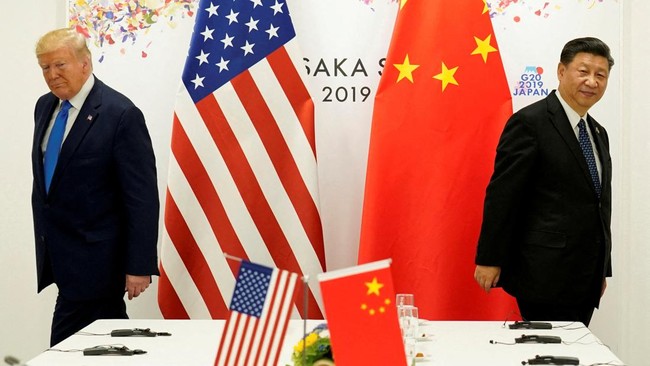
Trump’s War, Xi Jinping Calculates: China Quietly Takes Control of the Game
Jakarta, CNBC Indonesia - After a month of full military conflict involving the United States (US), Israel, and Iran, this war has triggered significant disruptions to the global oil and gas supply chain, particularly around the Strait of Hormuz in the Middle East.
Amid the crisis sparking energy panic in various countries, including in Southeast Asia, China has chosen to adopt a highly passive neutral stance on the current situation.
President Xi Jinping’s stance is also extremely cautious and does not get trapped in Donald Trump’s war strategy. China’s stance is certainly in the global spotlight given that Beijing has long been known to be close to Iran.
China’s Foreign Minister Wang Yi’s response is limited to calls for diplomacy and ceasefire without any direct intervention actions. This silent stance is the result of geopolitical and economic calculations that place domestic interests above all else.
Strategic Priorities on Core Interests
The main reason behind China’s restraint is an unwavering focus on its core national interests, namely stability in trade relations with the United States and the Taiwan issue.
Direct involvement or confrontation with Washington to defend Iran risks damaging ongoing geopolitical agreements. China realises that provoking the United States could cancel the previously achieved delay in US arms sales to Taiwan.
China’s bilateral relations with Iran, although bound in various strategic initiatives, are essentially transactional and do not include military security guarantees. China is reluctant to sacrifice Indo-Pacific regional stability for an ally that is strategically lower in hierarchy to its main national interests.
Energy Resilience and Gains in Southeast Asia
From a macro-economic perspective, China has sufficient buffer capacity to face short-term energy disruptions. As the largest oil importer, Beijing has long hedged by building massive national oil reserves and diversifying its import sources to Russia and Gulf Cooperation Council (GCC) countries.
On the other hand, the energy panic sweeping Southeast Asia actually benefits China. By positioning itself as a country prioritising peace and stability, Beijing is actively encouraging Southeast Asian countries to accelerate the transition from fossil fuels to renewable energy.
This directly expands the market for China’s dominance in green technology industries, such as solar panels, batteries, and electric vehicles in the region.
Exploiting Geopolitical Focus Shifts
The conflict in the Middle East effectively draws the attention, military resources, and budget of the United States. Washington’s shifting focus from the Indo-Pacific region provides significant strategic advantages for China.
While the United States is preoccupied with efforts to control the situation in Iran, China has greater freedom to consolidate its influence in Asia.
Additionally, Beijing is confident that any regime that eventually comes to power in Iran will remain dependent on oil and gas exports for its economic survival. This ensures that Iran will always need China as the main buyer in the global market, regardless of the conflict’s outcome.
Economic Calculations within the Belt and Road Initiative Framework
Furthermore, China positions the Belt and Road Initiative (BRI) purely as a global economic cooperation and infrastructure development project, not as a security alliance or military pact.
Although Iran is one of the important nodes in that route, military involvement or direct confrontation with the United States would risk damaging the main foundation of the BRI.
By choosing to remain silent and not intervene, Beijing seeks to maintain its image as a non-interventionist economic partner. This step is crucial to securing the sustainability of Chinese investments and infrastructure projects in other BRI participating countries, including Gulf and Southeast Asian countries that also have good relations with the United States.
Through this passive stance, China asserts that partnerships in the BRI are designed for trade stability, not to drag participants into open geopolitical conflict vortices.