
Trump's Threat Doesn't Happen, US Schedule to Attack Iran's Electricity Delayed Again
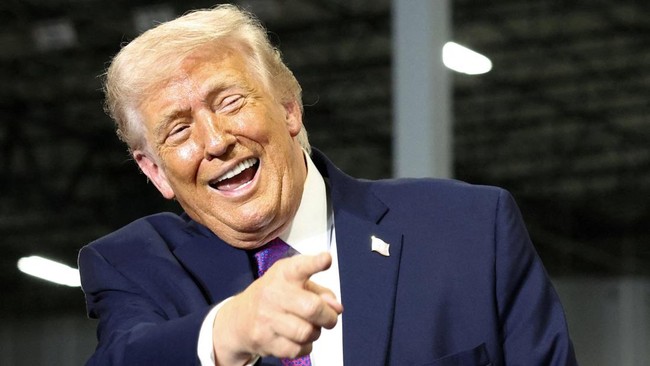
US President Donald Trump has decided to postpone an attack on Iran’s electricity network. This decision comes amid claims of progress in negotiations to end the war that has lasted one month, as well as ongoing pressure from Washington for Tehran to reopen the Strait of Hormuz.
Trump announced on Thursday (26/3/2026) local time that he was postponing the deadline he had set himself for attacking Iran’s energy system until 6 April 2026. In a post on Truth Social, he stated that the delay was at the request of the Iranian government.
“In accordance with the request of the Iranian Government, this statement serves as notice that I am postponing the period of destruction of energy facilities by 10 days until Monday, 6 April 2026, at 8 pm Eastern Time,” Trump wrote.
He also emphasised that talks are ongoing and proceeding positively. “Talks are ongoing and, despite misleading statements to the contrary from Fake News Media and others, everything is going very well.”
This announcement is the latest postponement since Trump first threatened Iran’s energy system. On Sunday, he threatened to attack Iran’s electricity grid if the Strait of Hormuz was not reopened within 48 hours. He even wrote that he would target energy facilities, “STARTING WITH THE LARGEST FIRST”.
A day later, on Monday, Trump said he would delay the attack for another five days based on “good and productive conversations” that Iran claims never happened. Thursday’s delay is the second in the series of threats.
US government statements on the direction of the conflict have often been seen as contradictory since the war began on 28 February, when the US and Israel launched strikes against Iran. Targeting Iran’s civilian electricity supply is seen as potentially increasing criticism of Washington’s military campaign.
Several international law experts even consider the plan risky as it could fall into the category of war crimes. The initial strikes on Iran have been described by legal experts as unprovoked aggression.
Under the Geneva Conventions, the destruction of civilian infrastructure can be considered a violation of the laws of war.
Nevertheless, analysts note a trend in modern conflicts where “dual-use” facilities—those used for both military and civilian purposes—are increasingly targeted.
In the Ukraine war, for example, Russian President Vladimir Putin justified attacks on energy infrastructure as a way to weaken Ukraine’s military-industrial complex, although the International Criminal Court later issued an arrest warrant related to those attacks.
Human rights group Amnesty International has also condemned Trump’s plan to bomb Iran’s power plants as a “threat to commit war crimes”.
On the other hand, the White House continues to state that victory in Iran is getting closer, even though the conflict shows no signs of abating. Iran’s pressure on the Strait of Hormuz is also shaking the global economy. More than one-fifth of the world’s oil supply passes through the narrow waterway along Iran’s coastline.
Threats to tankers have brought traffic in the strait to a near halt. Trump has asked allies to help reopen the route, but so far he faces scepticism from NATO countries and other partners.
In a cabinet meeting on Thursday, Trump reiterated that Iran actually wants to reach an agreement, even as attacks on US and allied bases in the region continue. He also criticised media reports claiming Iran rejected the US’s 15-point ceasefire plan.
“They will tell you, ‘We are not negotiating. We will not negotiate.’ Of course they are negotiating. They have been destroyed. Who wouldn’t negotiate?” Trump said.
“If they make the right deal, then that strait will be opened.”
US media reports also indicate that the White House is considering a ground operation against Iran, a move analysts say could potentially escalate the conflict further.
To date, around 1,937 people have been reported killed in Iran due to the war, while 13 US military personnel have also lost their lives. Dozens more casualties have been reported in various parts of the Middle East.
Meanwhile, Iran denies any peace talks are taking place and warns it will intensify attacks in the region if the US or Israel targets the country’s energy network.