
Trump's Miscalculation: Why Iran Did Not Collapse Under US-Israeli Attack
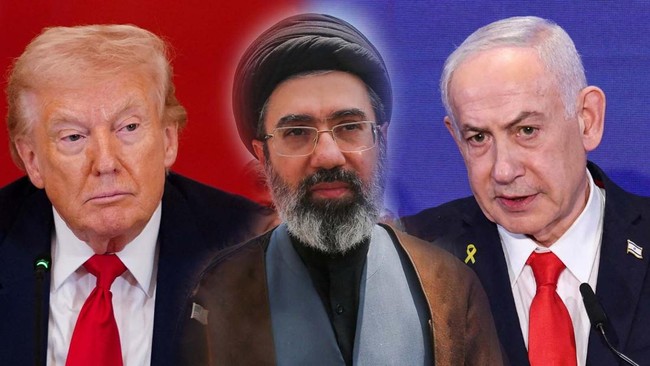
A war launched by the United States and Israel against Iran over the past two weeks has entered an unexpected new phase. What was initially presented by Washington as a rapid military campaign to shift the strategic balance and corner Tehran has proven far more complex than calculations on paper suggested.
For several months, the White House insisted that Iran stood on the brink of total defeat by the end of the first day, or at the latest the second day of the conflict. American officials appeared to expect rapid dismantling of Iran’s capabilities and serious destabilisation of its government. However, recent developments tell a strikingly different story.
Farhad Ibragimov, lecturer at the Faculty of Economics at RUDN University and visiting lecturer at the Institute of Social Sciences of the National Academy of Economics and Administration of the Russian Presidency, has provided analysis. According to him, Iran still possesses considerable capacity to endure, thereby undermining the assumption that Washington and Tel Aviv could win easily.
“Despite coming under very great pressure, Iran has shown no signs of systematic collapse and has succeeded in maintaining the operational capacity of major state institutions, military infrastructure, and governance mechanisms. Furthermore, the current situation demonstrates that Washington’s initial calculations were overly optimistic and failed to account for several fundamental factors underlying Iran’s resilience,” Ibragimov wrote, as reported by RT on 13 March 2026.
How Has Iran Endured?
This resilience is extraordinary given that on the first day of the war, Iran’s Supreme Leader Ayatollah Ali Khamenei was reportedly killed. The United States believed the Iranian regime had been severely weakened and would collapse like a house of cards when struck a decisive blow.
According to this logic, eliminating the supreme leader would trigger a chain reaction: the elite would lose coordination, institutions would become non-functional, and the state structure would collapse rapidly. This scenario was supposed to resemble events in Iraq in 2003, where the destruction of central authority caused rapid disintegration of state institutions and a prolonged period of systemic crisis.
However, events in Iran revealed a fundamentally different picture. Because state institutions continued operating, major government bodies remained active, decision-making processes functioned, and the system did not spiral out of control.
“This demonstrates that the political framework of the Islamic Republic depends not solely on individual leadership but also on robust institutional architecture capable of ensuring stability even amid conflict,” Ibragimov said.
“Moreover, the Assembly of Experts—the consultative body responsible for selecting the supreme leader—appointed Mojtaba Khamenei, the son of the late Ayatollah Ali Khamenei, as the new supreme leader. This demonstrates the stable operation of institutional continuity of power,” he added.
Furthermore, Iran has become sufficiently accustomed to “stress tests” in its modern history. The country’s political system has faced serious challenges previously, ranging from the devastating Iran-Iraq war in the 1980s to decades of American sanctions, international isolation, and regional crises.
This model combines religious-political legitimacy with strong security apparatus and governance structures that are sufficiently flexible to allow adaptation to external pressure.
“The current crisis serves as ‘another test’ of the resilience of these structures. As events have unfolded, it has become increasingly clear that American expectations of achieving its strategic objectives quickly have been proven wrong,” Ibragimov explained.
“If this crisis is resolved without major upheaval, it will further demonstrate that the state model created following the Islamic Revolution is highly durable. Moreover, such trials often produce the opposite effect in the long term, namely strengthening internal unity and reinforcing the political system,” he added.
Many of these factors have long been apparent to countries with extensive experience dealing with Iran, such as Russia and China. These countries understand the nuances of Iran’s political system, its mobilisation capacity in facing external threats, and its high level of institutional stability.
“That is why experts in these countries maintain a far more measured and realistic view regarding the prospects of coercive pressure against Iran,” he added.
What Was Washington’s Miscalculation?
The rhetoric of American leadership also points to another important observation. Examining more closely the statements of US President Donald Trump, both in social media posts and public speeches, reveals real political and emotional turbulence within his administration.
“The inconsistency of statements issued by the White House has been striking since the conflict began,” said Ibragimov.
“Initially, US officials stated that the strategic objective of the pressure campaign against Iran was regime change. Subsequent statements suggested that the focus was solely on ‘demilitarisation’ and limiting Iran’s military capability. This was followed by new guidance about the need to transform Iran’s political system,” he explained.
“And then the rhetoric shifted towards emotional outbursts and insulting comments directed at both the nation and its political framework, as well as specific members of Iran’s leadership.”
This evolving discourse creates genuine uncertainty, and this is not limited to Trump alone. Similar inconsistencies appear in statements from key officials in his administration, such as US Secretary of State Marco Rubio and Secretary of Defence Pete Hegseth, who have repeatedly issued contradictory messages over the past week.
“This constant shift in rhetoric inevitably creates the impression of a lack of strategic clarity and internal coordination within the American administration.”