
Trump's Miscalculation? CIA States Iran Will Not Surrender Easily
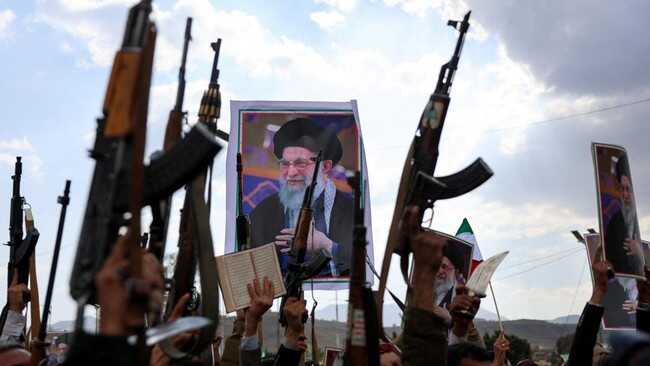
Following the reported death of Iran’s Supreme Leader Ayatollah Ali Khamenei, several senior US officials have been reported as still doubting that military operations by the United States and Israel against the Islamic Republic will result in a change of government in the near term.
Before and after the attacks commenced, US officials, including President Donald Trump, had suggested that overthrowing Iran’s repressive system of government was one of several US objectives, alongside disabling Iran’s ballistic missile and nuclear programmes.
However, three US officials with knowledge of intelligence assessments stated that there is serious scepticism that a battered Iranian opposition can topple the authoritarian theocratic system that has stood since 1979.
Nevertheless, no official has entirely ruled out the possibility of Iran’s government falling, which is currently weakened by the loss of key personnel due to ongoing US and Israeli airstrikes and is highly unpopular following a wave of brutal repression in January. However, the officials stressed that regime collapse is far from certain or even likely to occur in the short term.
A Central Intelligence Agency (CIA) report presented to the White House several weeks before the attacks on Iran concluded that if Khamenei died, he would likely be replaced by hardline figures from the Islamic Revolutionary Guard Corps (IRGC) or hardline clergy.
“IRGC officials are unlikely to voluntarily surrender, partly because they have benefited from an extensive protection network designed to ensure internal loyalty,” said one official, as cited by Reuters on Monday, 2 March 2026.
The CIA assessment followed at least one report from a separate US intelligence agency noting that there were no IRGC defections during the major wave of anti-government protests in January, despite these being met with brutal force by Iranian security forces.
“Such defections would likely be a prerequisite for a successful revolution,” according to three additional sources who requested that the specific intelligence agency not be named.
Even Trump himself stated on Sunday that he planned to reopen communications with Iran, suggesting that Washington does not expect the government to fall soon, at least in the short term.
As of this report, the White House did not immediately respond to requests for comment, whilst the CIA declined to provide an official statement.
For its part, Iranian President Masoud Pezeshkian stated on Sunday that a leadership council consisting of himself, the judicial chief, and influential Guardian Council members had assumed the duties of the Supreme Leader on a temporary basis.
Security Chief Ali Larijani accused the United States and Israel of attempting to plunder and destroy Iran, whilst warning “separatist groups” of a harsh response if they attempted any action.
This statement was broadcast on government television on Sunday after both countries launched a wave of airstrikes on Iran reported to include bombing an elementary girls’ school, although this government media report has not been independently confirmed.
The Fate of the Nuclear Programme
US intelligence discussions regarding the impact of Khamenei’s possible death have not been limited to whether it will cause a change in government leadership, but also concern Iran’s foreign policy direction.
Two US officials stated that since January there has been significant debate about the extent to which Khamenei’s death will cause a major shift in how Iran conducts negotiations with the US regarding its nuclear programme.
US officials have also debated the extent to which Khamenei’s death or overthrow will prevent the country from rebuilding its nuclear or missile facilities and capacity in the future.
Following the January protests, Steve Witkoff, Trump’s special envoy and close ally, had spoken several times with Iranian opposition figure Reza Pahlavi, the last exiled Iranian crown prince, to discuss administration support if the Iranian government fell.
However, in recent weeks, senior US officials have become increasingly pessimistic that any opposition figure backed by Washington would realistically be able to control the country.
“Ultimately, after US and Israeli attacks cease, if Iranians take to the streets, their success in pushing for the end of the regime will depend on security apparatus personnel choosing to stand aside or side with them,” said Jonathan Panikoff, a former senior US intelligence official now at the Atlantic Council.
“If not, the remnants of the regime, those holding weapons, will likely use them to maintain power,” Panikoff stated firmly.