
Trump's Loose Tongue Becomes a Stumbling Block on the Path to US-Iran Peace
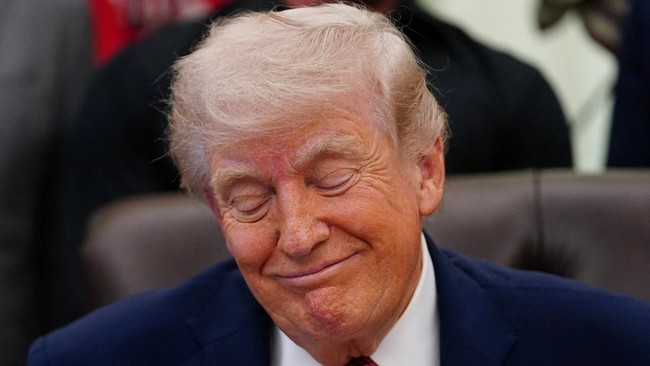
Efforts to revive diplomatic channels between Washington and Tehran are once again stalled, not solely due to on-the-ground military tensions, but also triggered by the communication style of the US President, which is seen as muddying the waters.
Citing analysis from The Guardian on Thursday (23/4/2026), Donald Trump’s harsh rhetoric and frequently changing statements are described as a major obstacle to restarting peace talks between the United States and Iran, mediated by Pakistan in Islamabad.
In addition to the US naval blockade of Iranian ports, Trump’s aggressive and often dismissive approach towards Iran is judged to be worsening trust between the two sides.
Although Iran’s Foreign Ministry has repeatedly stated it will not respond to every Trump statement on social media—which can reach seven posts in a few days—Tehran cannot entirely ignore them. Moreover, some of those statements contradict the closed-door communications Iran has received regarding Washington’s true intentions.
Trump’s hasty and confrontational diplomatic style has even been described as a self-imposed barrier in the negotiation process.
Iran’s chief negotiator, Mohammad Bagher Ghalibaf, has openly warned that Washington’s steps are shifting the direction of the talks.
“By imposing a siege and violating the ceasefire,” he said, the US president “is attempting to turn this negotiating table in his own imagination into a table of surrender or to justify renewed war provocations. We do not accept negotiations under the shadow of threats, and in the last two weeks, we have prepared to reveal new cards on the battlefield.”
A similar tone was conveyed by Iran’s Ambassador to Pakistan, Reza Amiri Moghadam, who quoted a classic literary work to describe his country’s position.
“It is a universally acknowledged truth that a nation with a great civilisation will not negotiate under threat and coercion,” referencing the work Pride and Prejudice.
Domestically, both Washington and Tehran face political pressures. Trump must manage his support base as well as market reactions, while Iran’s leadership needs to demonstrate firmness against US claims portraying Iran as weak or cornered, including on sensitive issues like enriched uranium stocks.
Tensions became more apparent when Trump responded to a statement from Iran’s Foreign Minister, Abbas Araghchi, who had previously said Iran would ease some restrictions in the Strait of Hormuz. Instead of reciprocating with a relaxation of the blockade, Trump called the move a sign of Iran’s defeat.
In a telephone interview on the same day, Trump said: “They [Iran] want me to open it. Iran really wants that border opened. I won’t open it until a deal is signed.”
On another occasion, he even claimed that Iran fully agreed with US demands and consented to no longer approaching the Strait of Hormuz.
However, just one day after that statement, Iran re-closed the Strait of Hormuz, reinforcing the impression that Washington had misread Tehran’s stance.
The confusion from contradictory statements was also highlighted by the Iranian Embassy in Ghana.
“In the last 24 hours, the President of the United States has: thanked Iran for closing the Strait of Hormuz; threatened Iran; blamed China; praised China; stated that the blockade is successful; confirmed that Iran has restocked through the blockade; promised a deal with Iran; promised bombs will be dropped on Iran.”
The embassy even mocked Trump as a “one-man WhatsApp group chat.”
Iran’s Deputy Foreign Minister, Saeed Khatibzadeh, also launched direct criticism by saying that Trump talks too much.
The situation grew more complicated when on Tuesday Trump issued another contradictory statement. He said: “I expect to carry out bombings,” while stating that the US military was ready to move ahead of a deadline that would not be extended.
However, just two sentences later, he stated that Iran would attend the scheduled talks starting on Wednesday.
In the same series of statements, Trump even praised and criticised Iran.
“Iran could build a very good foundation, become a strong country, an amazing country. They have an amazing people,” before adding “They seem bloodthirsty and led by some people who are unfortunately very harsh and not in a good way. We are much tougher than them, not even close, but they must use common sense and logic, not be a country based on death and horror.”
For some observers, this communication pattern may be intended to confuse opponents in diplomacy. However, so far, the emerging impact has been the opposite, with Iran becoming increasingly vigilant and only willing to agree to deals with clear, irrevocable enforcement mechanisms to ensure Washington’s commitments are truly implemented.