
Trump's Diplomacy Towards Iran Criticised: Expensive, Weak, and Untrustworthy
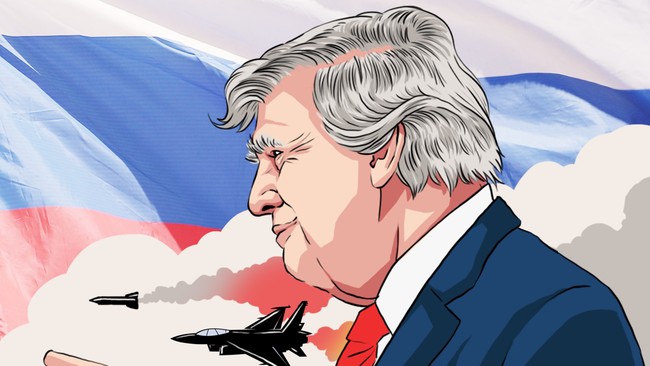
US President Donald Trump’s attempts to pressure Iran are instead seen as demonstrating weak, expensive, and increasingly untrustworthy diplomacy, both abroad and at home.
When it comes to dealing with Iran, the 1987 version of US President Donald Trump actually once gave some useful advice to today’s Donald Trump.
In his book The Art of the Deal, quoted from The Economist, Trump warned that the worst thing in a negotiation is to appear too eager to reach a deal. If that happens, the opponent will sense weakness, and our position will be lost.
The problem is that President Trump today appears not to be following the advice from his younger self. Since Iran closed the Strait of Hormuz and shook the global economy, Trump has shown several signs that he is very eager to reach a deal quickly.
Oil prices have surged, stock markets have weakened, and Trump’s version of the Gulf War is also facing domestic resistance. On 28 March, people in the US were angry and took to the streets in thousands of cities across the United States. They protested against their president, whom they saw as acting like a king, and the continuously rising petrol prices.
To calm the markets, on 30 March Trump said that he had made “major progress” towards a deal with Iran’s new regime, which he described as more reasonable.
At the same time, Trump also threatened that if no deal is reached, America would destroy Iran’s power plants, oil facilities, and possibly its water desalination installations.
Such behaviour is not new. Previously, Trump several times issued harsh threats on Saturdays when markets were closed, then retracted them just before the markets opened. He also unilaterally postponed the deadline for Iran to accept his terms or face power plant bombings twice, from an initial 48 hours to one week, then more than two weeks.
Iran appears to have spotted that weakness. Realising that Trump fears economic disruption, and that cheap drone attacks and even cheaper threats can have a big impact, the Iranian regime continues its attacks and threats. Iran is only allowing a few tankers to pass through the Strait of Hormuz, and sometimes reports of charging US$2 million per ship.
On Friday last (27/3/2026), US Secretary of State Marco Rubio even complained that Iranian leaders “might decide they want to set up a toll system in the strait”.
Naysan Rafati from the think tank International Crisis Group called this strategy the “Ayatollbooth”, a play on words referring to ayatollahs and toll booths. This strategy violates global norms on freedom of navigation and could be copied by other countries in conflict.
Nevertheless, Trump still sounds optimistic. On 29 March, he told reporters that Iran would allow 20 more ships to pass through the strait as a “sign of respect”.
There is another piece of advice in Trump’s book, namely “control costs”. The young Trump wrote that one may have big dreams, but they won’t mean anything if they can’t be realised at a reasonable cost.
However, Trump as commander-in-chief seems to be ignoring this advice too. He initially hoped for a quick victory, but the war is now in its fifth week. The war is estimated to have already cost the US $25 billion in direct military expenses, and the Pentagon is now requesting an additional $200 billion.
The indirect costs are likely much larger. The Organisation for Economic Co-operation and Development (OECD) estimates that if the war drags on, the conflict could shave 0.5% off global GDP next year and add 0.9 percentage points to inflation. The war could also worsen global hunger by disrupting fertiliser supplies.
All this is making US allies increasingly distant and adding pressure on Trump’s support numbers.
A YouGov survey reported by The Economist shows Trump’s net approval rating at minus 18% on 23 March 2026. Colin Dueck from the conservative think tank American Enterprise Institute said that Iran is no longer just a distant and abstract foreign policy issue. According to him, the Iran issue has become a matter of wallets, and that is something voters understand.
So how did Trump get trapped in this situation? The book The Art of the Deal describes it as a mix of vengeful aggression and narrow optimism. It states that if someone wrongs us, we must fight back very hard.
The risk is that it can make a bad situation worse, but, according to the book, it usually ends well in the end.
President Trump has so far consistently followed that advice. In some cases, the strategy worked. Not a single US soldier died when he sent special forces to capture Venezuelan leader Nicolás Maduro and install a replacement seen as easier to handle.
But in Iran, the results are different. So far, the war has only brought little benefit besides destroying most of Iran’s conventional weaponry. The Iranian regime still has reserves of highly enriched uranium, and now has an even stronger reason to build a nuclear bomb.
Democratic Senator Jeanne Shaheen from New Hampshire said Iranian leaders are likely now concluding that they would be better off having nuclear weapons, because then America might treat them like it treats Vladimir Putin.
On 27 March, US expeditionary marines arrived in the Gulf region, indicating that Trump might once again choose to “fight back very hard”.