
Trump's Contradictory Policies on Iran Shake Global Markets
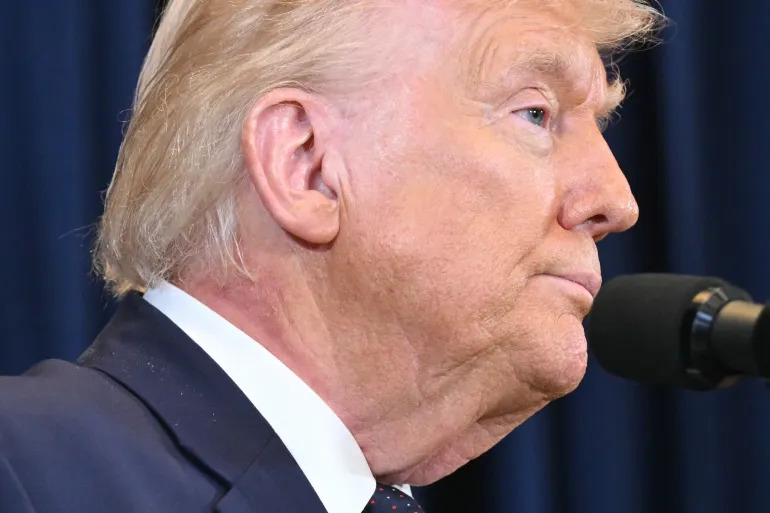
US President Donald Trump issued a series of contradictory statements regarding policy towards Iran on the same day. An analysis released by the Associated Press highlights mixed signals from the White House, ranging from discussions on ending military efforts to adding thousands of troops to the Middle East.
“We are very close to achieving our goals,” Trump stated, while indicating that Washington is considering halting “major military efforts” in the region. He claimed that Iran’s military capabilities have been significantly weakened.
However, at almost the same time, his administration confirmed the deployment of additional warships and around 2,500 marines. This addition brings the total US military strength supporting operations in the region to approximately 50,000 troops.
Trump’s ambivalence also extends to the security of the Strait of Hormuz, a vital route through which nearly one-fifth of the world’s oil supply passes. Trump indicated that the US could withdraw without securing the route and urged other countries to take responsibility for its protection.
This uncertainty was immediately met with a negative response from global markets. The S&P 500 index fell 1.5%, while fuel prices surged due to concerns over prolonged supply disruptions in this major distribution route.
On the economic front, the Trump administration took a surprising step by easing sanctions on certain Iranian oil shipments to ease pressure on energy markets. US Treasury Secretary Scott Bessent stated that this policy aims to increase global supply by up to 140 million barrels in the short term.
This move has drawn sharp criticism, including from within the Republican Party. Congressman Nancy Mace launched a scathing critique of the policy, seen as a double standard. “Bombing Iran with one hand, but buying Iranian oil with the other,” Mace wrote.
Analysts warn that this easing of sanctions will be futile if military tensions in the Strait of Hormuz persist, ultimately locking oil access out of Iran to international markets.