
Trump's Actions Cause Oil Shortage, One Country Suffers Total Blackout
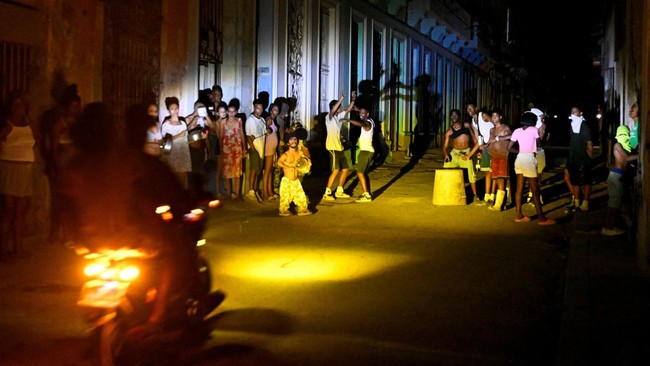
Cuba’s energy crisis reached a critical point after the country’s national power grid collapsed completely on Monday (16/3/2026) local time, causing around 10 million residents to lose their electricity supply.
According to the Wall Street Journal, Cuba’s power grid operator, Unión Eléctrica (UNE), stated that it is still investigating the exact cause of the major disruption, amid heavy pressure due to limited fuel supplies.
This incident is the latest in a series of major power outages that have frequently lasted for hours to days in recent times. In fact, the situation over the weekend even sparked rare protests in the communist-led country.
Authorities stated there is no indication of major damage to the main power plants. However, the root cause has not yet been identified, with initial suspicions pointing to a disruption in the electricity transmission system. The government said the recovery process has begun gradually by reactivating small groups of power networks or microsystems, as an initial step to normalise the overall system.
This crisis is inseparable from escalating geopolitical pressures. The United States government under President Donald Trump has tightened its policy towards Cuba, including halting oil shipments from Venezuela, which has long been the country’s main energy supplier. In addition, Washington has threatened to impose tariffs on countries that continue to supply oil to Cuba.
These measures have worsened the condition of Cuba’s already old and inefficient power system. The Cuban government has even initiated talks with the United States to ease the crisis, while Trump in recent weeks has stated that Cuba is on the brink of collapse and opened the possibility of negotiations.
On the other hand, oil supplies to Cuba have completely stalled. Ship tracking data shows the country has only received two small shipments this year. The first ship came from Mexico in January and unloaded its cargo at the port of Havana, while the second from Jamaica delivered liquefied petroleum gas for cooking needs in February.
Venezuela, which was previously the main supplier, has not recorded any fuel shipments to Cuba this year. In fact, a tanker previously used to send fuel to Cuba was reported to have only loaded petrol at a Venezuelan port without ever sailing out of the area.
Fuel import activities at Cuba’s main ports such as Matanzas and Moa have also been monitored as nil throughout this year. Both ports usually serve as hubs for incoming crude oil for refining and fuel oil for power plants. The ports of Havana and Cienfuegos have not recorded import activities for more than a month, based on satellite imagery analysis.
Cuban residents are now increasingly accustomed to living under severe restrictions due to this prolonged energy crisis. A Havana resident, Dayana Machin (26), admitted that the situation is no longer surprising.
“No, this news doesn’t surprise me. Now all Cubans are trying to find alternatives besides grid electricity,” she said.
“We are starting to get used to living like this.”
This condition reflects the new reality in Cuba, where power outages are no longer extraordinary events but part of daily life due to a combination of oil supply crises and weak energy infrastructure.