
Trump-Xi Summit and Indonesia's Waning Trade Premium
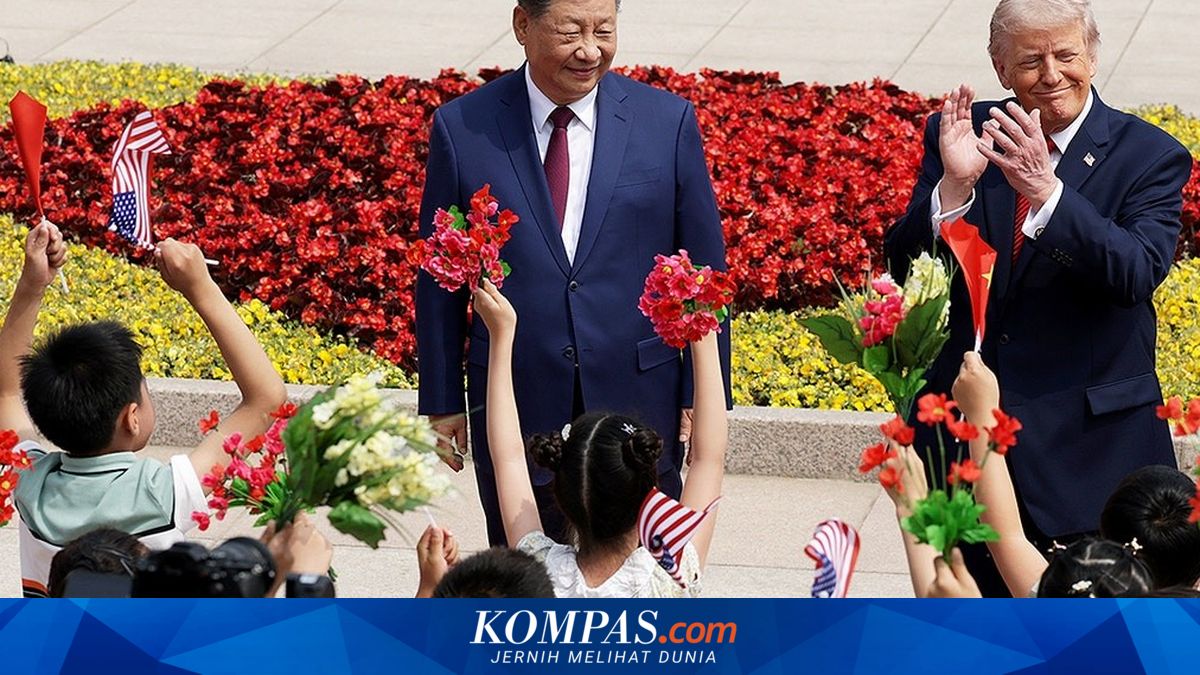
For the past year, Indonesia has enjoyed a position rarely available to any developing country. As the US and China raised tariffs on each other, global supply chains sought alternative routes—and Indonesia lay in that path. US imports from Indonesia surged 24% throughout 2025, a figure unprecedented in the history of bilateral trade between the two nations. However, that momentum now faces its first test. The Trump-Xi summit in Beijing this week is not merely a routine diplomatic meeting; it is a negotiation whose outcome, for better or worse, will determine how much longer the tariff disparities benefiting Indonesia will persist. Are we prepared for that change? The Peterson Institute for International Economics (PIIE) ranks Indonesia among the six countries with the largest gains in US trade share in 2025. Vietnam, Thailand, Indonesia—these three repeatedly appear in discussions about reshoring (moving production out of China). Those figures align with patterns seen in port data and cargo reports throughout 2025. Such a disparity is substantial enough to make purchasing managers in Ohio or Texas choose Surabaya over Shenzhen, even if production capacity is not necessarily more efficient. This gap is most pronounced in the machinery and electronics sectors. Those two categories were previously almost entirely dominated by Chinese supply, and suddenly a breach opened. Indonesia, along with Vietnam and Thailand, slipped into that breach—partly due to genuine competitiveness, partly because it happened to be in the right place at the right time. Yet, there is a part of this story rarely discussed in government meeting rooms. Cargo tracking data shows that Indonesia’s export surge to the US runs parallel to a rise in imports of semi-finished goods from China. The same pattern emerges in Vietnam, Malaysia, Thailand—nearly all countries currently celebrating their export increases to Uncle Sam’s land. A portion of Indonesia’s exports are actually goods born in Chinese factories, crossing the Karimata Strait or Malacca Strait, then departing from our ports with different documentation. This is known as transshipment (goods transfer via a third country), and it is no minor phenomenon.