
Trump Wants to Pull the US Out of NATO: Is It That Simple?
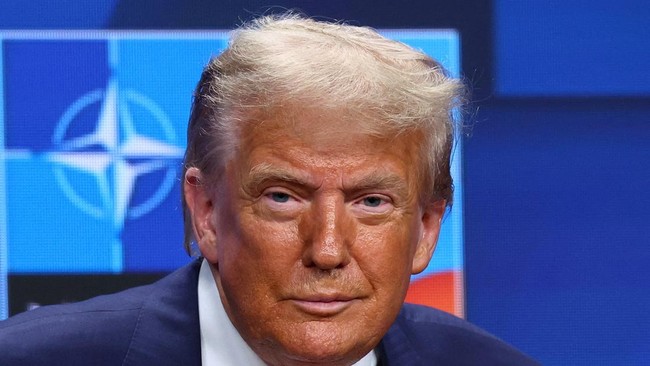
Jakarta, CNBC Indonesia - United States President Donald Trump has issued a stark threat to withdraw his country from NATO membership on Wednesday (1 April 2026). This extreme step was triggered by the refusal of European member states to send warships to break the blockade in the Strait of Hormuz near Iran, amid escalating military tensions in the region.
Trump expressed his disappointment with the military alliance in an official statement. He feels that European allies are not providing adequate support for US security interests in the conflict zone.
“I am seriously considering withdrawing from this alliance because I am fed up with NATO,” Trump told Reuters.
This threat emerged just hours after Defence Secretary Pete Hegseth refused to reaffirm the United States’ commitment to NATO’s collective defence. The absence of a security guarantee from the White House represents the most alarming signal for transatlantic stability since the alliance was formed 77 years ago.
Experts assess that the lack of commitment from executive leadership is far more dangerous than any legal hurdles. Without direct military support from the president, NATO’s role as a protector of Western security could collapse immediately.
“If the president and the military are not committed to NATO and European security, then I think there is not much Congress can do to stop it,” said Max Bergmann, a former State Department official who now serves as Director of the Europe, Russia, and Eurasia Program at the Center for Strategic and International Studies.
Although Trump is aggressively advocating for withdrawal, legally this step faces a rocky path due to a 2023 law signed by Joe Biden. That regulation prohibits any president from severing ties with NATO without the support of a two-thirds majority of the 100 Senate members.
Interestingly, the law was originally sponsored by Democratic Senator Tim Kaine and Republican Senator Marco Rubio. However, Rubio, now serving as Trump’s Secretary of State and National Security Advisor, has signalled a policy shift following the outbreak of the Iran war on 28 February.
“Washington must reassess its relationship with NATO after the Iran war,” Rubio stated on Tuesday.
On the other hand, Trump’s camp has its own legal weapon in the form of a 2020 opinion from the Department of Justice’s legal advisor, which states that the president has exclusive authority to withdraw from international treaties. A February 2026 report from the Congressional Research Service also indicates that the government could sue Congress’s restrictive rule as unconstitutional.
The US Constitution itself requires Senate approval to make treaties but remains silent on the withdrawal process. In its history, Trump previously withdrew the United States from the Open Skies treaty in 2020 without involving congressional approval.
If Trump truly executes his threat, it will have massive implications for global defence budgets. Moreover, previous amendments to the defence authorisation act (NDAA) have stipulated that not a single cent of US funds may be used to finance the process of withdrawing from NATO.
To date, no NATO member has ever cancelled its membership since the alliance was established in 1949. However, with conservative majorities in the Supreme Court that often favour Trump’s policies, the path for Washington to leave its Western allies is now wider open than ever before.