
Trump Threatens Unrelenting Attacks on Iran, World Cries Out
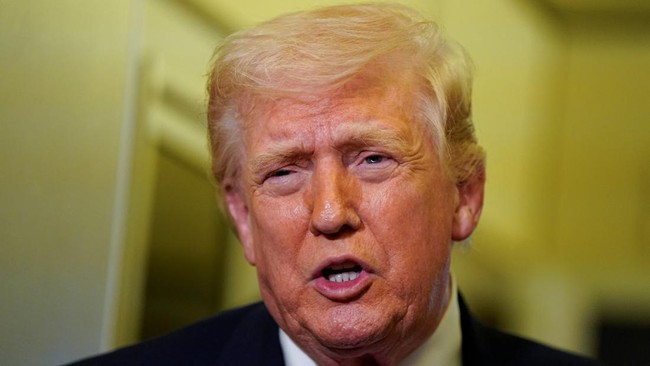
US President Donald Trump has once again stirred global unrest. In a speech at the White House on Wednesday (1 April) local time, Trump firmly pledged to become more aggressive in launching attacks on Iran over the next 2-3 weeks. He even bluntly threatened to return Iran to the Stone Age. Iran’s response to Trump’s threats has been even fiercer. The country has affirmed it will not surrender and has immediately bombarded Israel with missiles. The escalating tensions between the US and Iran have left the world anxious about the impact on soaring oil prices. After all, ongoing war means there is no hope for the Strait of Hormuz to operate normally in the near future. For context, the Strait of Hormuz is a vital route for global oil trade. That route typically handles around one-fifth of the world’s oil consumption, but it is now closed due to the war. Dozens of countries are seeking ways to restart shipments of vital energy through the Strait of Hormuz on Thursday (2 April) local time. Despite losing several of its leaders, Iran continues to show a defiant stance and says it is drafting a protocol with Oman on monitoring ships in the Strait of Hormuz. “We are developing a protocol for Iran and Oman to monitor traffic and navigation through the Strait of Hormuz,” said Iran’s Deputy Foreign Minister Kazem Gharibabadi, according to the official IRNA news agency. “Of course, these requirements do not mean restrictions, but rather to facilitate and ensure safe passage, as well as to provide better services to ships passing through this route,” he added. In his speech, Trump hinted that the war could escalate if Iran does not yield to Washington’s demands during negotiations, with potential attacks on Iran’s energy and oil infrastructure. Trump told countries dependent on fuel shipments through the Strait of Hormuz to “take it immediately.” However, European countries and others say they will only help secure the strait if there is a ceasefire. The UK is leading a virtual meeting of around 40 countries to explore ways to restore freedom of navigation, stating that the focus is on diplomatic and economic tools. “That can only be done by consulting with Iran,” said French President Emmanuel Macron. Thousands have died across the Middle East since 28 February, when the US and Israel began airstrikes on Iran, which triggered Iranian attacks on Israel, US bases, and Gulf states, while also opening a new front in Lebanon. Iran’s Revolutionary Guard said it has targeted US-linked steel and aluminium facilities in Gulf countries and will intensify attacks if Iran’s industry is hit again. Russia said it will ask the US and Israel to stop firing so its staff can leave the Bushehr nuclear power plant in Iran. Israel, which shot down most of Iran’s missiles, reported new attacks on Thursday (2 April). Saudi Arabia said it intercepted four drones, and Abu Dhabi said it intercepted a missile, with minor damage near the economic zone. The US Embassy in Baghdad urged its citizens to leave Iraq, warning of attacks in the capital by Iran-allied militias within the next 24 to 48 hours. Fuel shortages have caused economic pressure across Asia and are expected to soon impact Europe. In addition, a report by two UN agencies warns that a sharp economic slowdown could trigger a cost-of-living crisis in Africa. Benchmark Brent crude oil prices surged around 7% to about US$108 per barrel, US bond yields jumped, and global equity markets lost gains. “The key question on every investor’s mind is ‘When will this end?’” said Russel Chesler, Head of Investment and Capital Markets at VanEck Australia.