
Trump Threatens to Plunge Iran into Darkness within 48 Hours, Asian Markets Plummet
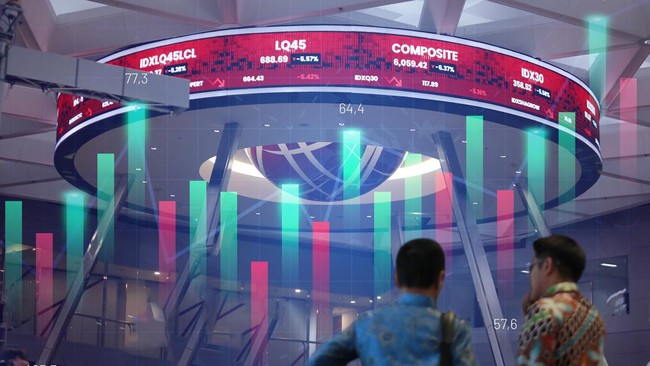
Jakarta, CNBC Indonesia - Asian-Pacific stock markets uniformly weakened in early-week trading, in line with rising tensions in the Middle East between the United States and Iran.
Citing CNBC International, market participants are monitoring the escalation of the conflict entering its fourth week, after the two countries exchanged threats to intensify military actions.
President Donald Trump stated he would “destroy” power plants and threaten Iran with complete darkness if Tehran does not fully reopen the Strait of Hormuz within 48 hours on Saturday (21/3/2026). As is known, the Strait of Hormuz is a vital artery for global energy distribution.
Iran responded harshly to the ultimatum. Its government threatened to target energy infrastructure and desalination facilities in the Gulf region if the US truly launches an attack.
Iran’s Parliament Speaker, Mohammad Bagher Ghalibaf, emphasised that an attack on the country’s power plants would be immediately met with strikes on energy and oil infrastructure across the region.
“Critical infrastructure as well as energy and oil infrastructure throughout the region will be considered legitimate targets and will be permanently destroyed, and oil prices will rise for a long time,” Ghalibaf said on social media platform X, as quoted on Monday (23/3/2026).
It did not stop there; on Sunday (22/3/2026), Ghalibaf expanded the threats to holders of US government bonds, warning that financial entities buying American government bonds and “financing the US military budget” would be considered legitimate targets, along with military bases.
Crude oil prices were largely stable in early Monday trading hours. Brent crude fell 0.25% to US$111.97 per barrel at 19:16 EST. US West Texas Intermediate crude fell 0.6% to US$97.64 per barrel.
Australia’s S&P/ASX 200 index fell more than 1.8% in early Asian trading. Meanwhile, Japan’s Nikkei 225 index dropped 4% at opening, while the broader Topix index fell 2.8%.
South Korea’s benchmark Kospi stock index plunged 4.6%, and the small-cap Kosdaq index fell 3.7%. Hong Kong’s Hang Seng futures were also expected to open lower, at 24,725 compared to the previous close of 25,277.32.