
Trump States US Military Operations Against Iran Will End Shortly
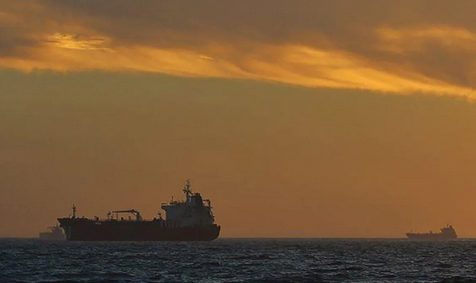
President Donald Trump has stated that United States military operations against Iran are likely to end shortly. However, on the ground, the conflict has expanded following Iran’s new leader Mojtaba Khamenei launching missile attacks against several regional countries and creating tensions along the vital Strait of Hormuz energy corridor.
The conflict involving the United States and Israel previously triggered a sharp decline in stock markets and a surge in global oil prices.
The situation has grown increasingly tense after Iran, under Mojtaba Khamenei’s new leadership, launched a series of missile attacks against several Gulf nations and signalled the possibility of closing the strategically important Strait of Hormuz shipping lane.
However, Trump’s statement suggesting a short-lived conflict has provided momentum to financial markets.
Stock exchanges in the United States have returned to positive movement, whilst markets in Tokyo and Seoul also opened stronger on Tuesday, although Trump maintained warnings that the military campaign could be expanded if Iran does not comply with Washington’s demands.
Global oil prices have also reversed course and fallen approximately five per cent, a day after crude oil had briefly exceeded $100 per barrel, the highest level since Russia’s invasion of Ukraine in 2022.
“This will end shortly, and if it begins again, they will face much worse consequences,” Trump said during a press conference in Florida, having previously described the military operations as a short-term excursion.
The statement was immediately answered by the Islamic Revolutionary Guard Corps (IRGC), which asserted that it, rather than America, would determine when the war ends.
Tensions escalated on the first day of Mojtaba Khamenei’s rule after Iranian forces launched a wave of missile and drone attacks against several regional countries, including Saudi Arabia, Bahrain, Qatar, the United Arab Emirates, and Israel.
A missile was also reported to have been fired towards Turkey, a NATO member, but was successfully intercepted by the alliance’s air defence system before reaching its target.
International diplomatic efforts are now largely focused on the Strait of Hormuz, a vital passage typically carrying approximately 20 per cent of global crude oil supplies. This corridor has been reported to be almost entirely closed to oil tankers since Iran blockaded it in response to attacks by the US and Israel.
French President Emmanuel Macron stated that his country, along with allies, is preparing a purely defensive mission to reopen the passage. The mission aims to escort commercial vessels after the most intense phase of the conflict subsides.
However, analysts have warned that such an operation risks placing Western naval vessels within range of fire from Iran’s coastal regions.
Meanwhile, Iran’s foreign policy adviser Kamal Kharazi told CNN that Teheran expects global economic pressure will ultimately compel other nations to intervene to stop the war.
Demonstrations of Support in Iran
Within the country, tens of thousands of Iranian citizens took to the streets in Teheran to celebrate Mojtaba Khamenei’s appointment as supreme leader by the Assembly of Experts. Many were seen carrying photographs of the new leader.
Several groups allied with Iran in the region have also expressed their support, including the Houthi movement in Yemen and Hezbollah in Lebanon.
Russian President Vladimir Putin even promised unwavering support to Teheran.
Trump himself expressed disappointment at Mojtaba Khamenei’s appointment but remained open to the possibility of leadership change from within Iran.
“I am disappointed,” Trump told journalists, whilst citing the recent transition of power in Venezuela as a formula that has worked quite well so far.
The conflict has also triggered major concerns about the stability of global energy supplies. Oil traders, policymakers, and central banks are now closely monitoring the situation in the Gulf region.
Approximately ten vessels near the Strait of Hormuz have been reported attacked since Iran blockaded the shipping lane, according to shipping experts.
Global shipping company Mediterranean Shipping Company has even halted some export shipments from the Gulf, which has forced the unloading of cargo from vessels.
In Bahrain, an attack on the Al Ma’ameer oil facility triggered a major fire. The state energy company Bapco, along with energy companies in Qatar and Kuwait, have declared force majeure, indicating potential export disruptions from circumstances beyond their control.
Meanwhile, Saudi Arabia’s Ministry of Defence reported that it has thwarted a drone attack targeting oil fields in the kingdom’s eastern region.
The conflict’s effects are also being felt by civilians. In Manama, Bahrain, the interior ministry reported one person killed and several others injured from Iranian attacks on residential areas.
In Tel Aviv, Israel, approximately ten explosions were heard after the military detected missiles fired from Iran. At least one Israeli civilian was reported killed by shrapnel.
The war has also increasingly spread to Lebanon. Armed clashes between Israel and Hezbollah since 2 March have reportedly killed at least 486 people and injured over 1,300 others.
Lebanese President Joseph Aoun accused Hezbollah of attempting to destroy the state. However, the parliamentary bloc leader of the group stated they had no choice but to resist.