
Trump Seeks Aid from Other Nations to Secure the Strait of Hormuz; Japan Unwilling to Rush
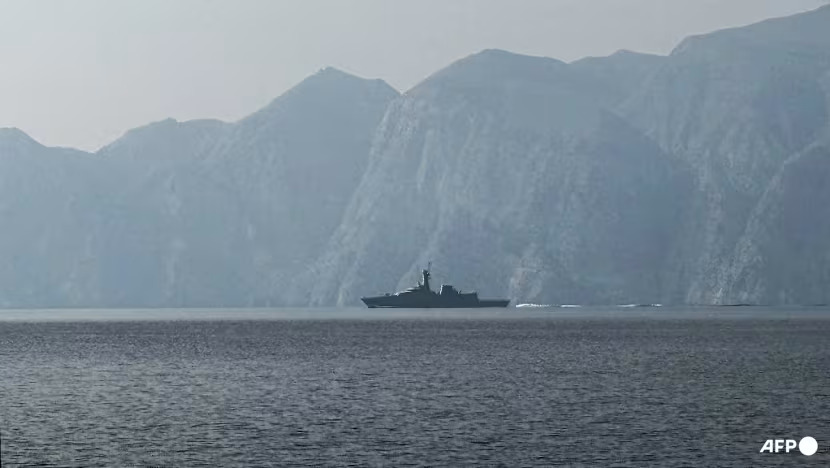
The Japanese government has expressed a high level of caution regarding the United States’ request to send warships to secure oil shipping routes in the Middle East. This approach has been taken amid the closure of the Strait of Hormuz, which has triggered a surge in global oil prices following the outbreak of conflict between the US-Israel alliance and Iran.
Takayuki Kobayashi, the policy chief of the ruling Liberal Democratic Party (LDP), emphasized that the threshold for deploying the Self-Defence Forces (SDF) to the conflict zone remains “very high” under Japanese law. Whilst the legal possibility is not entirely closed, the ongoing conflict situation demands extremely careful consideration.
“Legally, we do not rule out the possibility, but given the current conflict situation, this is something that must be considered very carefully,” Kobayashi stated during a political debate on the national television station NHK on Sunday (15 March).
Japan is the world’s fifth-largest oil importer, with 95% of its supply coming from the Middle East. Approximately 70% of this amount typically passes through the Strait of Hormuz, which is now practically closed due to military escalation. This situation places the world’s fourth-largest economy in a dilemma between energy requirements and the pacifist 1947 constitution that restricts military involvement overseas.
Prime Minister Sanae Takaichi is scheduled to visit Washington this week to meet with President Donald Trump. The meeting is expected to clarify the US’s intentions regarding the call for naval escort assistance, whilst also discussing the potential security vacuum in East Asia resulting from the shift of US forces from bases in Japan and South Korea towards the Gulf.
To date, Takaichi has asserted that “nothing has been decided” regarding the dispatch of warships, whilst continuing to monitor increasingly uncertain global security dynamics.
The International Energy Agency (IEA) chief Fatih Birol has sought to allay concerns about a global oil crisis amid the escalating conflict in the Middle East resulting from the Strait of Hormuz closure.
The House of Representatives has expressed support for the steps taken by the Minister of Energy and Mineral Resources in mitigating potential disruptions to oil supplies.
Minister Bahlil Lahadalia stated that the government plans to increase the national fuel oil storage capacity from approximately 25-26 days to 90 days, or equivalent to three months.
The General Chairman of Apindo (Indonesian Business Association), Shinta Widjaja Kamdani, noted that the risk of US attacks on Iran stems not only from market sentiment but also from potential disruptions to global energy and trade routes.
Oil and gas practitioner Hadi Ismoyo assessed that the US-Venezuela conflict would not alter global oil trading routes nor drive an increase in global oil prices.