
Trump Revokes US Climate Rules, Risking Public Health for Cheaper Petrol Cars?
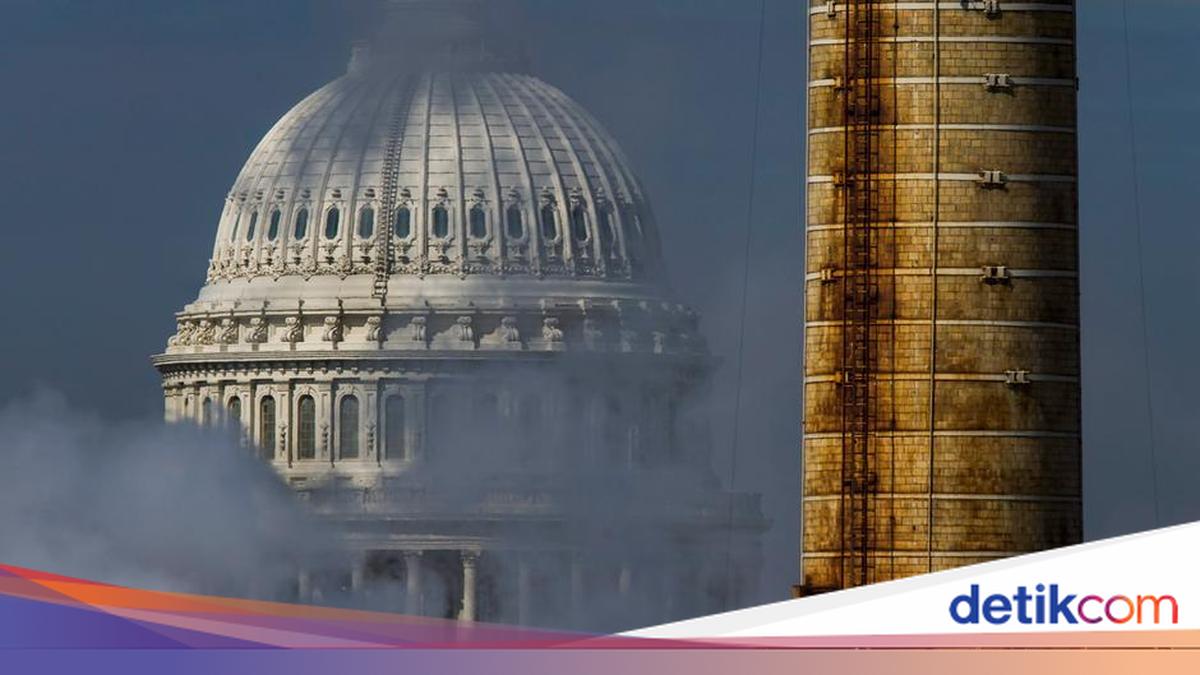
In what the White House has described as “the largest deregulatory action in American history,” US President Donald Trump has revoked a key scientific finding that for more than 16 years served as the foundation of America’s efforts to combat climate change.
Speaking at the White House on Thursday (12 February), the US president formally rescinded the 2009 government declaration issued during the Barack Obama era, known as the “endangerment finding.” This finding was a central pillar of the green policies subsequently developed by Democratic presidents, including Joe Biden.
“This determination had no factual basis whatsoever, and it also had no legal basis,” Trump said, calling it a “great hoax” that had “severely damaged the automotive industry.”
He dismissed concerns that the revocation could cost lives by worsening climate change, instead asserting that the move would “bring car prices down dramatically.”
“You’re going to get better cars, easier to start, that work better, at a far lower price,” Trump said.
What is the 2009 endangerment finding?
The key scientific finding, issued by the Environmental Protection Agency (EPA) in December 2009, established the legal framework enabling the EPA to regulate emissions causing global warming, which were deemed a threat to “the health and welfare of current and future generations.”
A prior US Supreme Court ruling in 2007, known as Massachusetts v. EPA, granted the agency authority to establish policies targeting heat-trapping emissions — such as carbon dioxide, methane, and other pollutants.
The policy initially targeted exhaust emissions from cars and lorries, then expanded to cover coal and gas-fired power stations and the oil and gas industry.
The Trump administration has questioned the scientific basis of the 2009 decision, arguing that the health impacts of emissions on humans are indirect and that US regulations alone are insufficient to address a global problem.
However, scientists and environmental experts broadly support the finding. The non-profit American Geophysical Union stated that the finding “is grounded in decades of rigorous, peer-reviewed climate science.”
In July 2025, EPA Administrator Lee Zeldin said the costs associated with greenhouse gas regulations for cars and lorries represented “a real threat to the livelihoods of the American people.”
The White House stated that revoking the environmental regulations would expand access to affordable and reliable energy. Trump added that the move would save more than US$1.3 trillion by eliminating regulatory requirements related to vehicle emission standards and associated programmes.
However, environmental analysts contend that these savings fail to account for rising costs stemming from the impact of climate change on human health, loss of biodiversity, and extreme weather events.
Impact on US climate efforts
With the endangerment finding eliminated, the EPA loses its authority to use the 1963 Clean Air Act to regulate greenhouse gases.
Barry Rabe, professor of public and environmental policy at the University of Michigan, said the move reflects a complete US shift away from renewable energy and energy efficiency towards increased production and use of fossil fuels, including coal, oil, and natural gas.
The revocation will slow efforts to require the US automotive industry to sell lower-emission cars and lorries, whilst reducing federal support for the growing electric vehicle sector. The Biden administration had previously set a non-binding target for electric vehicles to account for at least 50 per cent of new car sales by 2030.
“Transportation is the single largest source of US heat-trapping emissions,” said Gretchen Goldman, president of the non-profit science advocacy organisation Union of Concerned Scientists.
Environmental groups warned that the move could also pave the way for the revocation of carbon and other pollutant emission limits from power stations and fossil fuel industries, potentially undoing nearly all climate regulations.
An international research team this week also warned that destabilisation of Earth’s feedback systems could exacerbate the consequences of global warming after millions of years of relatively stable climate. William Ripple, professor of ecology at Oregon State University, said the world could enter a period of unprecedented climate change and risks heading towards an “extreme greenhouse” trajectory.
Since beginning his second term in January 2025, Trump has withdrawn the US from international climate commitments, including the Paris Agreement, cut environmental protections, suppressed climate research, and promoted the fossil fuel industry.
This week, he also ordered US military bases and facilities to purchase electricity from “beautiful clean coal” power stations, arguing that renewable energy is unreliable.
Can the decision be challenged?
Critics, including the Environmental Defense Fund and the non-profit environmental law firm Earthjustice, have stated they will challenge the decision in court, potentially all the way to the US Supreme Court. However, the process could take years, during which time the endangerment finding and all its derivative policies will remain inoperative.
Manish Bapna, head of the Natural Resources Defense Council, said communities across the country would bear the consequences of what he described as an illegal action, accusing Trump of handing “a blank cheque to oil billionaires.”
Whilst some electricity companies welcomed the EPA’s move, others expressed concern that the revocation could trigger a wave of “public nuisance” lawsuits against activities deemed harmful to public health and safety.
Robert Percival, professor of environmental law at the University of Maryland, said the move could become a classic example of how government overreach ultimately backfires.