
Trump Rages and Threatens to Impose 50% Tariffs on China, What's Happening Now?
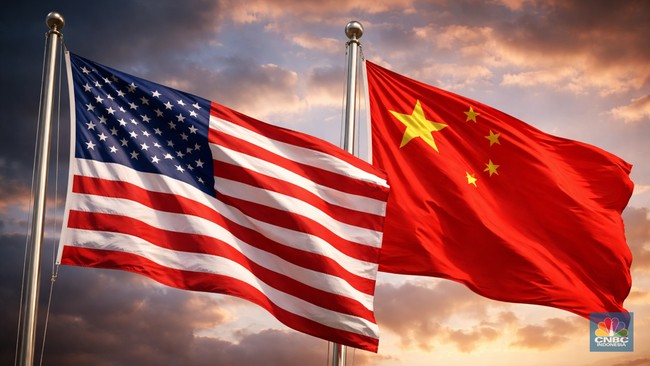
US President Donald Trump has threatened to impose tariffs of up to 50% on China. This threat emerged following intelligence reports indicating that Beijing is considering sending air defence systems to Iran.
Trump conveyed the threat during a telephone interview with Fox News. He was responding to reports that China is suspected of supplying shoulder-fired missiles or anti-aircraft missile systems to Tehran.
“If we catch them doing that, they will be hit with 50% tariffs, a shocking amount,” Trump stated, as quoted by CNBC International on Tuesday (14/4/2026).
Nevertheless, Trump also expressed doubts about the accuracy of the reports. He described the circulating information as “not meaning much” and even implied that the news might not be true.
Previously, a CNN International report citing internal sources indicated that US intelligence assessments suggest a potential shipment of MANPADS—portable surface-to-air missiles—from China to Iran. To date, there has been no official confirmation from Beijing regarding the issue.
Speculation about China’s role in the Iran conflict has intensified following a New York Times report that Beijing once pressured Tehran to agree to a ceasefire with the US. However, spokesperson for China’s Ministry of Foreign Affairs, Mao Ning, affirmed that her country is only promoting peaceful dialogue without confirming involvement as an official mediator.
Global policy analyst from Nanyang Technological University, Dylan Loh, assesses that China tends to act cautiously. According to Loh, if the arms shipment reports prove true, it would represent a significant shift in Beijing’s approach in the Middle East and could potentially add to geopolitical uncertainty, although the military impact may not necessarily be substantial.
“China appears to use its influence selectively and is willing to be more proactive when it sees opportunities to make an impact,” he said.
To date, there are no official reports that China has provided direct military or financial assistance to Iran since the conflict escalated at the end of February. Beijing’s support is seen as more driven by economic interests, particularly dependence on energy trade routes.
This tension is occurring ahead of Trump’s planned meeting with Chinese President Xi Jinping in Beijing on 14-15 May. This is expected to be a crucial moment in determining the direction of relations between the two countries amid escalating global conflicts.