
Trump Opens Diplomatic Prospects with Iran amid Military Tensions
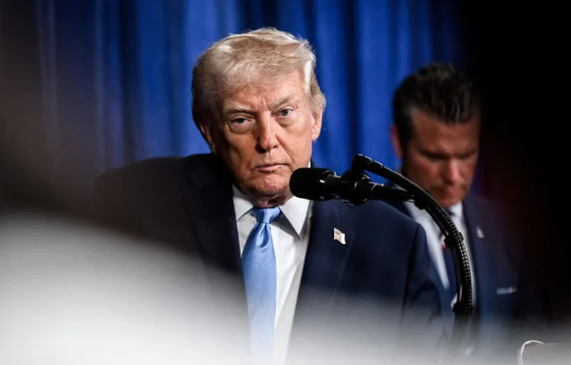
PRESIDENT of the United States Donald Trump has given fluctuating diplomatic signals regarding Washington’s relations with Tehran. Despite increased military tensions following air strikes on 28 February, Trump stated he has not completely closed the door to negotiations with the Islamic Republic.
In an interview with Fox News on Tuesday (10 March 2026), Trump stated that dialogue might be possible, but only under strict conditions.
“It is possible, depending on the terms. You know, actually we don’t need to talk anymore, but it is possible,” Trump said in response to questions about potential negotiations with Iran’s new leadership.
Trump’s statement comes amid a power transition in Iran following the death of Ayatollah Ali Khamenei. The deceased Supreme Leader’s son, Mojtaba Khamenei, has now been appointed as the new Supreme Leader, a move that Trump previously described as “disappointing.”
Trump expressed doubts about Mojtaba’s ability to bring stability to the region. “I do not believe he (Mojtaba) can live in peace,” the President stated.
The situation in the Middle East reached a critical point after the United States and Israel launched “preemptive” strikes against Tehran in late February. Iran subsequently retaliated by attacking Israel’s territory and US military facilities in the Middle East.
The US and Israel initially claimed that the “preemptive” strikes were necessary to address what they considered threats from Iran’s nuclear programme, but they subsequently made clear their desire to see a change in Iran’s power structure.
Supreme Leader Ayatollah Ali Khamenei was reported killed on the first day of the military operations. The Islamic Republic of Iran declared a national period of mourning lasting 40 days.
The killing of Ayatollah Ali Khamenei triggered a harsh response from the Kremlin. Russian President Vladimir Putin characterised the action as a cynical violation of international law.
Russia’s Ministry of Foreign Affairs urged the US and Israel to immediately cease hostilities and begin a process of de-escalation to prevent a wider open conflict in the region, which is globally significant for energy supplies.
Amid the escalating conflict in the Middle East, Indonesia’s Foreign Ministry has evacuated 32 Indonesian citizens from Iran. The Ministry of Foreign Affairs evacuated the first wave of Indonesian nationals from Iran due to the uncertain Middle East situation. Twenty-two Indonesian citizens were scheduled to arrive today at Soekarno-Hatta Airport.
President Prabowo convened several ministers and raised awareness of the potential economic impact of the Middle East conflict.
Finance Minister Purbaya Yudhi Sadewa assured that the state budget for subsidised fuel needs remains sufficient.
Amid the heating Middle East situation resulting from the Iran-Israel-US conflict, the movement of hajj pilgrims from South Sulawesi has shown a contrasting trend.
The Israeli military attack on strategic Iranian targets on 28 February 2026 was like a spark falling on dry straw.
US and Israeli strikes against Iran have had a direct impact on the export sector in the region. One such impact has been on the non-power loom fabric (ATBM) industry in Tegal City, Central Java.