
Trump One Step Closer to "Taking Over" This Country: I Can Do Anything!
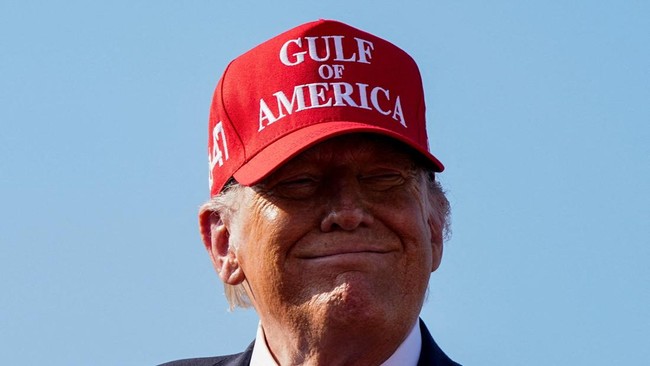
President Donald Trump of the United States escalated his rhetoric against Cuba on Monday local time, stating his expectation to obtain the honour of taking control of the island nation in some form and asserting his absolute authority over this neighbouring country.
This threatening statement emerged precisely as Cuba and the United States opened talks aimed at improving their poor relations. The relationship between the two nations has reached one of the most critical moments in 67 years since Fidel Castro overthrew a close US ally in the past.
“I truly believe I will get the honour of taking over Cuba. That is a great honour. Taking over Cuba in some form,” Trump told reporters as the island faced an unprecedented economic crisis, according to reports from 17 March 2026.
Cuba’s economic conditions have been further worsened by an oil blockade imposed by the US following the arrest of former Venezuelan President Nicolas Maduro. Trump made the statement during a signing ceremony in the Oval Room of the White House.
“I mean, whether I free it or take it. I think I can do whatever I want with it. You want to know the truth,” Trump added.
Following this statement, the New York Times reported that the removal of Cuban President Miguel Diaz-Canel from his position was the primary objective of the US in those bilateral talks. Citing four sources familiar with the talks, the United States had signalled to Cuban negotiators that Diaz-Canel must step down, but left the next steps to the Cuban side.
Cuba has traditionally rejected all forms of interference in its internal affairs. The Cuban government views any proposal touching on that realm as a deal-breaker for any agreement.
Miguel Diaz-Canel, aged 65 and who replaced the late Fidel Castro and his brother Raúl Castro as president in 2018, previously made a statement regarding this diplomatic process. On the previous Friday, he expressed the expectation that talks with the US would be conducted fairly.
“I expect talks with the United States to take place under the principles of equality and respect for the political systems of both nations, sovereignty, and self-determination,” said Diaz-Canel.
However, after overthrowing Maduro from power and joining Israel in attacking Iran, Trump openly contemplated that Cuba would be the next target. He increased pressure by halting all Venezuelan oil shipments to Cuba and threatened to impose tariffs on any country selling oil to the communist nation.
As a result of this policy, the Cuban government stated it had not received oil shipments in the last three months and had implemented strict energy rationing, resulting in prolonged power cuts. Much of the nation’s economy had ground to a halt, and on Monday the Cuban power grid collapsed entirely, leaving 10 million people without electricity.
The US leader’s aggressive sentiment was also revealed during his travels a day earlier. Trump confirmed communications, but asserted his military priorities lay elsewhere.
“We are speaking with Cuba, but we will deal with Iran before Cuba,” Trump told reporters aboard Air Force One on Sunday.
Although more than a dozen US Presidents over recent decades have opposed Cuba’s Communist government and criticised its human rights record, Washington has hitherto respected the commitment not to attack Cuba. This was part of an agreement with the Soviet Union to resolve the Cuban Missile Crisis of 1962, although the White House has yet to outline the legal basis for any possible intervention.